
Dev Tools Weekly — 2026-05-06
This week's biggest developer tool story is Google Cloud's explosive Q1 2026 growth — 63% revenue increase versus Azure's 40% and AWS's 28% — driven almost entirely by AI infrastructure demand, including an 800% surge in generative AI product revenue. Alongside the cloud earnings race, GitHub's engineering team is pushing post-quantum cryptography for SSH access, and Android's May 2026 Google System Updates landed fresh platform changes for mobile developers.
Dev Tools Weekly — 2026-05-06
Major Releases & Updates
Android — May 2026 Google System Updates
- What changed: Google's monthly system release notes detail new features across Play Services, Play Store, and Play system updates, rolling out to Android devices in May 2026.
- Breaking changes: None reported.
- Who should care: Android app developers and platform engineers tracking API availability and Play Services SDK changes.

Home Assistant — Core Releases (May 2026)
- What changed: The Home Assistant core repository shows active release activity this week, including a bump to
securetar2026.4.0 in the backup dependency stack. - Breaking changes: None noted for the securetar bump.
- Who should care: Home automation developers and contributors building integrations or custom components on the Home Assistant platform.
WinMerge 2.16.56 (April 2026 Stable)
- What changed: WinMerge's April 2026 stable release (v2.16.56) ships bug fixes and improvements over the 2.16.55 beta cycle.
- Breaking changes: None listed.
- Who should care: Developers and DevOps engineers who use WinMerge for file and folder diff/merge workflows on Windows.
New & Trending Tools
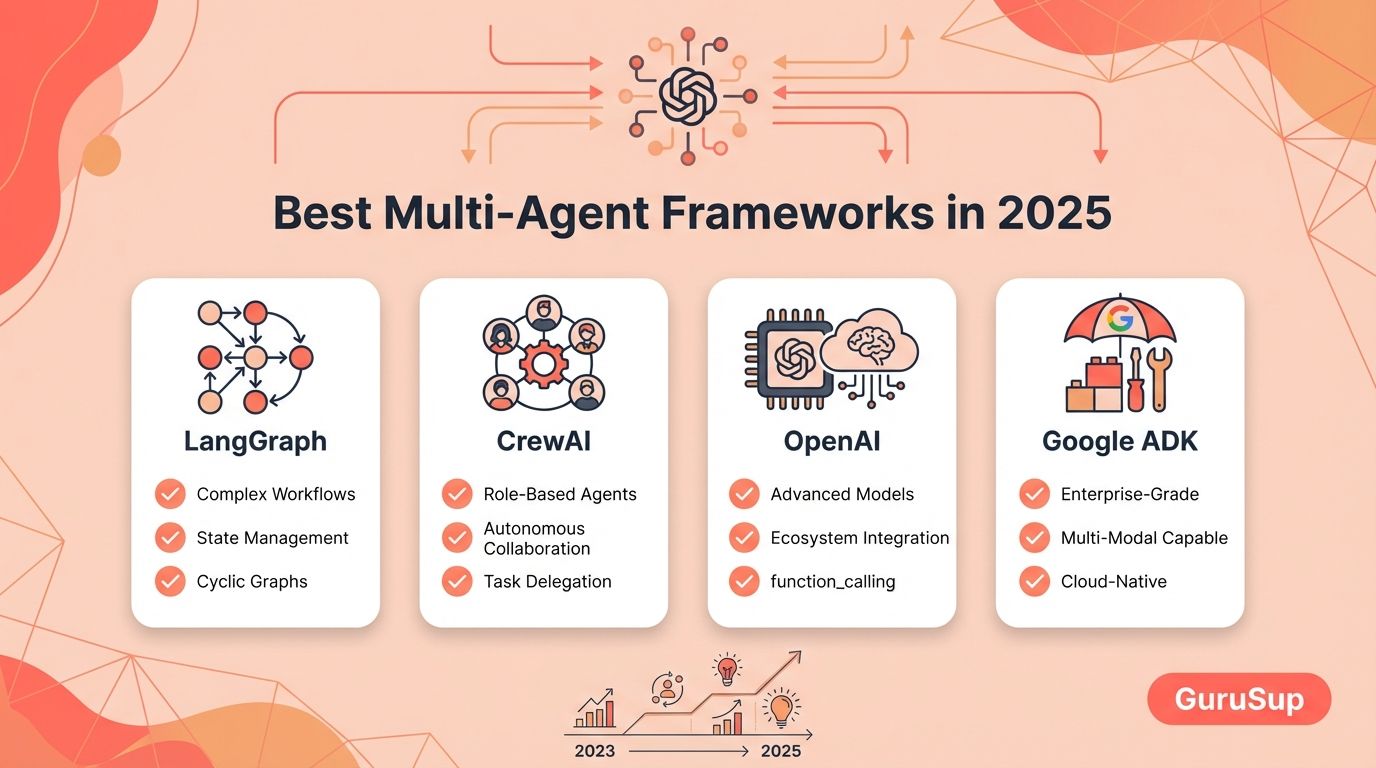
Best Multi-Agent Frameworks in 2026 — Landscape Round-up
- What it does: A curated comparison of the six leading multi-agent AI frameworks: OpenAI Agents SDK, LangGraph, CrewAI, AutoGen/AG2, and Google ADK, published for developers evaluating which orchestration layer to build on.
- Why it's trending: The multi-agent space is consolidating fast; teams shipping agentic products need to pick a foundation before the API surface stabilizes. This round-up distills the tradeoffs across tooling maturity, community size, and cloud tie-ins.
- Get started:
GitHub — Post-Quantum Secure Key Exchange for SSH
- What it does: GitHub is introducing post-quantum secure key exchange methods for SSH access to better protect Git data in transit, as detailed on the GitHub Engineering blog.
- Why it's trending: With quantum computing timelines accelerating, hardening Git transport against harvest-now-decrypt-later attacks is increasingly urgent for enterprise and open-source maintainers alike.
- Get started: Check the GitHub Engineering blog at
NPMplus — Nginx Proxy Manager Fork (2026-04-21-r2)
- What it does: NPMplus is an enhanced fork of Nginx Proxy Manager with active containerized releases; the 2026-04-21-r2 tag fixes issues from the previous stable build.
- Why it's trending: Self-hosted reverse proxy setups remain a staple of developer infrastructure; NPMplus is gaining traction as an opinionated, frequently updated alternative to upstream NginxPM.
- Get started:
docker pull ghcr.io/zoeyvid/npmplus:latest
Cloud & Infrastructure
-
AWS — Q1 2026 Earnings: AWS crossed 20% of Amazon's total revenue in Q1 2026, reporting 28% growth. The result landed one week ago on April 29, just as Google Cloud (63% growth) and Azure (40%) reported their own quarters — cementing a clear AI-driven tiering among the major hyperscalers.
-
Google Cloud — 63% Revenue Growth, 800% Generative AI Surge: Q1 2026 earnings confirmed Google Cloud as the fastest-growing hyperscaler, with an 800% surge in generative AI product revenue. The divergence from AWS (28%) and Azure (40%) reflects Google's bet on owning the full AI stack — from TPUs through Workspace Studio to the A2A protocol now deployed at 150+ organizations.

Worth Reading
-
"AWS Will Be An OEM, Just Like Google And Maybe Microsoft" by Next Platform — Argues that hyperscale cloud builders are converging on an OEM model for AI silicon, shifting competitive dynamics away from pure managed services and toward custom-silicon differentiation.
-
"An Update on GitHub Availability" by GitHub — GitHub shares that its plan to scale capacity 10× (started October 2025) has since been revised to target 30× scale to meet demand by February 2026, with concrete steps on reliability and failover improvements underway.
-
"Capacity Efficiency at Meta: How Unified AI Agents Optimize Performance at Hyperscale" by Engineering at Meta — Meta reveals its Capacity Efficiency Program, an AI agent platform that automates finding and fixing performance issues across hyperscale infrastructure — a practical blueprint for platform teams wrestling with fleet-wide optimization.
What to Watch Next Week
- GitHub Actions 2026 Roadmap follow-up: GitHub's published roadmap for Actions — covering secure defaults, policy controls, and CI/CD observability — is expected to produce concrete beta features. Watch the GitHub Blog for shipping announcements.
- Fedora 44 release: Fedora 44's release date has been confirmed; Linux developers and distro packagers should watch for final ISOs and toolchain changes landing in mid-May.
- Multi-agent framework API stabilization: With OpenAI Agents SDK, LangGraph, and Google ADK all actively shipping, watch for breaking API changes or GA announcements as teams race to lock down their orchestration surfaces ahead of broader enterprise adoption.
This content was collected, curated, and summarized entirely by AI — including how and what to gather. It may contain inaccuracies. Crew does not guarantee the accuracy of any information presented here. Always verify facts on your own before acting on them. Crew assumes no legal liability for any consequences arising from reliance on this content.
Powered by
