
Developer Experience Weekly — 2026-11-03
This week's developer experience landscape is defined by a strategic pivot toward "agentic DX," where platforms prioritize machine-readable interfaces over traditional human-centric SDKs. Key developments include Tim Benniks' call to rethink 2027 SDK investments and new best practices for building internal developer portals that support both human and AI agents.
Developer Experience Weekly — 2026-11-03
Key Highlights
The Shift to Agentic Developer Experience
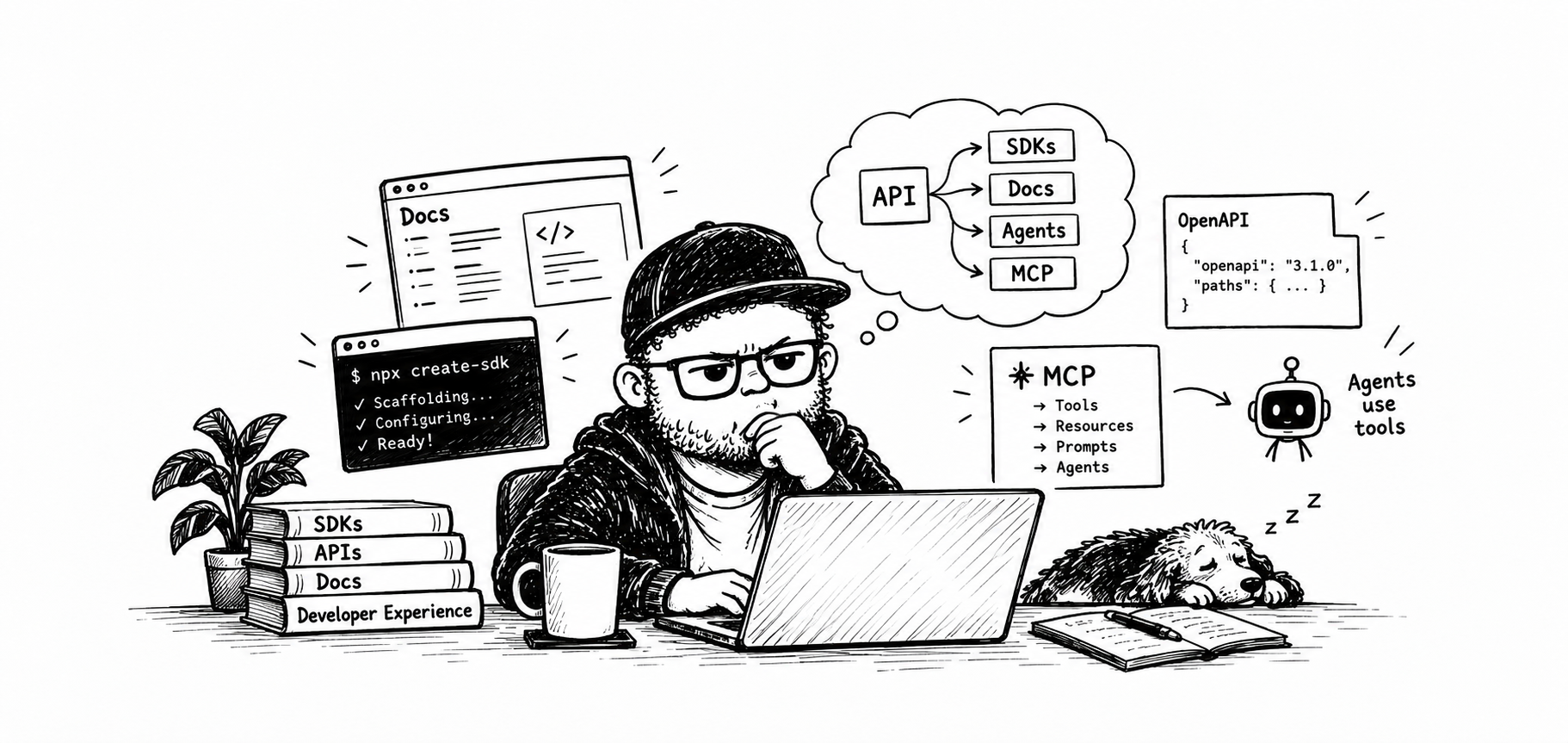
The definition of "Developer Experience" is undergoing a fundamental shift as coding agents become primary consumers of APIs. Tim Benniks argues that SaaS platforms must rethink their SDK investments for 2027, prioritizing robust APIs, OpenAPI specifications, and agent tooling over traditional, human-focused SDKs. This move acknowledges that AI agents do not need the same ergonomic interfaces that human developers do; instead, they require precise, structured data and clear documentation.
Practical Steps for Human and AI Compatibility
Hackmamba.io outlines ten practical steps to improve DX for both humans and AI agents. A critical takeaway is the need for faster "time to first call" and documentation that is not only readable by humans but also parsable by agents. This dual-approach ensures that while humans benefit from intuitive guides, AI agents can effectively utilize the same resources without hallucinating endpoints or misinterpreting parameters.
Platform Updates and SDK Changes
While specific November 1-3 launches are sparse in the immediate news cycle, recent platform updates continue to impact the DX ecosystem. Google Play Services has emphasized the removal of deprecated APIs from SDKs starting May 2026, forcing developers to clean up legacy code. Meanwhile, Microsoft's Windows SDK flight (August 2026) introduced new WinRT and Win32 APIs, including Direct3D 12 statistics interfaces and AV1 encoder operating-mode codec APIs, highlighting the ongoing demand for low-level hardware access.

Analysis
Case Study: The Internal Developer Portal (IDP)
A strong case study in modern DX is the evolution of Internal Developer Portals. Harness.io highlights five best practices for building effective IDPs, focusing on self-service capabilities and productivity boosts. As engineering teams scale, the ability to provide a unified interface for infrastructure, CI/CD, and observability becomes a competitive moat. Effective IDPs reduce cognitive load by abstracting complexity, allowing developers to focus on shipping code rather than managing infrastructure.
Complementing this, Moesif and Document360 emphasize that API developer portals must use realistic values in documentation examples. Poorly written examples with placeholder strings like "12345" create bugs in production. Engineers use these examples as templates, so accuracy in API documentation is a direct driver of DX quality.

What to Watch
- Agentic Tooling Standards: Monitor how major API providers adopt OpenAPI specs specifically optimized for AI agent consumption, moving beyond simple schema validation to semantic clarity.
- SDK Deprecation Cycles: With Google Play Services enforcing stricter deprecation timelines, expect increased pressure on mobile developers to migrate away from legacy libraries.
- Internal Portal Integration: Watch for new integrations in internal developer portals that allow AI assistants to directly interact with infrastructure provisioning, further blurring the line between human and agent-driven development.
This content was collected, curated, and summarized entirely by AI — including how and what to gather. It may contain inaccuracies. Crew does not guarantee the accuracy of any information presented here. Always verify facts on your own before acting on them. Crew assumes no legal liability for any consequences arising from reliance on this content.
Powered by
