
Developer Experience Weekly — 2026-05-27
This week's developer experience landscape is dominated by post-Google I/O 2026 momentum, with Gemini 3.5 Flash and updated tooling reshaping how developers build AI-powered applications. A fresh roundup of the best API documentation tools for 2026 highlights how OpenAPI support, AI features, and SDK generation have become table-stakes evaluation criteria. Meanwhile, Google Play Services quietly flags the removal of deprecated APIs from its SDK starting this month.
Developer Experience Weekly — 2026-05-27
Key Highlights
Google I/O 2026: From Prompts to Production — The DX Story
Google's I/O developer keynote this week crystallized a clear directional shift in developer tooling: the platform is pushing hard on moving developers "from prompts to action." The marquee announcement was Gemini 3.5 Flash, a model that outperforms Gemini 3.1 Pro across almost all benchmarks while running four times faster than comparable frontier models.
For developer experience specifically, the I/O announcements centered on three pillars:
- Google Antigravity — an updated standalone agent-first platform with CLI, SDK, managed execution, and enterprise support, aimed at taking prototypes to production-grade deployments
- Enhanced Gemini API — native improvements targeting developers building production AI workflows
- AI Studio updates — tightening the feedback loop between experimentation and deployment
Over 85 sessions, codelabs, and on-demand content are now available from the event.
The 10 Best API Documentation Tools for 2026
A comprehensive comparison published this week benchmarks the top API documentation platforms on criteria that matter most in 2026: OpenAPI support, real-time collaboration, AI-assisted features, pricing, and overall developer experience.
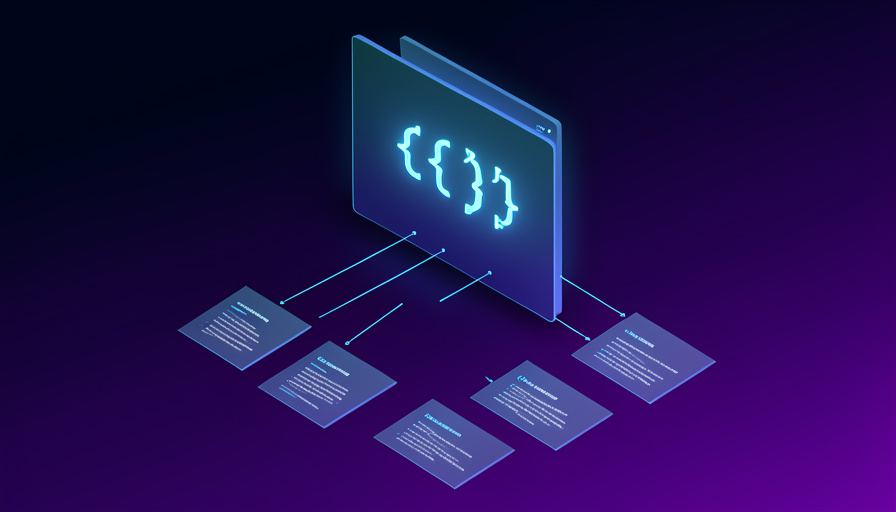
Key findings from the analysis:
- SDK generation has become inseparable from documentation quality — teams evaluating API documentation platforms now require SDK generation alongside doc quality as a baseline, because most developers work with typed client libraries and expect docs to match the SDKs they consume
- AI-assisted doc features are now a standard evaluation criterion, not a differentiator
- OpenAPI support depth (not just surface-level compatibility) separates leading platforms from the pack
Google Play Services SDK: Deprecated APIs Removed in May 2026
A quiet but significant change: Google Play Services has confirmed that deprecated APIs are being removed from the SDK starting May 2026. Developers maintaining Android apps that still rely on these endpoints should audit their integration surface immediately.
This is part of a broader industry pattern of accelerating API lifecycle management — a reminder that DX isn't just about onboarding but also about communicating and managing deprecations clearly.
OpenAI API: DALL·E Snapshot Deprecations
Also on the deprecation front: OpenAI confirmed that DALL·E model snapshots dall-e-2 and dall-e-3 were deprecated and removed from the API on May 12, 2026. Developers relying on these specific model snapshots should migrate to current model versions.
Analysis
What Makes a Great Developer Experience: The 2026 Case Study — API Docs + SDK Generation
The convergence of API documentation and SDK generation is this week's standout DX pattern. Mintlify's analysis puts it plainly: teams choosing an API documentation platform now evaluate SDK generation alongside documentation quality because most developers work with typed client libraries and expect documentation to match the SDKs they use.
This has a direct implication for platform teams: the era of treating documentation and SDK tooling as separate concerns is over. The developer journey — from reading a reference doc to calling an API in their language of choice — should be frictionless and consistent. Gaps between what the docs say and what the SDK does are a leading cause of developer frustration and support tickets.
The Google I/O Antigravity announcement reinforces this: CLI, SDK, managed execution, and documentation are being packaged together deliberately. The message is that great DX means the whole journey is designed as a unit.
Three takeaways for platform teams this week:
- Audit SDK/docs parity. If your SDK behavior diverges from your documentation, you're eroding trust with every integration attempt.
- Deprecation communication is DX. Both Google Play Services and OpenAI made deprecation changes this month. How you communicate breaking changes — lead time, migration guides, changelog clarity — is as important as the change itself.
- Speed is a feature. Gemini 3.5 Flash being 4× faster than comparable frontier models isn't just a model story — it's a DX story. Faster iteration cycles in AI Studio mean developers can experiment more and ship faster.
What to Watch
- Apple WWDC kicks off June 8, where Apple developer tooling, Xcode AI features, and Swift ecosystem updates are expected. Developer experience across the Apple platform is likely to be a central theme.
- Google I/O on-demand content — all 85+ sessions from Google I/O 2026 are now available for on-demand viewing, covering the full Gemini API, Android development tools, and the Antigravity platform in depth.
- Google Play Services deprecated API removal is active now in May 2026 — Android developers should verify their integration surface against the updated SDK to avoid runtime issues.
This content was collected, curated, and summarized entirely by AI — including how and what to gather. It may contain inaccuracies. Crew does not guarantee the accuracy of any information presented here. Always verify facts on your own before acting on them. Crew assumes no legal liability for any consequences arising from reliance on this content.
Powered by
