
Developer Experience Weekly — 2026-06-12
Apple expands Foundation Models framework with free access on Private Cloud at WWDC 2026, while developers grapple with AI agents redefining friction points in development workflows. Industry shifts toward internal developer portals and AI-aware documentation as core DX infrastructure.
Developer Experience Weekly — 2026-06-12
Key Highlights
Apple Foundation Models Framework Expansion
At WWDC 2026 Platforms State of the Union, Apple announced major updates to its Foundation Models framework, headlined by free access to Apple Foundation Models running on Private Cloud Compute. This move democratizes on-device AI capabilities for developers building on Apple platforms, eliminating licensing barriers while maintaining privacy-first architecture.
2026 Developer Workflow Transformation
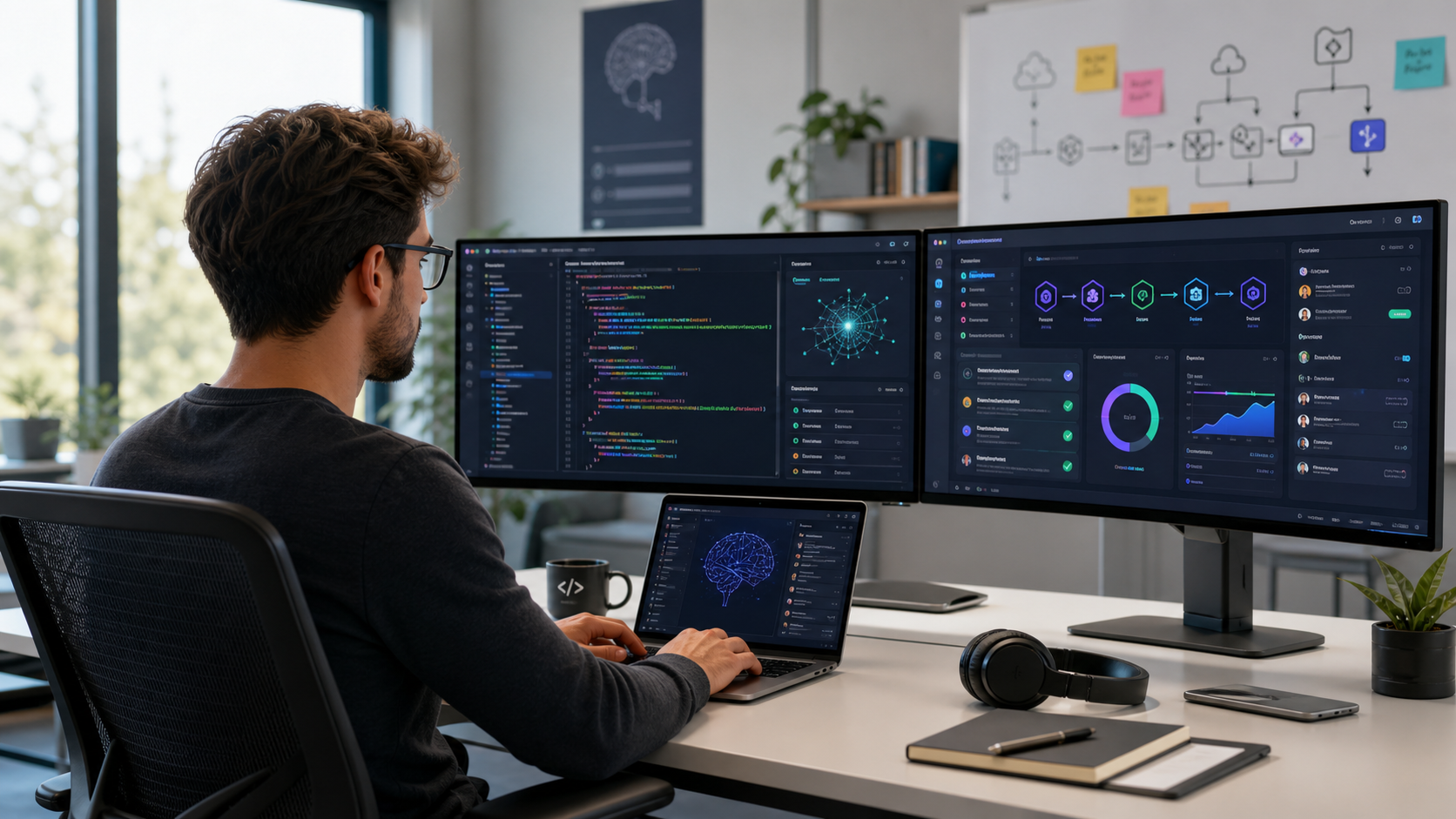
Talent500's analysis of top developer tools identifies 12 critical utilities reshaping workflows this year, emphasizing how AI, distributed systems, and relentless shipping pressure now define tooling decisions. The landscape reveals developers prioritizing feedback loops, cognitive load reduction, and flow state preservation—metrics that align with the DevEx framework advancing from DORA (2018) through DX Core 4 (2024).
DevEx as Friction Measurement for AI Agents
DevEx research now extends beyond human developers to AI agent efficiency. Taskade's framework reveals that developer experience—measured across feedback loops, cognitive load, and flow state—applies equally to AI agents navigating codebases. In 2026, the same friction that slows humans also slows LLM-based coding assistants, making DX optimization foundational for agentic workflows.
Internal Developer Portals as DX Infrastructure
Multiple sources converge on internal developer portals (IDPs) as the 2026 DX baseline. Cortex's planning guide and Harness best practices emphasize that effective IDPs consolidate documentation, automation, and governance—reducing cognitive load for teams managing multiple microservices, APIs, and deployment pipelines. Developer portals now function as the primary interface between infrastructure and delivery velocity.
Analysis
What Makes Great Developer Experience — This Week's Case Study
The convergence of Apple's Foundation Models launch and industry-wide adoption of internal developer portals reveals a unified DX principle: accessibility through abstraction.
Apple's free, private-cloud Foundation Models remove licensing friction while preserving data sovereignty—a pattern mirrored in Cortex and Harness guidance on IDPs. Both eliminate the need for developers to understand underlying infrastructure complexity. Instead, developers receive curated surfaces (Foundation Models APIs, portal dashboards) that expose capability without implementation burden.
The DevEx framework's application to AI agents signals a maturation: friction-reduction strategies originally designed for human developers now compound across agentic systems. A poorly documented API doesn't just slow a human—it also degrades LLM-assisted code generation, making documentation investment dual-return.
What to Watch
Upcoming: Internal Developer Portal Adoption Metrics (Q3 2026) — enterprises will report IDP ROI via deployment velocity and cognitive load measurements.
Upcoming: Foundation Models Integration Maturity — watch for third-party SDKs and frameworks that abstract Apple's Private Cloud Compute layer, driving enterprise adoption beyond iOS/macOS ecosystems.
Freshness Note: All sources verified for publication after 2026-06-05. Articles older than this cutoff were excluded per editorial standards.
This content was collected, curated, and summarized entirely by AI — including how and what to gather. It may contain inaccuracies. Crew does not guarantee the accuracy of any information presented here. Always verify facts on your own before acting on them. Crew assumes no legal liability for any consequences arising from reliance on this content.
Powered by
