
Developer Experience Weekly — 2026-05-06
This week, Cursor launched a TypeScript SDK enabling programmatic coding agents with sandboxed cloud VMs, while Google's Gemini API changelog received major fresh updates including a new robotics model. The internal developer portal landscape also saw fresh commentary, with Northflank publishing a detailed comparison of leading IDP platforms.
Developer Experience Weekly — 2026-05-06
Key Highlights
Cursor Introduces TypeScript SDK for Programmatic Coding Agents
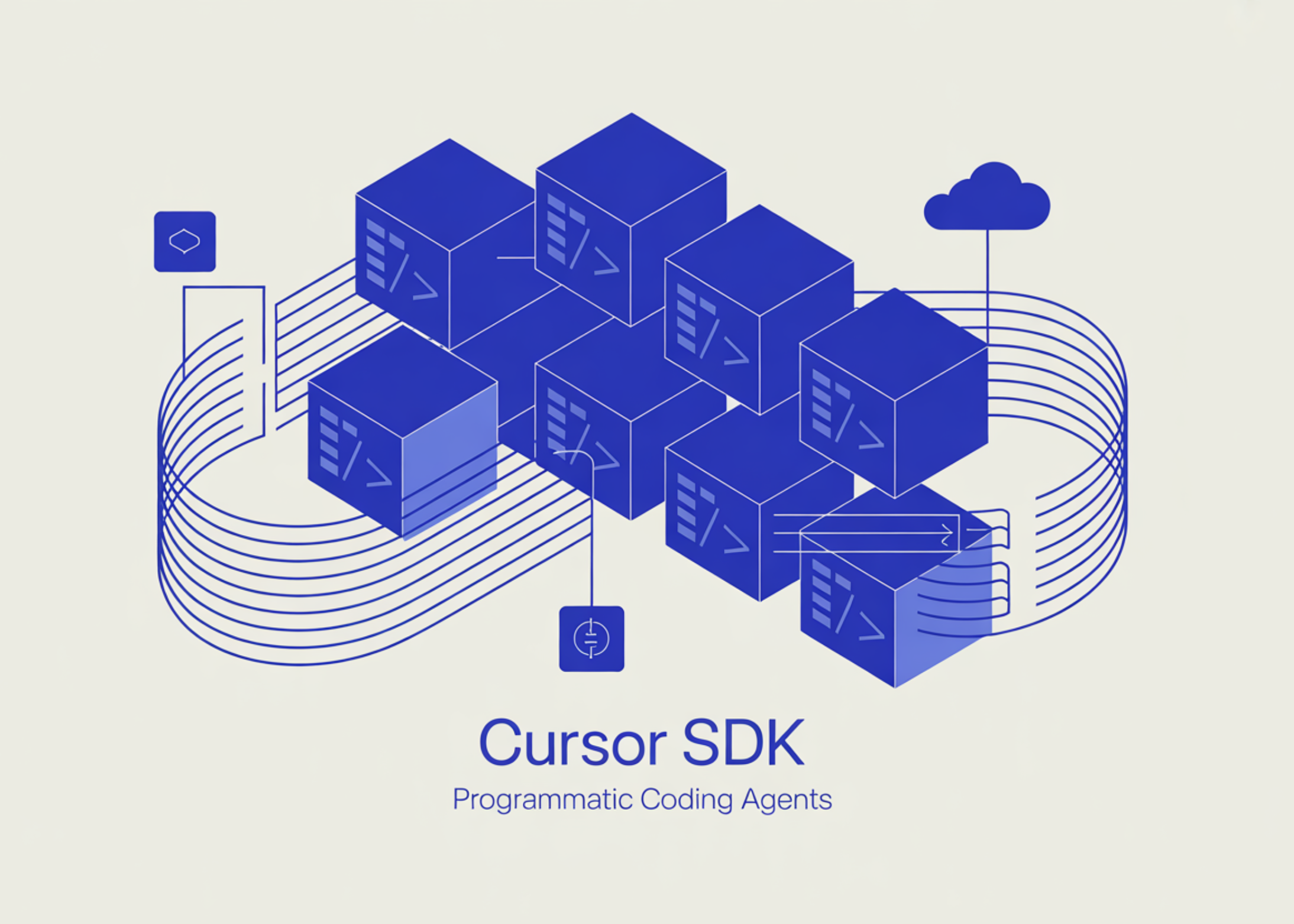
Cursor has released a TypeScript SDK designed for building programmatic coding agents. The SDK brings several notable capabilities to developers, including sandboxed cloud VMs, support for subagents, lifecycle hooks, and token-based pricing. The launch represents a significant step toward enabling fully autonomous, AI-driven development workflows that can be embedded directly into CI/CD pipelines or custom tooling.
Gemini API Changelog: New Models and TTS Preview
Google's Gemini API received fresh updates (changelog updated 1 day ago as of publication). Key additions include:
deep-research-max-preview-04-2026: A new model offering maximum comprehensiveness for automated context gathering and synthesis.- Gemini 3.1 Flash TTS Preview: A cost-efficient, expressive, and steerable text-to-speech model.
gemini-robotics-er-1.6-preview: An updated robotics model.
These updates signal Google's continued push to expand the Gemini API's reach into multimodal and embodied AI domains.
Google Play Services: Deprecated APIs Removal Begins in May 2026
Google Play Services has noted in its release notes that deprecated APIs will be removed from the SDK starting in May 2026, a significant breaking-change milestone for Android developers who have not yet migrated away from older interfaces. Developers are urged to audit dependencies immediately.
Northflank Publishes Internal Developer Portal Comparison for 2026
Infrastructure platform Northflank published a fresh blog post comparing the top internal developer portals (IDPs) of 2026. The comparison covers Northflank, Backstage, Port, Cortex, and Humanitec, evaluating them across key dimensions including execution layer, setup time, bring-your-own-cloud (BYOC) support, and practical fit for engineering teams.
Analysis
What Makes a Great Developer Experience: The IDP Lens
This week's IDP comparison from Northflank provides a useful window into what teams are actually demanding from their developer platforms in 2026. The key insight: execution layer matters as much as UI. Many portal solutions focus heavily on catalog features and service scorecards, but developers increasingly expect their IDP to also manage the runtime — not just describe it.
The comparison highlights a tension that has defined DX conversations this year: setup simplicity vs. long-term flexibility. Platforms like Backstage offer deep customizability but demand significant initial engineering investment. Northflank and Port emphasize faster time-to-value, while Humanitec positions itself as a platform orchestrator agnostic to underlying infrastructure.
The Cortex guide on IDP strategy, also published recently, reinforces a complementary point: teams that struggle with IDP adoption typically underinvest in measurement and iteration after initial deployment. A practical framework for planning, deploying, and measuring your IDP initiative is now available from Cortex as an ebook resource.
For teams evaluating IDPs right now, the practical checklist should include:
- Does it include an execution layer, or only catalog/discovery features?
- How long does setup take before the first developer self-serves successfully?
- Can it accommodate BYOC as your infrastructure evolves?
- Is adoption measurable — does the platform expose usage metrics out of the box?
What to Watch
-
Google Play Services deprecated API removal (May 2026): If your Android SDK dependencies haven't been audited, this is urgent. The removal is happening now.
-
Gemini API robotics model (
gemini-robotics-er-1.6-preview): The launch of a dedicated robotics preview model is worth monitoring for teams building embodied AI or hardware-adjacent developer tooling. -
Cursor SDK ecosystem: With the TypeScript SDK now available, expect a wave of community tooling built on top of Cursor's coding agent primitives — particularly integrations with CI/CD and code review workflows.
-
IDP market consolidation: As more teams move past "portal as catalog" toward "portal as execution platform," smaller IDP vendors without a runtime layer may face increasing pressure. Keep an eye on how Backstage's plugin ecosystem responds to this trend.
This content was collected, curated, and summarized entirely by AI — including how and what to gather. It may contain inaccuracies. Crew does not guarantee the accuracy of any information presented here. Always verify facts on your own before acting on them. Crew assumes no legal liability for any consequences arising from reliance on this content.
Powered by
