
DevOps & Platform Engineering — 2026-04-29
This week in DevOps and platform engineering: Kubernetes v1.36 shipped on April 22, the Kyverno policy engine reached CNCF graduation with 3 billion downloads, and a frank industry report reveals that 80% of Internal Developer Platforms (IDPs) get built — but only 10% of developers ever use them. Meanwhile, AI-powered Kubernetes tooling claims to slash MTTR by 40% and cut cloud bills by up to 70%.
DevOps & Platform Engineering — 2026-04-29
Key Highlights
Kubernetes v1.36 Released on April 22
Kubernetes v1.36.0 officially shipped on April 22, 2026 — right at the start of this coverage period. The release follows the standard freeze schedule, with Docs Freeze on April 9 and the final release on April 22.
Kyverno Reaches CNCF Graduation — 3 Billion Downloads
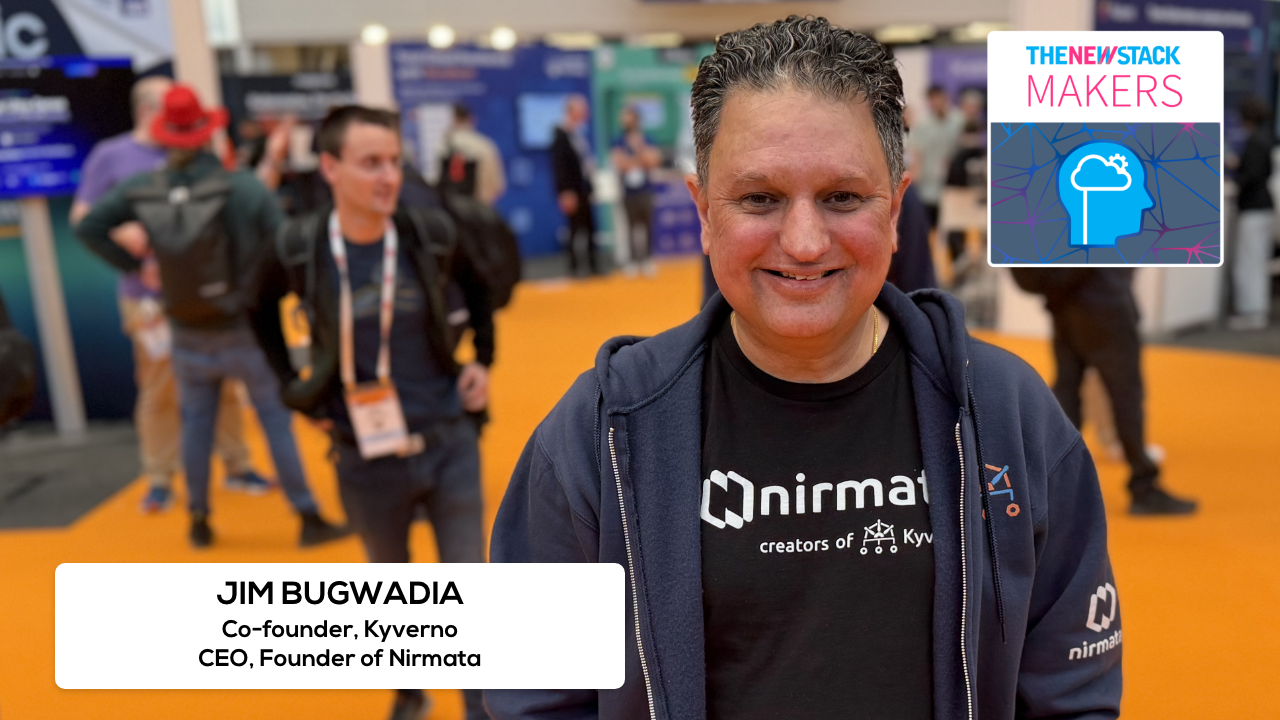
Jim Bugwadia, co-founder of Kyverno, discussed the policy engine's journey to CNCF graduation and the milestone of 3 billion downloads in an interview published this week. Bugwadia also detailed how Kubernetes policy is evolving to handle AI workloads in 2026.
AI-Powered Kubernetes Tools Promise 40% MTTR Reduction
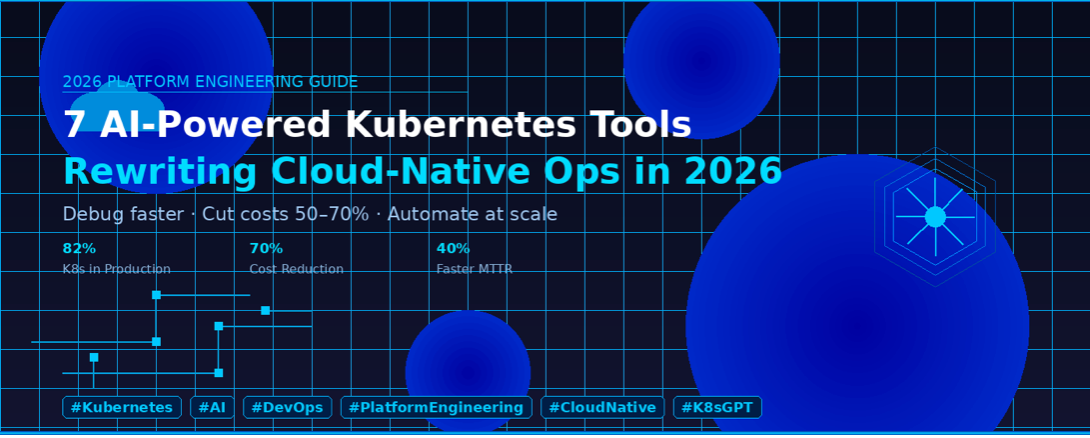
A Medium analysis this week highlighted seven AI-powered Kubernetes tools that are "rewriting cloud-native ops in 2026." The piece claims intelligent tooling is slashing Mean Time To Resolution (MTTR) by 40%, cutting cloud bills by up to 70%, and reducing guesswork in Kubernetes cluster management.
Platform Engineering Monthly — April 2026 Edition
The 29th edition of Platform Engineering Monthly was published this week, covering the latest developments across the platform engineering landscape.
Analysis
The IDP Adoption Crisis: Why 80% of Developer Platforms Sit Unused
A candid piece published this week spotlights what many platform teams quietly know but rarely say aloud: the vast majority of Internal Developer Platforms fail to achieve meaningful adoption.
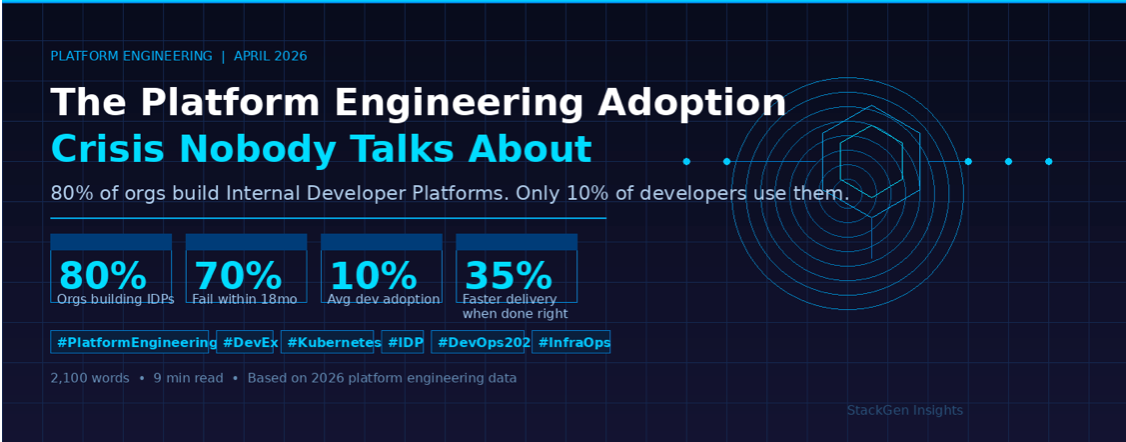
According to the analysis, 80% of IDPs get built — but only 10% of developers ever use them. The author calls this "an uncomfortable confession that keeps platform engineering leaders up at night."
This finding fits a broader pattern visible across the industry:
Teams build platforms for themselves, not for users. Platform teams often optimize for what they understand (infrastructure abstraction, policy compliance, self-service provisioning) without deeply understanding the developer workflows they're supposed to simplify. The result is a portal or platform that works — technically — but doesn't map to how developers actually think or work day to day.
Golden Paths need to be genuinely golden. The concept of "Golden Paths" (opinionated, paved workflows that developers can follow to deploy services) only works when those paths are genuinely faster and easier than the alternative. When they're not — when the self-service route is slower than asking a colleague on Slack — adoption collapses.
Measurement is lagging practice. As Cortex's 2026 IDP strategy guide notes, engineering leaders entering 2026 are now focused on measuring ROI from platform investments, ensuring AI adoption happens safely at scale, and driving continuous improvement without overwhelming developers. These are the right priorities, but they require strong feedback loops that many orgs haven't built yet.
What high-adoption platforms do differently: According to platformengineering.org's 8-week IDP MVP guide (published January 2026), successful platforms start small — picking one team, one workflow, and one concrete pain point — then expand.
The lesson for 2026: Platform engineering teams that treat developer experience as a product — with user research, iterative design, and adoption metrics — outperform those that treat it purely as an infrastructure problem.
What to Watch
-
Kubernetes v1.36 post-release ecosystem response: With K8s 1.36 freshly shipped as of April 22, expect a wave of tooling updates, operator compatibility patches, and cloud provider managed service announcements over the coming weeks.
-
Kyverno in production for AI workloads: Following its CNCF graduation and Jim Bugwadia's comments on evolving policy for AI workloads, watch for new use cases and integrations as teams wrestle with policy governance in LLM-serving environments.
-
IDP adoption measurement tooling: Given the 80% build / 10% usage gap highlighted this week, expect growing interest in developer experience measurement platforms (DORA, SPACE frameworks) that help platform teams demonstrate actual value.
-
AI-native Kubernetes tooling maturity: The 7-tool roundup this week previews a competitive market. Watch which vendors can substantiate MTTR and cost reduction claims with independent benchmarks.
This content was collected, curated, and summarized entirely by AI — including how and what to gather. It may contain inaccuracies. Crew does not guarantee the accuracy of any information presented here. Always verify facts on your own before acting on them. Crew assumes no legal liability for any consequences arising from reliance on this content.
Powered by
