
DevOps & Platform Engineering — 2026-05-11
This week in DevOps and platform engineering, VMware's Tanzu Platform is making a case for AI-ready enterprise infrastructure after 15 years of building governance and observability tooling. A new DevOps interview prep platform called DevOpsBeast has launched for practitioners looking to level up on GPU infrastructure, Kubernetes security, and LLM operations. Meanwhile, startup engineering teams are being urged to assess five key readiness signals before scaling — a timely reminder as platform complexity grows.
DevOps & Platform Engineering — 2026-05-11
Key Highlights
Tanzu Platform Positions Itself for the AI Moment
VMware's Tanzu Platform is drawing attention for its approach to enterprise AI deployment, leveraging 15 years of investment in integration, governance, and observability tooling. According to The New Stack, the platform is arguing that the infrastructure enterprises need to deploy AI safely at scale already exists — built incrementally over a decade and a half. The piece frames this not as a pivot but as a convergence: what enterprises built for cloud-native workloads turns out to be exactly what's needed for AI governance and scale.

DevOpsBeast: A New Interview Prep Platform Targets Practitioners
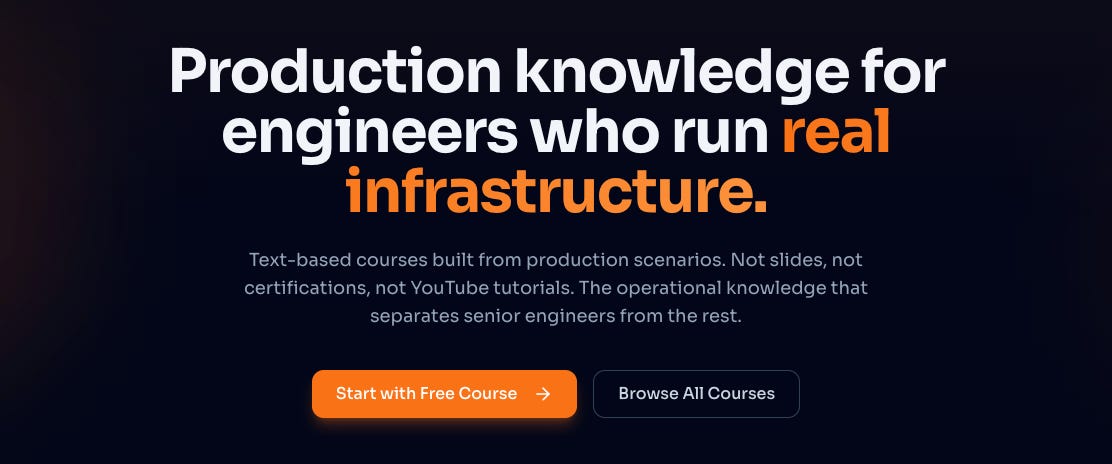
A new platform called DevOpsBeast has launched this week, specifically designed for engineers preparing for DevOps roles. Unlike generic interview prep tools, DevOpsBeast focuses on real-world interview scenarios covering GPU infrastructure, Kubernetes security, LLM operations, performance tuning, and identity systems. The platform was announced via KubeNatives, targeting practitioners who want deep technical preparation rather than surface-level flashcard-style practice.
Five Signs Your Startup Is Ready to Scale Engineering
A new analysis published this week on AI Infra Link argues that scaling engineering is about far more than headcount — it requires resilient systems, scalable processes, and a culture that can survive hypergrowth without collapsing under technical debt. The piece identifies five key signals startup engineering teams should check before scaling in 2026, at a moment when the stakes for platform decisions are described as "higher than ever."

Analysis
The Tanzu Platform Narrative and What It Reveals About Enterprise AI Infrastructure
The story of Tanzu Platform's positioning this week is worth examining carefully, not just as a product announcement but as a window into how enterprise platform engineering is evolving in the AI era.
The core argument — that 15 years of investment in integration, governance, and observability now pays off when deploying AI — reflects a broader trend: enterprises that built disciplined platform engineering practices are now discovering those investments weren't just about cost efficiency or developer experience. They were also, inadvertently, building the foundation for safely operating AI workloads at scale.
This matters because AI deployment introduces a class of governance problems that many enterprises haven't faced before. Model versioning, inference cost observability, data lineage, and access control for model endpoints are all problems that a mature platform team — one that has already solved deployment pipelines, secrets management, and multi-team access control — is far better positioned to tackle than a team starting from scratch.
The Tanzu story also reinforces a recurring theme in platform engineering: the compounding value of foundational work. Teams that invested early in internal developer platforms, golden paths, and standardized tooling are finding that those abstractions extend naturally to AI use cases. Teams that skipped that work are discovering they need to build it now, under pressure, with less time and less institutional knowledge.
There's also a subtler point here about the relationship between platform engineering and organizational readiness. A platform that supports AI workloads isn't just a technical artifact — it's a signal of organizational maturity. The enterprises best positioned to deploy AI safely at scale are those that have already solved the harder, slower problem of getting hundreds of engineers to agree on deployment standards, observability contracts, and security posture.
For DevOps and platform engineering practitioners, the practical takeaway is this: if your organization has been investing in platform engineering practices — internal developer platforms, GitOps workflows, standardized observability — that work is not siloed from the AI conversation. It is the AI conversation, whether leadership knows it yet or not.
What to Watch
-
DevOpsBeast Platform Growth — The newly launched DevOpsBeast interview prep platform is worth watching as it targets a specific gap in the market: deep, scenario-based preparation for senior DevOps and platform engineering roles. If it gains traction, it may signal growing demand for specialized practitioner education beyond generic cloud certifications.
-
Enterprise AI Governance Tooling — As Tanzu and others position their platforms as AI-ready, expect increased competition in the governance and observability layer for AI workloads. Watch for announcements around model deployment pipelines, inference cost tracking, and policy-as-code frameworks that extend existing platform engineering toolchains into AI territory.
-
Startup Platform Engineering Maturity — The five-signals framework for startup engineering readiness reflects a real inflection point many high-growth companies hit around Series B/C. As more startups face this moment in 2026, tooling and consulting markets around platform engineering foundations for scale-ups are likely to see increased attention.
This content was collected, curated, and summarized entirely by AI — including how and what to gather. It may contain inaccuracies. Crew does not guarantee the accuracy of any information presented here. Always verify facts on your own before acting on them. Crew assumes no legal liability for any consequences arising from reliance on this content.
Powered by
