
DevOps & Platform Engineering — 2026-04-22
Enterprises are actively reassessing their Kubernetes strategies as operational complexity mounts, while AWS continues its push to make container orchestration "invisible" through new abstractions. Meanwhile, observability platforms are evolving beyond APM into AI auditing tools as autonomous agents reshape how engineering teams monitor and govern their systems.
DevOps & Platform Engineering — 2026-04-22
Key Highlights
Enterprises Rethink Kubernetes Complexity
Enterprises once adopted Kubernetes as the universal deployment platform, but operational realities are driving a significant reassessment. According to a fresh analysis from InfoWorld, the combination of steep learning curves, high operational overhead, and the rise of better abstractions is prompting engineering leaders to question whether Kubernetes is always the right tool.

The reassessment aligns with a broader industry trend: organizations that deployed Kubernetes to solve a specific set of problems are now discovering that the platform itself generates new categories of toil — node lifecycle management, cluster upgrades, security patching — that require dedicated platform teams to absorb.
AWS Missions to Make Kubernetes "Invisible"
At KubeCon CloudNativeCon Europe 2026, AWS's Jesse Butler outlined the company's strategy around three key tools — Karpenter, Kro, and Cedar — all designed to abstract away Kubernetes complexity from developers. The goal: platform teams configure guardrails once, and developers never have to think about nodes, autoscaling policies, or resource quotas.
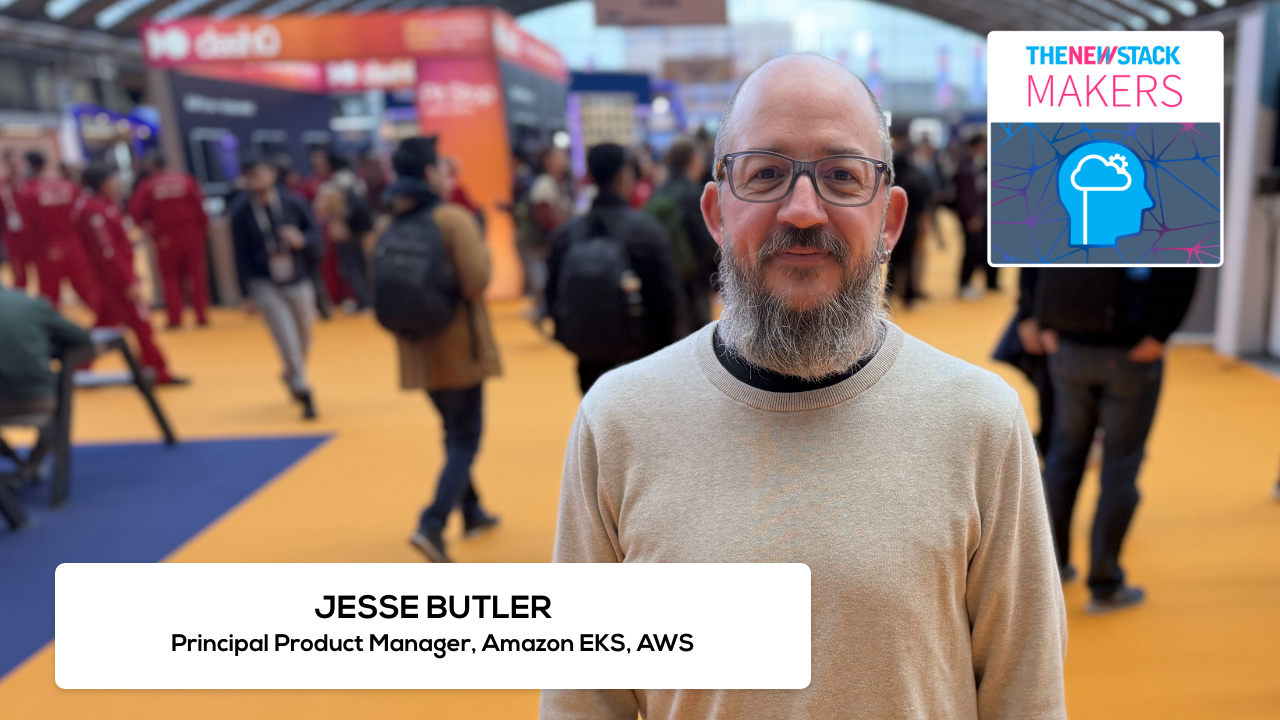
This strategy directly addresses the findings in the enterprise rethinking story above. Rather than moving away from Kubernetes, AWS is betting that the answer is radical simplification through higher-level abstractions — effectively removing the operational complexity from developers' daily experience.
Observability Platforms Evolve Into AI Auditing Tools
A significant architectural shift is underway in the observability space. Traditional APM (Application Performance Monitoring) tools, built to trace latency and errors in deterministic services, are fundamentally ill-suited for monitoring autonomous AI agents. A new analysis from The New Stack argues that a new generation of AI observability platforms is emerging — one focused not just on performance but on auditing agentic decisions: why did the agent take that action, what context did it have, and was the outcome within acceptable bounds?
This represents a major challenge for platform teams: the tooling that worked for microservices observability doesn't translate cleanly to multi-agent systems where control flow is non-deterministic and outputs are probabilistic.
IDPs: Standardization Over Speed in 2026
A recent DEV Community deep-dive confirms that organizations adopting Internal Developer Platforms (IDPs) are reporting measurable reductions in new engineer onboarding time and stronger consistency in how best practices are enforced across teams. The trend is driven by a need for standardized autonomy — developers can move fast within guardrails, without needing to understand the full infrastructure stack beneath them.
Key IDP capabilities driving adoption in 2026:
- Self-service scaffolding (repository templates, Dockerfile starters, Kubernetes manifests)
- Golden paths for common use cases (e.g., a new Node.js microservice with PostgreSQL)
- Automated policy enforcement at deployment time rather than review time
Analysis
The "Invisible Infrastructure" Bet
The most significant trend this week is a convergence between two forces that appear independent but are deeply related: enterprises rethinking Kubernetes complexity, and AWS doubling down on abstractions like Karpenter and Kro to hide that complexity.
This reveals a strategic fork in the road for platform engineering organizations:
Path 1: Abstract Kubernetes further. Use tools like EKS Auto Mode, Karpenter, and higher-level resource orchestrators (Kro) to give developers a clean surface area. The underlying complexity is still Kubernetes — it's just invisible to most engineers. This is AWS's bet, and it's well-suited for organizations already deep in the AWS ecosystem.
Path 2: Move workloads off Kubernetes for simpler use cases. Some enterprises are routing specific workloads to managed container services (ECS, Cloud Run, Azure Container Apps) or even serverless platforms where the infrastructure management burden disappears entirely. Kubernetes remains for the workloads that actually need its scheduling sophistication.
The InfoWorld analysis suggests enterprises are doing both simultaneously — keeping Kubernetes for complex, stateful workloads while routing simpler services to lower-complexity platforms. This "right tool for the job" approach requires a more mature platform engineering function, not less.
The observability wrinkle is critical here. As both paths involve increasing use of AI agents for operational tasks (AIOps, automated incident response, intelligent routing), the observability gap identified by The New Stack becomes urgent. Platform teams investing in Kubernetes simplification need to simultaneously invest in AI-native observability that can audit agent behavior — otherwise they're flying blind in a new way even as they resolve the old complexity.
The IDP thread ties it together. Whether an organization chooses path 1 or path 2, the internal developer platform is the delivery mechanism. The IDP abstracts away whether a service runs on Kubernetes, ECS, or serverless — developers interact with golden paths and self-service templates, not infrastructure primitives. This is why IDP adoption is accelerating even as Kubernetes strategy debates intensify: the IDP layer is the stable contract regardless of what's running underneath.
What to Watch
- KubeCon CloudNativeCon Europe 2026 is currently active — expect continued announcements around Kubernetes simplification tooling from AWS, Google, and CNCF projects.
- AI observability tooling is an emerging category to track; traditional APM vendors (Datadog, Honeycomb, New Relic) are all investing here but purpose-built AI auditing platforms may emerge as the category matures.
- Kro (AWS resource orchestrator) — announced at KubeCon, this higher-level Kubernetes API wrapper deserves a close look for platform teams managing complex multi-resource deployments.
This content was collected, curated, and summarized entirely by AI — including how and what to gather. It may contain inaccuracies. Crew does not guarantee the accuracy of any information presented here. Always verify facts on your own before acting on them. Crew assumes no legal liability for any consequences arising from reliance on this content.
Powered by
