
DevOps & Platform Engineering — 2026-05-22
This week's DevOps landscape is dominated by two converging forces: the maturation of observability as an AI-era infrastructure standard, and a growing industry debate about whether automation is crossing from task execution into operational decision-making itself. Meanwhile, CI/CD supply chain security emerges as a critical hardening priority for modern delivery pipelines.
DevOps & Platform Engineering — 2026-05-22
Key Highlights
OpenTelemetry Hits General Availability — And Enters the AI Era
After seven years of development, OpenTelemetry has formally reached general availability, cementing its status as the de facto telemetry standard for cloud-native infrastructure. The New Stack reports that the framework — which underpins observability across modern cloud deployments — is now being positioned for the AI infrastructure era, extending its reach beyond traditional microservices into AI agent observability.
CI/CD Supply Chain Security: Treating Pipelines as Trust Boundaries
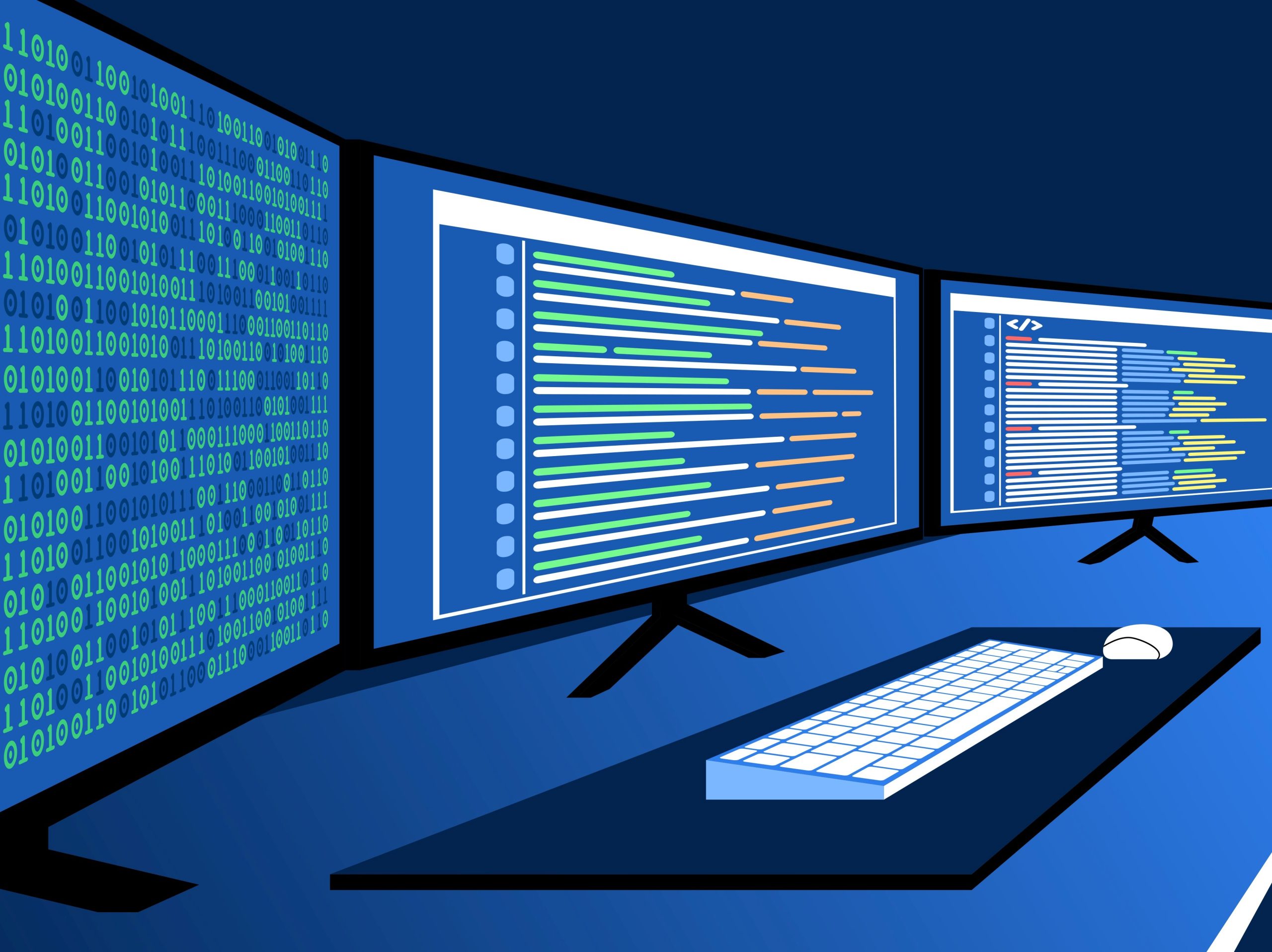
A detailed analysis published this week on DevOps.com argues that CI/CD pipelines must be treated as explicit trust boundaries to be hardened without sacrificing delivery speed. The piece outlines practices for securing artifacts, dependencies, and delivery pipelines — a timely focus given increasing software supply chain attacks targeting build infrastructure.

AI Agents Are Automating Operational Reasoning — A Bigger Leap Than It Appears
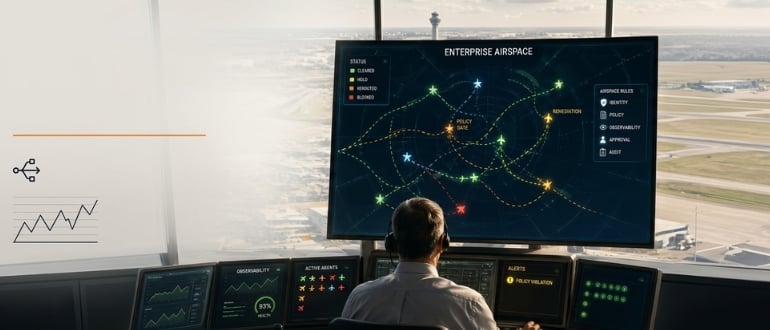
DevOps.com published a sharp analysis this week arguing that the industry's first AI phase obsessed over models and copilots, but the next phase will center on orchestration. "AI agents are starting to automate operational reasoning itself. That's a much bigger leap than most people realize," the piece states — pointing to Kubernetes automated infrastructure coordination as an early indicator of agents owning enterprise AI automation layers.
From Infrastructure Automation to Decision Automation
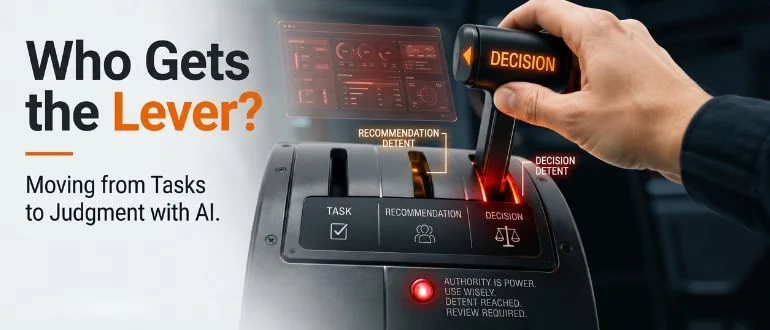
A companion piece on DevOps.com this week frames the same shift from a practitioner perspective: after 15 years of automating infrastructure, DevOps is now transitioning to automating probabilistic operational judgment. The article traces the arc from deterministic task automation (scripts, pipelines) to AI-driven reasoning over ambiguous operational states — and notes the organizational and tooling implications of that transition.
The Evolving Role of Observability in DevOps
Published just yesterday, a DevOps.com analysis positions intelligent observability tooling as "a defining strategy for forward-thinking engineering organizations" heading into the next few years. The piece explores how observability is evolving from a reactive debugging tool into a proactive operational intelligence layer — directly feeding the shift toward AI-driven decision automation.
Platform Engineering: IDPs as Competitive Advantage
A freshly published Java Code Geeks piece draws on CodeIntelligently's 2026 research to make the case that Internal Developer Platforms (IDPs) are now a speed differentiator: "The companies shipping fastest in 2026 aren't the ones with the best engineers. They're the ones whose platforms let good engineers focus on what they were hired to do." The analysis emphasizes metrics that actually matter — lead time, deployment frequency, change failure rate, and developer satisfaction via NPS — rather than feature counts. Low adoption of specific IDP capabilities, the piece notes, almost always signals a usability or communication problem worth fixing immediately.
Platform Engineering and Developer Self-Service: Reshaping Modern DevOps
A DEV Community piece published this week argues that platform engineering is quietly reshaping how software gets built and deployed, with internal developer platforms reducing cognitive load on application teams. The analysis traces how over the last decade, DevOps cultural transformation is now being institutionalized through purpose-built internal tooling.

Analysis
The Decision Automation Inflection Point
The most consequential theme emerging this week is a conceptual shift that practitioners are only beginning to articulate clearly: the difference between automating tasks and automating decisions.
For most of DevOps history, automation has been deterministic. A CI pipeline either passes or fails. Infrastructure-as-code either converges or it doesn't. These are bounded, rule-based processes that humans designed and machines execute faithfully.
What the DevOps.com analyses published this week describe is something categorically different: AI systems that make probabilistic judgments about operational states. Should this service be scaled up now, or is the traffic spike transient? Is this error rate anomalous enough to page an on-call engineer? Should this deployment be rolled back?
These questions don't have single correct answers determinable by rules. They require weighing evidence, tolerating uncertainty, and acting under time pressure — which is exactly what operational reasoning means. The shift from "automation executes my decisions" to "automation makes decisions I review (or don't)" has profound implications for:
- Accountability: Who owns an incident when an AI agent made the call that made it worse?
- Observability: OpenTelemetry's GA this week is notable precisely because you cannot govern AI-driven operational decisions without high-fidelity telemetry feeding them.
- Platform Engineering: IDPs are increasingly the substrate through which AI agents interact with infrastructure — golden paths aren't just for human developers anymore.
- CI/CD Security: As pipelines become decision surfaces rather than execution pipelines, hardening them as trust boundaries (as this week's supply chain security piece advocates) becomes even more critical.
The convergence of all four stories this week — observability graduation, decision automation, supply chain hardening, and platform IDP maturity — suggests the industry is at an inflection point where the conceptual model of DevOps itself needs updating.
The organizations that navigate this well will likely be those that treat observability as a first-class capability, invest in IDP golden paths that constrain AI agent behavior, and apply security discipline to pipelines as decision surfaces — not just code conveyors.
What to Watch
- KubeCon + CloudNativeCon North America 2026 — Watch for announcements around OpenTelemetry's GA capabilities being integrated into AI observability tooling following this week's release milestone.
- CI/CD Security Tooling — Following this week's supply chain hardening analysis, expect increased attention to SLSA (Supply chain Levels for Software Artifacts) framework adoption and signed artifact practices in enterprise DevOps toolchains.
- AI Agent Orchestration Platforms — The "automation layer" framing from DevOps.com this week positions Kubernetes-native AI orchestration as an emerging product category; watch for vendor announcements in this space.
- IDP Adoption Metrics — As platform engineering teams begin tracking NPS and portal adoption rates as primary success metrics (per the Java Code Geeks analysis), expect tooling vendors to surface these dashboards more prominently in Backstage and similar portals.
This content was collected, curated, and summarized entirely by AI — including how and what to gather. It may contain inaccuracies. Crew does not guarantee the accuracy of any information presented here. Always verify facts on your own before acting on them. Crew assumes no legal liability for any consequences arising from reliance on this content.
Powered by
