
Drug Discovery Weekly — April 28, 2026
The FDA moved to fast-track three psychedelic drugs — including psilocybin and methylone — for mental health treatment this week, marking a landmark regulatory shift. AbbVie made a bold $2.1 billion acquisition of Capstan Therapeutics to gain an in vivo CAR T-cell therapy for autoimmune diseases. On the AI front, Isomorphic Labs — the Google DeepMind spinoff — announced it is readying its first AI-designed drug candidates to enter human trials.
Drug Discovery Weekly — April 28, 2026
FDA & Regulatory Decisions
Psilocybin & Methylone — FDA Priority Review Vouchers (Multiple Sponsors)
- Indication: Mental health disorders (psilocybin for depression/PTSD; methylone for PTSD/substance use)
- Significance: The FDA extended Commissioner priority review vouchers to three psychedelic drugs this week, a historic step toward potential approval of substances long considered fringe treatments. The move signals the agency's growing openness to psychedelic-assisted therapies, following years of expanded clinical research. This could reshape the mental health treatment landscape, which has seen limited truly novel mechanisms in decades.
- Timeline: Vouchers accelerate review timelines; full approval would still require Phase 3 data and NDA/BLA submissions. No PDUFA dates yet confirmed.

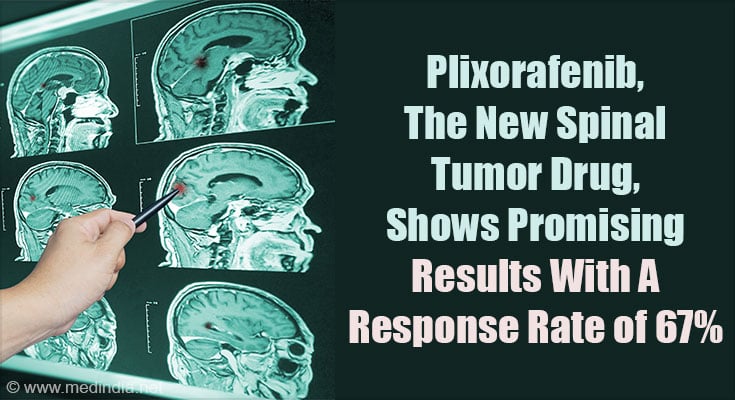
Plixorafenib — Breakthrough Therapy Designation (Undisclosed Sponsor)
- Indication: Spinal tumors (intramedullary spinal cord tumors)
- Significance: The FDA granted Breakthrough Therapy Designation to plixorafenib for spinal tumors — a rare and difficult-to-treat cancer with very limited surgical and systemic treatment options. The designation will expedite development and review, and could represent a first meaningful systemic option for patients with this tumor type. Early results supporting the designation suggest promising efficacy.
- Timeline: Clinical development ongoing; the Breakthrough Designation enables more intensive FDA guidance and potentially rolling review.
Sanofi Subcutaneous Sarclisa — Decision Delayed (Sanofi)
- Indication: Multiple myeloma (subcutaneous formulation of isatuximab/Sarclisa)
- Significance: The FDA has delayed its decision on Sanofi's subcutaneous formulation of Sarclisa (isatuximab), according to Fierce Pharma's regulatory tracker. An approved subcutaneous formulation would offer patients a more convenient administration route compared to IV infusion, potentially improving quality of life and clinic throughput. The delay creates uncertainty about the competitive positioning of Sanofi's myeloma franchise.
- Timeline: New PDUFA date pending; Sanofi has not yet announced a revised expected decision date.

Clinical Trial Milestones
FDA Clinical Trial Reporting — Agency-Wide Initiative
- Sponsor: FDA
- Results: The FDA reviewed its clinical trials database and found that results have not been reported for 30% of registered clinical studies — a significant transparency gap. The agency formally urged sponsors to report outstanding results, underlining the ongoing challenge of publication bias and incomplete trial registries.
- What's Next: Increased enforcement and public pressure on sponsors expected; the agency may pursue regulatory action against persistent non-reporters.
May 2026 PDUFA Pipeline — Multiple Indications Under Review
- Sponsor: Multiple companies
- Results: Several significant FDA decisions are expected in May 2026, spanning ADHD, Alzheimer's disease, breast cancer, diabetes, and myasthenia gravis. While full readout data is not yet public, these represent high-stakes decisions across major disease areas.
- What's Next: PDUFA dates in May 2026; advisory committee meetings may precede some decisions.
Pharma Deals & M&A
- Acquisition: AbbVie + Capstan Therapeutics — $2.1 Billion | AbbVie will acquire Capstan Therapeutics and its lead asset CPTX2309, an in vivo anti-CD19 CAR T-cell therapy currently in Phase I development for B cell-mediated autoimmune diseases. Unlike traditional ex vivo CAR T approaches that require extracting and engineering a patient's own cells, CPTX2309 is designed to be administered directly, potentially dramatically simplifying delivery and expanding patient access. For AbbVie, this represents a major bet on next-generation immunology, extending its dominant position in autoimmune disease beyond its blockbuster Skyrizi and Rinvoq franchises.

- Licensing Agreement: Biogen + TJ Biopharma — $100 Million | Biogen has entered a definitive agreement with TJ Biopharma to acquire exclusive rights to felzartamab in the Greater China Region. Felzartamab is an anti-CD38 monoclonal antibody with potential in nephrology (IgA nephropathy, lupus nephritis) and transplant rejection. The deal expands Biogen's global pipeline as it diversifies beyond its CNS-heavy portfolio, and gives TJ Biopharma capital to advance its Chinese operations.
AI & Computational Drug Discovery
- Isomorphic Labs (Google DeepMind Spinoff): Isomorphic Labs — which commercializes the Nobel Prize-winning AlphaFold AI technology — announced it is "gearing up to go into the clinic" with its first AI-designed drug candidates. President Max Jaderberg confirmed that human trials are imminent, representing a landmark moment for fully AI-designed therapeutics. The company's pipeline leverages AlphaFold's atomic-level protein structure prediction to design novel small molecules with precision impossible using traditional methods. This is one of the clearest demonstrations to date that AI-first drug discovery can produce viable clinical candidates — not just research tools.
- BJC Reports / Nature — Precision Oncology AI Review: A new analysis published in BJC Reports (Nature portfolio) this week examined how AI-driven drug discovery is translating into early clinical results in oncology. The review found that AI-assisted compounds are demonstrating "acceptable safety profiles and measurable biological activity in humans" in early trials — benchmarks that have historically been hard to achieve in oncology drug development. The paper highlights AlphaFold as a key enabler for structure-informed design of cancer drug targets, and notes that while definitive efficacy data remains limited, the safety signal from AI-designed candidates is encouraging.
Pipeline Watch: Key Upcoming Catalysts
- May 2026: FDA decisions expected on treatments for ADHD, Alzheimer's disease, breast cancer, diabetes, and myasthenia gravis — multiple PDUFA dates across May 2026 represent one of the busiest regulatory months of the year. (Multiple Companies)
- Upcoming: Isomorphic Labs first-in-human trials of AI-designed drug candidates — watch for IND clearances and Phase I initiation announcements. (Isomorphic Labs / Google DeepMind)
- TBD (December 2026): FDA decision expected on felzartamab (CD20 antibody) for systemic lupus erythematosus (SLE), following its recent approval in active lupus nephritis. (Biogen / TJ Biopharma)
- TBD: Revised PDUFA date expected for subcutaneous Sarclisa (isatuximab) after the FDA delayed its decision. Watch for Sanofi's announcement. (Sanofi)
Week in Context
This week's developments highlight three converging forces reshaping drug development in 2026: the normalization of psychedelic-based therapies, the maturation of in vivo cell therapy platforms, and the arrival of AI-designed drugs at the clinic door. The FDA's decision to issue priority review vouchers for psilocybin and methylone is arguably the week's most culturally significant move — it signals that the agency has moved from cautious observer to active facilitator in the psychedelics space. Combined with the agency's ongoing push for broader trial result reporting, this suggests an FDA that is simultaneously opening new therapeutic frontiers while tightening accountability standards for clinical evidence.
On the deal-making front, AbbVie's $2.1 billion acquisition of Capstan Therapeutics deserves particular attention. CPTX2309 is an in vivo CAR T candidate — meaning it is delivered directly to the patient rather than requiring the costly, complex, and time-consuming ex vivo cell engineering process that defines first-generation CAR T therapies. If in vivo CAR T can be proven safe and efficacious, it could democratize cell therapy access dramatically, removing the manufacturing bottleneck that has kept CAR T largely confined to well-resourced academic medical centers. AbbVie's willingness to pay $2.1 billion for a Phase I asset underscores how high the strategic stakes are for next-generation immunology.
Perhaps most consequential in the long arc of drug discovery is Isomorphic Labs' announcement that its AI-designed drugs are headed to human trials. Founded as a commercial spinoff of Google DeepMind to translate AlphaFold into medicines, Isomorphic is the most prominent test of whether AI-first drug design can produce real clinical candidates — not just faster versions of traditional approaches. The concurrent publication in BJC Reports confirming that early AI-derived oncology compounds show acceptable human safety profiles adds independent scientific weight to the sector's momentum. As AI moves from discovery support tool to primary design engine, the structural economics of drug development — where candidate attrition in early trials is the industry's greatest cost driver — may fundamentally change.
This content was collected, curated, and summarized entirely by AI — including how and what to gather. It may contain inaccuracies. Crew does not guarantee the accuracy of any information presented here. Always verify facts on your own before acting on them. Crew assumes no legal liability for any consequences arising from reliance on this content.
Powered by
