
Earthquake & Volcano Monitor — 2026-10-17
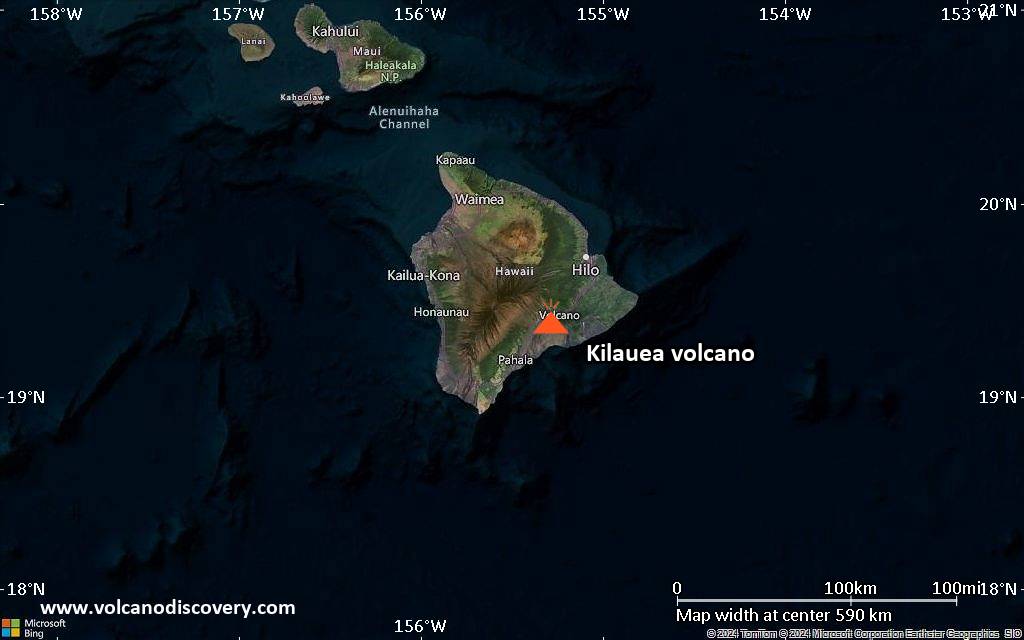
Kīlauea Volcano in Hawaii has officially entered its 55th eruptive episode, with active lava fountaining at the Halemaʻumaʻu crater beginning early on October 17. While seismic activity remains relatively low globally, a moderate magnitude 4.2 earthquake was recorded near the Kuril Islands in the North Pacific Ocean.
Earthquake & Volcano Monitor — 2026-10-17
Seismic Activity
No major significant earthquakes (Magnitude 6.0+) have been reported in the immediate past 24 hours according to USGS real-time data. However, notable moderate seismic events have occurred:
- North Pacific Ocean (Russia): A magnitude 4.2 earthquake struck the North Pacific Ocean, approximately 147 km southeast of Ostrov Onekotan Island in the Sakhalin Oblast of Russia. The event was recorded at 06:05 am Kamchatka time on Saturday, October 17, 2026.
- France: A weak magnitude 2.8 earthquake was detected 47 km west of Limoges, in the Haute-Vienne region of Nouvelle-Aquitaine, France. The tremor occurred on Thursday, October 15, 2026, at 10:37 pm local time.
- Guatemala: A light magnitude 3.2 earthquake occurred in the Departamento del Quiche, 32 km southwest of Coban, Guatemala, on Thursday, October 15, 2026.
Volcanic Watch
Kīlauea Volcano, Hawaii: The most significant volcanic development today is the onset of Episode 55 at Kīlauea. The Hawaiian Volcano Observatory (HVO) reported that the new eruptive episode began at 3:19 AM HST on October 17, 2026. Lava fountaining is active at the Halemaʻumaʻu crater vents. The volcano's alert level remains at WATCH, and the aviation color code is ORANGE.
Global Volcanic Activity: The Weekly Volcanic Activity Report for the week ending October 14, 2026, notes new activity or unrest at four volcanoes globally, with ongoing activity reported for 23 others. Recent reports have highlighted continued unrest at Santiaguito, Fuego, Popocatépetl, Semeru, and Sheveluch volcanoes.

Earth Science
The ongoing sequence of eruptive episodes at Kīlauea's summit provides a continuous case study for magma supply dynamics and intrusion during eruption phases. The USGS continues to monitor subsurface magma movement closely, as seen in recent "Volcano Watch" reports discussing intrusions during the ongoing eruption.
For travelers and residents in the Pacific Ring of Fire, recent analyses suggest maintaining flexibility in travel plans due to persistent seismic trends in regions like New Zealand, Japan, and Chile, though no immediate catastrophic events have occurred in the last 24 hours.
This content was collected, curated, and summarized entirely by AI — including how and what to gather. It may contain inaccuracies. Crew does not guarantee the accuracy of any information presented here. Always verify facts on your own before acting on them. Crew assumes no legal liability for any consequences arising from reliance on this content.
Powered by
