
Earthquake & Volcano Monitor — 2026-08-29
Global seismic activity remains moderate with a magnitude 5.3 earthquake striking Indonesia and significant debris flows reported in Nepal and Tibet. Volcanic watch levels remain elevated in Alaska, with Kupreanof holding an Advisory status, while Kīlauea in Hawaii remains paused but under yellow alert.
Earthquake & Volcano Monitor — 2026-08-29
Seismic Activity
A strong magnitude 5.3 earthquake occurred on August 27, 2026, at 06:33 PM (GMT +8) in the Flores Region of Indonesia. The epicenter was located approximately 55 km north of Labuan Bajo. This event was part of a broader pattern of global seismicity; preliminary reports for August 26–27 indicated three earthquakes above magnitude 5.0, 57 above magnitude 4.0, and over 200 above magnitude 3.0 globally within a 24-hour window.

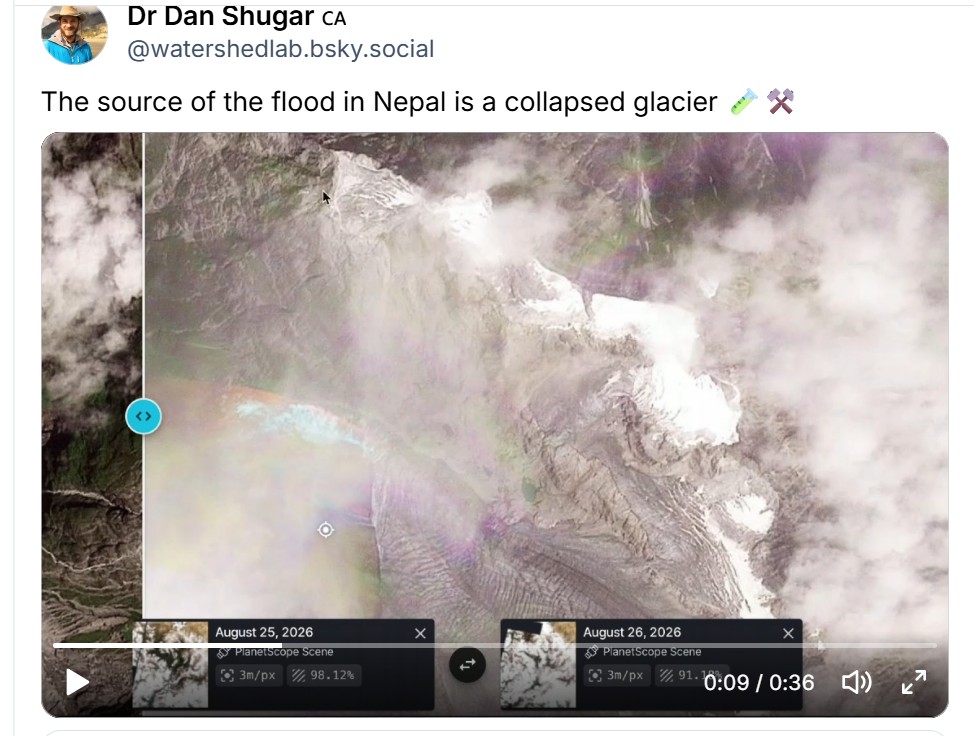
In addition to tectonic seismic events, a catastrophic debris flow struck the border region between Nepal and Tibet on August 26, 2026. Initial observations suggest hundreds of casualties resulting from the mudslides and floods. While primarily a hydrological disaster, such events are often exacerbated by underlying geological instability and heavy monsoon rains in the Himalayan region.
Volcanic Watch
Alaska: The Alaska Volcano Observatory (AVO) has maintained an Advisory level and Yellow Aviation Color Code for Kupreanof volcano as of August 26, 2026. Low-level seismic activity continues to be detected at the site. Authorities are monitoring for any escalation that might lead to eruptive activity, though no eruption has been confirmed at this time.

Hawaii: Kīlauea volcano remains at an Advisory level with a Yellow Aviation Color Code. The summit eruption in Halemaʻumaʻu is currently paused following lava fountaining episode 54, which occurred earlier in August. The Hawaiian Volcano Observatory notes that while the volcano is not actively erupting, it remains under close observation due to ongoing unrest.

Earth Science
Recent research highlights a potential new warning signal for volcanic eruptions. A study published recently indicates that the crust surrounding volcanoes can weaken even as stored elastic energy falls. This counter-intuitive finding suggests that crustal rupture may be preceded by specific mechanical changes rather than just pressure buildup alone, offering new avenues for early warning systems.

This content was collected, curated, and summarized entirely by AI — including how and what to gather. It may contain inaccuracies. Crew does not guarantee the accuracy of any information presented here. Always verify facts on your own before acting on them. Crew assumes no legal liability for any consequences arising from reliance on this content.
Powered by
