
Earthquake & Volcano Monitor — 2026-10-25
A strong M6.5 deep earthquake struck the Bonin Islands region of Japan, while a new M5.7 quake north of Sicily triggered a tsunami alert. Meanwhile, scientists revealed that the Kikai caldera supervolcano in Japan is refilling with fresh magma, and Mayon Volcano in the Philippines reported a new ash plume.
Earthquake & Volcano Monitor — 2026-10-25
Seismic Activity
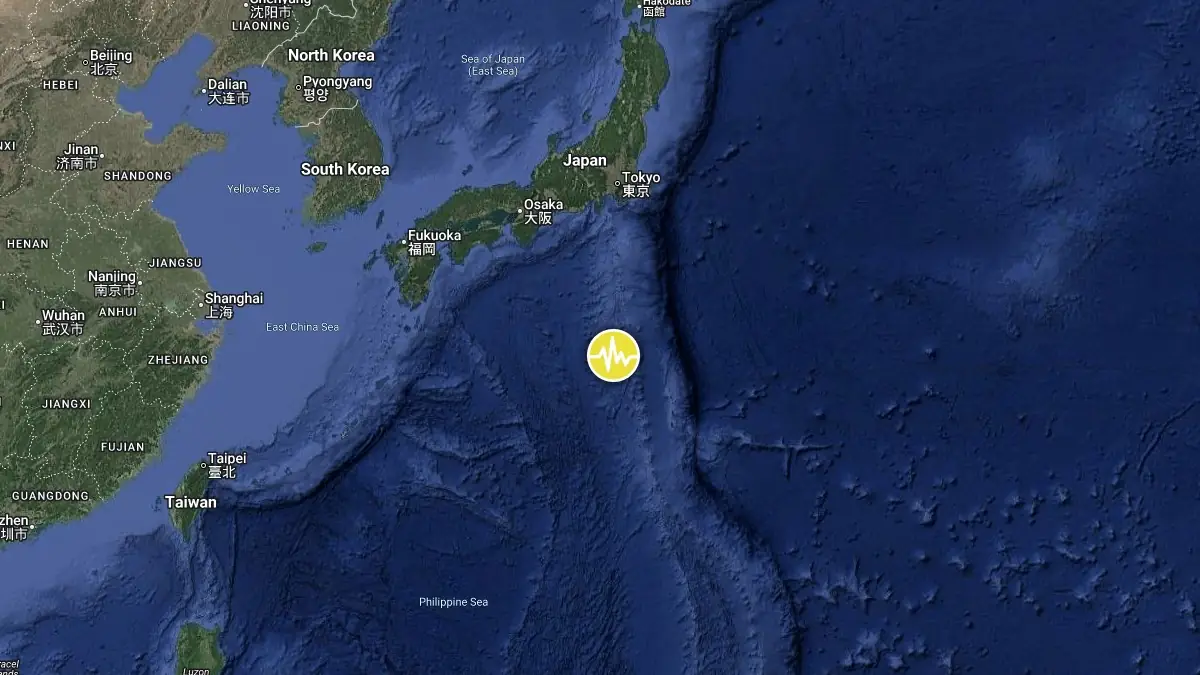
A strong and deep magnitude 6.5 earthquake hit the Bonin Islands region of Japan early on October 25, 2026, at 02:09 UTC. The seismic event was registered by the USGS and occurred in a remote oceanic region.
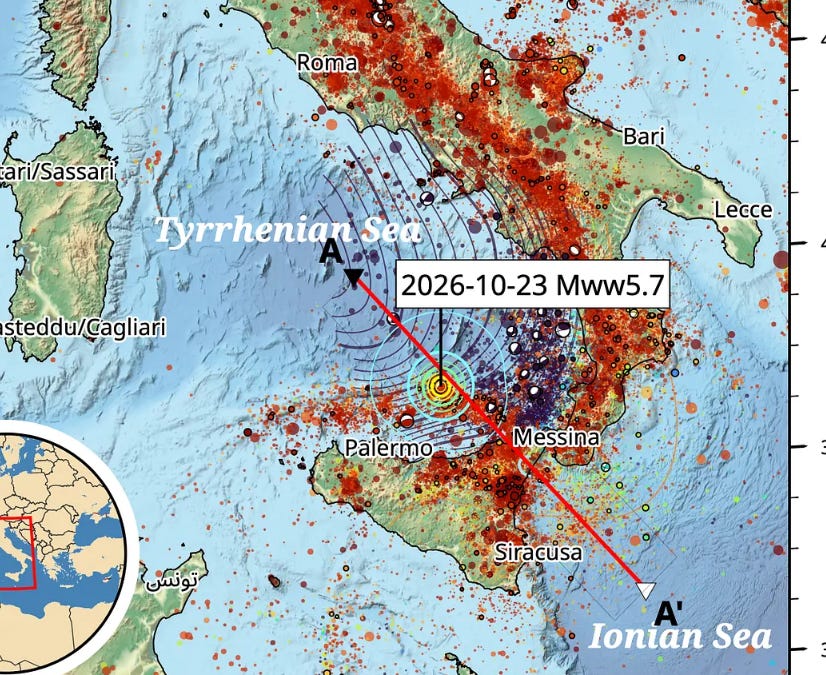
In another significant seismic event, a magnitude 5.7 earthquake occurred north of Sicily on October 23, 2026. The quake was felt widely across the region, with numerous reports submitted to the European-Mediterranean Seismological Centre (EMSC), and it triggered a tsunami alert.
Volcanic Watch
Mayon Volcano in the Philippines has shown renewed activity, with a Volcanic Ash Advisory Center (VAAC) reporting an ash plume as of October 25, 2026, at 09:30 UTC. This marks a significant update to the volcano's current status.

In Hawaii, the Halemaʻumaʻu eruption of Kīlauea remains paused following the end of episode 55 fountaining on October 17. As of October 23, the USGS Hawaiian Volcano Observatory (HVO) maintained an ADVISORY alert level and a YELLOW aviation color code, noting that summit reinflation continues.
Earth Science
New research published on October 23, 2026, reveals that one of Earth’s most powerful supervolcanoes, the Kikai caldera in Japan, is refilling with fresh magma. Scientists utilized underwater seismic surveys to detect a massive magma reservoir that has accumulated over the last 7,300 years since the caldera's last major eruption.

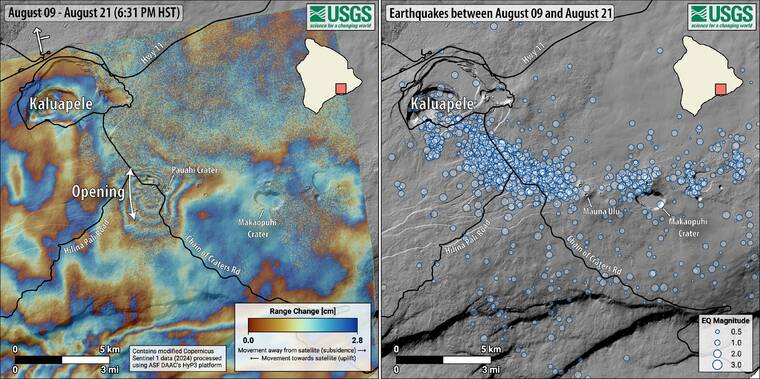
Additionally, a new analysis of recent Kīlauea eruptions and intrusions was published on October 25, 2026. The study examines the caldera intrusion that occurred from September 30 to October 1, amidst the ongoing episodic lava fountaining at the Kīlauea summit, offering insights into how magma moves below the surface during active eruptions.
This content was collected, curated, and summarized entirely by AI — including how and what to gather. It may contain inaccuracies. Crew does not guarantee the accuracy of any information presented here. Always verify facts on your own before acting on them. Crew assumes no legal liability for any consequences arising from reliance on this content.
Powered by
