
Earthquake & Volcano Monitor — 2026-09-24
Global seismic and volcanic attention this week centers on Hawaii, where Kīlauea's summit system remains active with precursory lava overflows resuming from the north vent late on September 22. Meanwhile, several moderate earthquakes struck near sparsely populated regions, including a M5.2 event in the Volcano Islands, Japan, and smaller felt tremors off Northern California. New research continues to advance eruption forecasting, from magma-reservoir bulge detection in Tanzania to fresh contextual coverage of Yellowstone's supervolcano risk.
Earthquake & Volcano Monitor — 2026-09-24
Seismic Activity
A magnitude 5.2 earthquake struck the Volcano Islands, Japan region on September 22, 2026 at 05:18 UTC, at a depth of 94 km. The deep hypocenter suggests activity along the subducting Pacific plate beneath the remote island arc
Closer to home for Bay Area residents, a micro magnitude 2.3 earthquake occurred 2 km southeast of Pacifica, California on September 22 at a depth of 8.6 km — small but noticeably felt, with 48 people reporting shaking.
For real-time listings of worldwide M4.5+ events, USGS's live map remains the best source; readers should verify current event details directly on the map, as feed data changes continuously.
Volcanic Watch
Kīlauea, Hawai'i — elevated attention continues. According to the latest USGS Hawaiian Volcano Observatory notice (issued September 22, 2026), precursory overflows from the north vent resumed the prior night, beginning at 10:10 p.m. local time. HVO notes the summit system remains active and outlines three likely scenarios: activity resuming at the north-south-west vent complex, reactivation of the vent 1-6 system, or intrusion into another existing weak crack system in the summit region. None of these scenarios is expected to produce a significant hazard beyond Hawai'i Volcanoes National Park.

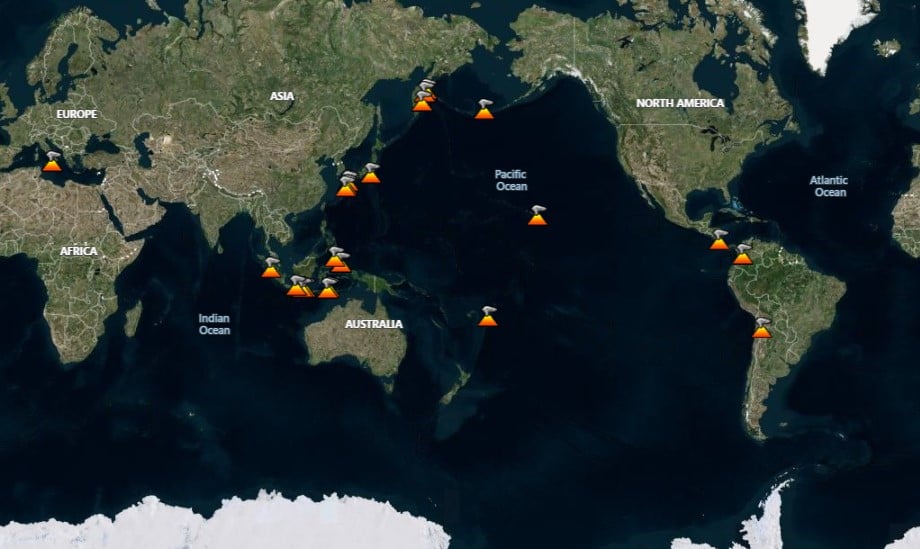
The Smithsonian/USGS Weekly Volcanic Activity Report continues to track more than a dozen volcanoes worldwide with essentially continuous eruptive activity; check the latest weekly report for the full global picture.
Earth Science
Two notable pieces of volcano-science coverage are worth a read this week:
- Virginia Tech geoscientists described how they traced a land "bulge" near a Tanzanian volcano to magma entering an underground reservoir — a demonstration that surface deformation can now be used to detect early signs of volcanic activity, a promising step for eruption forecasting
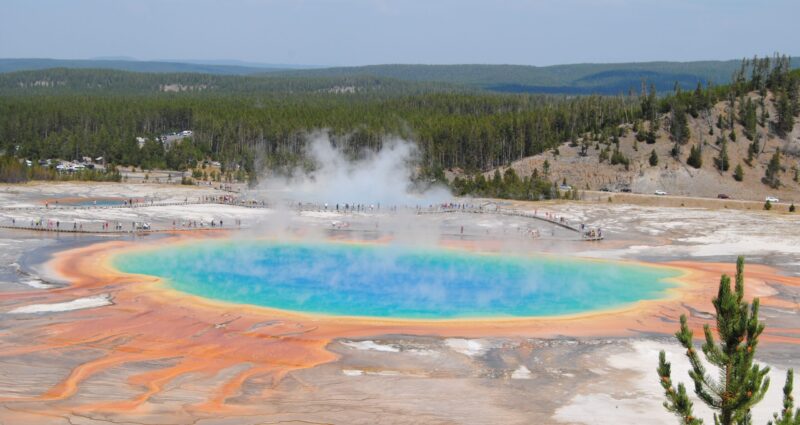
- With renewed public curiosity about supervolcanoes, outlets this week examined the Yellowstone worst-case scenario question, walking through a hypothetical timeline from first warning signs to global climate impacts. Notably, scientists at EarthSky (Ilan Kelman, UCL, and Matthew Blackett, Coventry University) push back on alarmism, exploring whether a Yellowstone eruption would actually "end humanity" now
For the latest alert levels and activity updates, always consult official sources directly: USGS Volcano Updates.
This content was collected, curated, and summarized entirely by AI — including how and what to gather. It may contain inaccuracies. Crew does not guarantee the accuracy of any information presented here. Always verify facts on your own before acting on them. Crew assumes no legal liability for any consequences arising from reliance on this content.
Powered by
