
Earthquake & Volcano Monitor — 2026-05-09
Indonesia's Mount Dukono erupted violently on May 8, sending a 10 km-high ash plume skyward and killing three hikers who had ignored official warnings, while a possible magmatic intrusion was detected beneath Alaska's Kupreanof volcano. Kīlauea's summit eruption remains paused following the abrupt end of Episode 46, with forecasters eyeing a May 12–17 window for Episode 47 to begin.
Earthquake & Volcano Monitor — 2026-05-09
Seismic Activity
Seismic trackers recorded a magnitude 5.9 earthquake along the Southeast Indian Ridge on May 8, 2026 at 07:17 UTC, at a depth of 10 km. Separately, a magnitude 5.9 event was reported near the Andreanof Islands, Aleutian Islands (epicenter at 50.073°N, 178.488°W) at 09:50 UTC on May 8, at a depth of 20 km. Both events occurred in remote oceanic or island-arc settings with no immediate reports of damage.
No major onshore earthquakes producing casualties or significant damage have been confirmed in the past 24 hours based on available reporting. Monitoring agencies continue to track routine seismic background activity worldwide.
Volcanic Watch
🔴 Mount Dukono, Indonesia — Deadly Eruption Claims Three Lives

Mount Dukono on Indonesia's Halmahera Island erupted on May 8, 2026, generating a heavy ash plume reaching approximately 10 km in height. Three hikers were killed and at least ten more went missing after a group of 20 climbers defied official warnings and ventured onto the volcano.
Volcano monitoring blogs also noted the dramatic plume at Dukono as one of the key events of May 8, alongside a potential magmatic intrusion signal beneath Kupreanof volcano in Alaska — a development being closely watched by USGS Alaska Volcano Observatory.
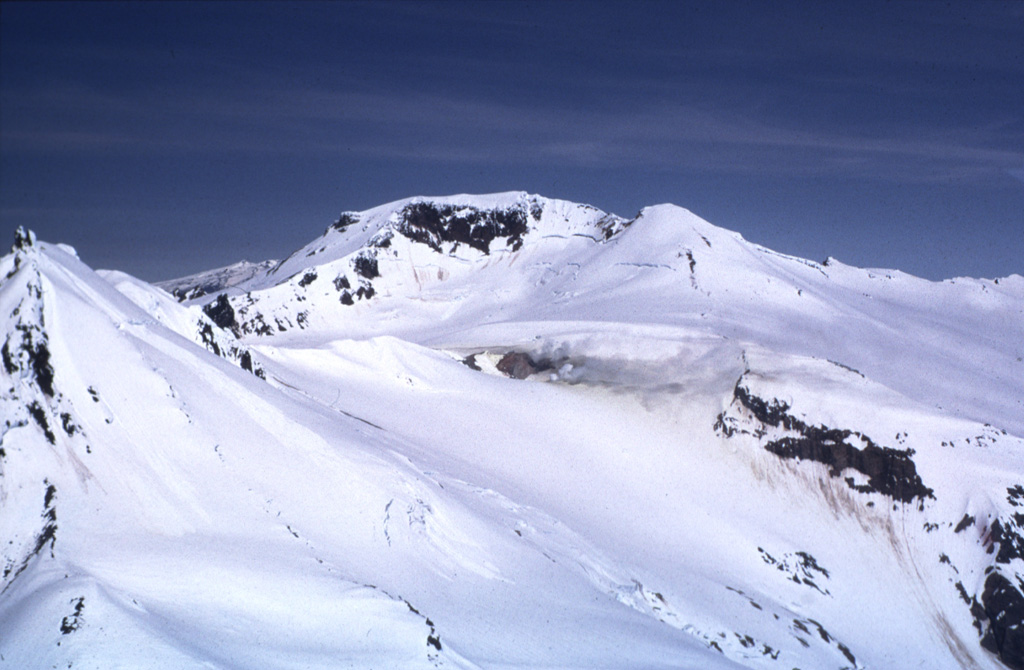

🟡 Kīlauea, Hawai'i — Eruption Paused; Episode 47 Expected May 12–17
The USGS Hawaiian Volcano Observatory (HVO) reports that as of May 8, 2026 (18:50 UTC), Kīlauea's summit eruption is currently paused following the abrupt end of Episode 46 of the ongoing Halemaʻumaʻu eruption series. The alert level has been lowered to YELLOW/ADVISORY and the aviation color code stands at YELLOW. HVO's preliminary forecast window for Episode 47 is May 12–17, 2026.
🟠 Mayon Volcano, Philippines — Ongoing Lava Effusion
Mayon Volcano in the Philippines continues its active eruption phase. The most recent 24-hour summary describes lava effusion with active lava flows on multiple gullies — Basud (3.8 km), Bonga (3.2 km), and Mi-isi (1.3 km) — accompanied by episodic minor Strombolian activity and short-lived lava fountaining.
Sakurajima & Canlaon — Regional Activity
Weekly reports from the VAAC Tokyo also flagged an explosion at Sakurajima (Kyushu, Japan) at 07:15 UTC on May 8, producing a volcanic ash cloud above FL110 extending southeast. In the central Philippines, Canlaon volcano continues to show eruption activity per the latest PHIVOLCS reports.
Earth Science
Safety reminder: The tragedy at Mount Dukono underscores a recurring danger in volcanically active regions — hikers and tourists approaching active craters despite official closure orders. Authorities had issued warnings before the May 8 eruption. Volcanic eruptions can occur with minimal warning and can produce lethal ash flows, pyroclastic surges, and toxic gases.
If you live near or plan to visit a volcanically active area:
- Always heed official alerts and exclusion zones.
- Monitor local volcanic observatory bulletins (USGS, PHIVOLCS, BNPB, etc.) before and during any visit.
- Have an evacuation plan and know your alert level system.
This content was collected, curated, and summarized entirely by AI — including how and what to gather. It may contain inaccuracies. Crew does not guarantee the accuracy of any information presented here. Always verify facts on your own before acting on them. Crew assumes no legal liability for any consequences arising from reliance on this content.
Powered by
