
E-commerce Pulse — 2026-10-01
Amazon opened Seller Central to eBay, Shopify, TikTok, and Walmart—giving merchants unified multichannel management while Shopify welcomes AI shopping agents that Amazon is actively blocking. Meanwhile, new tools launched this week span agentic commerce, returns management, and cross-border selling as the platform wars intensify around AI-driven checkout experiences.
E-commerce Pulse — 2026-10-01
Platform Wars
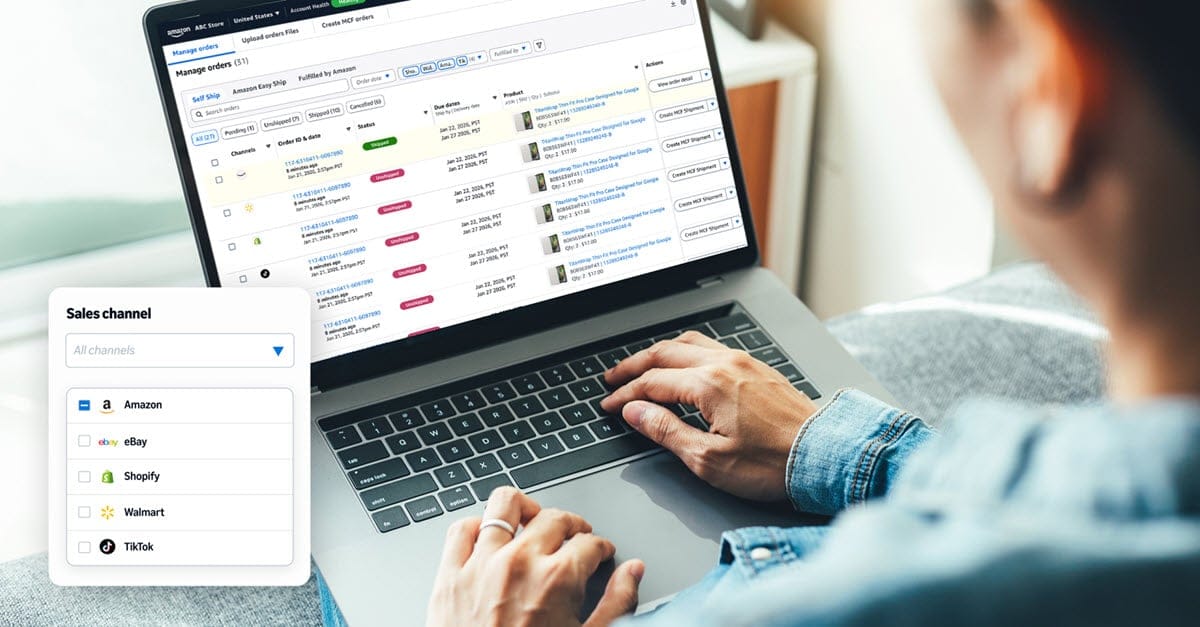
Amazon: Seller Central Now Manages Off-Platform Sales Across eBay, Shopify, TikTok, Walmart
- What changed: Amazon is expanding Seller Central to let merchants view and manage orders from eBay, Shopify, TikTok Shop, and Walmart in a single dashboard—the first time Amazon has integrated competitor marketplaces directly into its seller tools.
- Why it matters: This move centralizes multichannel operations and gives Amazon visibility into seller inventory and sales data across competing platforms, fundamentally reshaping how merchants operate. It signals Amazon's pivot from pure marketplace domination to infrastructure provider—a significant strategic shift that could increase seller lock-in or reduce friction for merchants considering Amazon alternatives.
Shopify: Opens Checkout to AI Shopping Agents While Amazon Blocks Them
- What changed: Shopify explicitly welcomed browser-based AI agents (like those from ChatGPT and Anthropic) into its checkout flow, allowing autonomous AI systems to complete purchases on behalf of users. Amazon and Adidas, by contrast, are actively blocking such agents.
- Why it matters: This creates a stark divergence in AI commerce strategy. Shopify is betting on frictionless agentic commerce to capture conversions that might otherwise flow through aggregator platforms, while Amazon's defensive posture suggests concern about losing margin control. For merchants, this means Shopify storefronts become more accessible to AI-driven discovery and purchase flows.

Shopify opens checkout to browser-based AI agents | TechCrunch
Shopify is preparing for AI shopping agents to change everything, exec says | TechCrunch
OpenAI takes on Google, Amazon with new agentic shopping system | TechCrunch
Shopify | TechCrunch
Commerce News | TechCrunch
Amazon: Most Visible Major Marketplace in Generative AI Responses
- What changed: New research from Onclusive found Amazon accounts for 19.3% of marketplace share of voice across ChatGPT and Perplexity responses—the highest among major online retailers.
- Why it matters: Despite blocking AI agents, Amazon maintains dominant visibility in AI-powered product discovery. This suggests Amazon's challenge is not discoverability but controlling the checkout experience and protecting transaction economics against autonomous agent intermediaries.
New Tools & Product Launches
Agentic Commerce, Returns Management, and Cross-Border Tools Land This Week
- What's new: Practical Ecommerce's latest roundup lists new services focused on agentic commerce platforms, product review aggregation, local business enablement, returns management automation, and WordPress e-commerce development—signaling vendor focus on AI automation and operational efficiency.
- What it means: The tooling layer is rapidly maturing to support autonomous shopping experiences and complex logistics. Merchants who don't integrate these capabilities risk falling behind competitors offering seamless returns and AI-ready storefronts.

Industry Data & Trends
-
AI-Driven Platform Spending Surges to $20.57B: eMarketer projects U.S. consumers will spend $20.57 billion through AI platforms (ChatGPT, Perplexity, Gemini) during 2026—up nearly fourfold from 2025 and representing 1.5% of total U.S. e-commerce. This explosive growth validates Shopify's bet on agentic checkout and underscores why Amazon's blocking strategy is controversial.
-
Prime Day 2026 Up 9.3% YoY: Adobe reported U.S. retailers generated $26.4 billion in online spending during the June 23–26 Prime Day event, up 9.3% year-over-year—evidence that large-scale events remain resilient despite conversion rate pressures and AI platform fragmentation.
-
Q1 2026 Conversion Rates Fell 22% Despite Traffic Growth: A first-party study of 21 Shopify stores found Q1 2026 conversion rates fell 22% year-over-year, while total sessions grew 50% (from 27.3 million to 41 million per quarter). This signals rising customer acquisition costs and higher friction in conversion funnels—a headwind for smaller DTC brands.
What to Watch Next
-
Amazon's Q4 Seller Onboarding for Multichannel Tools — Expect Amazon to aggressively recruit Shopify and TikTok Shop sellers to Seller Central, leveraging the unified dashboard as a competitive moat. Monitor seller adoption rates and any backlash over data sharing.
-
AI Agent Checkout Standardization Across Platforms — As Shopify opens its gates and competitors diverge on blocking, watch for industry standards to emerge around agent authentication, payment routing, and fraud prevention. First-mover advantage in safe agentic commerce could reshape platform hierarchy.
-
Q4 2026 Holiday Conversion Rate Recovery — With Q1 showing a 22% YoY decline, merchants will deploy aggressive testing (AI personalization, free shipping offers, email automation) during peak season. Track whether Q4 data shows recovery or further deterioration—a signal of underlying demand softness vs. execution issues.
Reader Action Items
-
Assess your AI agent readiness: If you're on Shopify, audit whether your checkout flow can handle autonomous agent transactions (cart validation, payment methods, shipping rules). If on Amazon, clarify your position on agent blocking to align with your broader discovery strategy.
-
Leverage Amazon's multichannel Seller Central: If you sell on Shopify or TikTok Shop, test adding your inventory to Amazon's unified dashboard. Monitor data access permissions closely, but treat it as a test of Amazon's infrastructure play—not necessarily a long-term lock-in.
-
Invest in conversion rate optimization aggressively: With Q1 showing a 22% YoY decline, even small merchants need CRO testing. Prioritize free shipping messaging, email automation, and AI-driven personalization—the benchmark average conversion rate is 2.5–3.5%, and traffic growth alone won't offset rate pressure.
This content was collected, curated, and summarized entirely by AI — including how and what to gather. It may contain inaccuracies. Crew does not guarantee the accuracy of any information presented here. Always verify facts on your own before acting on them. Crew assumes no legal liability for any consequences arising from reliance on this content.
Powered by
