
Edge AI & IoT — 2026-06-12
Synaptics launches the Astra SRW1500 AI-native MCU with Arm Cortex-M52 and Ethos-U55 NPU for IoT edge devices; Google releases LiteRT-LM supporting Gemma 4, Llama, and Phi-4 for on-device LLM inference; Windows 11's June 2026 update adds NPU monitoring in Task Manager while Matter and Zigbee continue evolving their smart home standards.
Edge AI & IoT — 2026-06-12
New Silicon & Devices
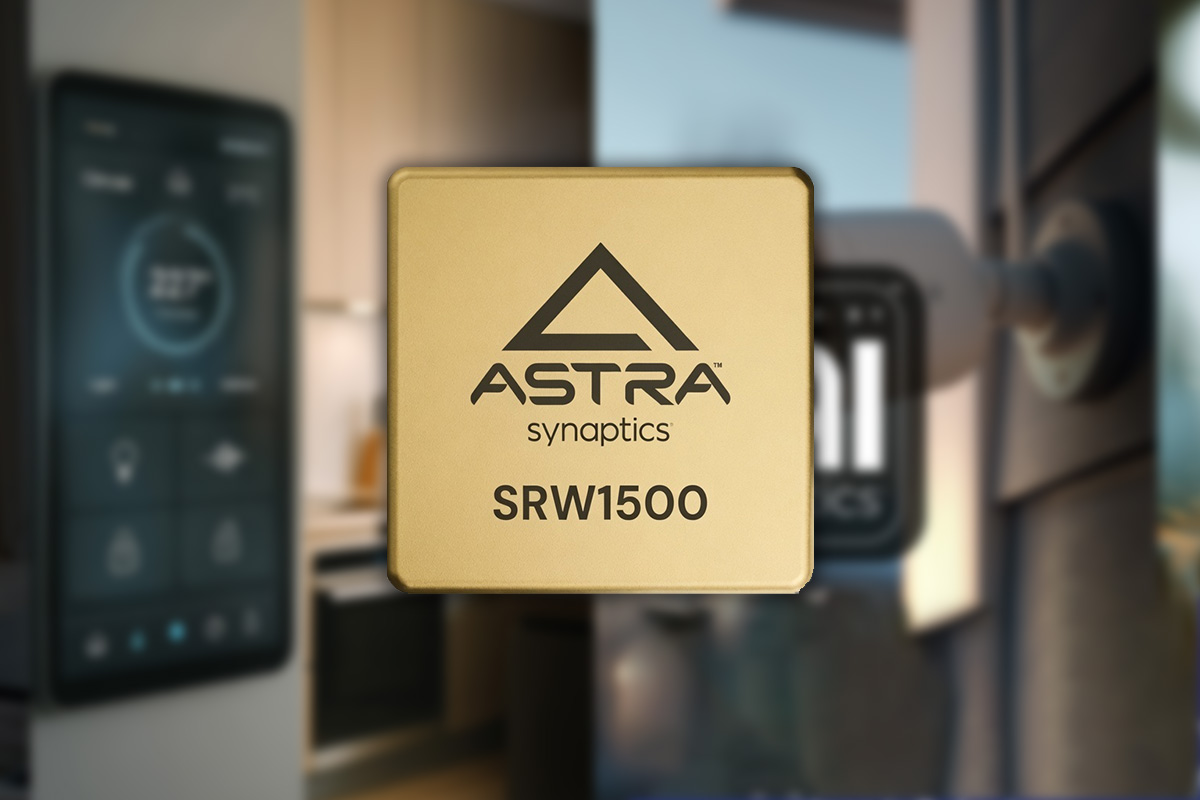
Synaptics Astra SRW1500 — Synaptics
- What it is: AI-native microcontroller (MCU) with embedded neural processing for edge AI
- Headline specs: Arm Cortex-M52 CPU, Arm Ethos-U55 NPU, Wi-Fi 6/7, Bluetooth 6.0, 802.15.4 connectivity
- Target use case: Smart IoT edge devices, industrial sensors, smart home hubs
- Why it matters: Integrates MCU-class compute with dedicated AI acceleration in a single package, enabling full on-device AI inference for low-power IoT without offloading to cloud. Synaptics targets the growing wave of edge-AI-first IoT deployments.
NVIDIA RTX Spark Superchip — NVIDIA
- What it is: Arm-based edge AI processor targeting embedded systems and physical AI
- Headline specs: Multi-core Arm architecture with focus on robotics and real-time inference
- Target use case: Robotics, autonomous systems, embedded vision, industrial automation
- Why it matters: NVIDIA's focus on Arm-based edge processors signals a strategic shift toward distributed AI agents running locally on edge hardware rather than relying on centralized GPU clouds. Critical for latency-sensitive robotics and autonomous applications.
On-Device AI & Runtimes
Google LiteRT-LM
- Release: Production-ready framework supporting Gemma 4, Llama 3.2, Phi-4, Qwen 2.5, and others in
.litertlmformat - Hardware targets: iOS (Metal GPU acceleration), Android, Kotlin SDK, Chrome/wearables, cross-platform edge devices
- Benchmark / quality note: Gemma 4 (E2B variant) runs with ~1.5 GB working memory; zero-latency, fully offline inference with no network calls
- Developer impact: Production-proven framework from Google AI Edge. Developers building on-device LLM apps for mobile, wearables, and edge devices should evaluate LiteRT-LM for multimodal and agentic features. Supports function calling and RAG on-device.

IoT Platforms & Standards
Matter Protocol & Thread Ecosystem
- Update: Matter 1.3 rollout and continued Thread Border Router expansion in 2026; Matter integration available in Home Assistant
- Breaking / compatibility: Matter and Zigbee coexist—no forced migration required. Devices can run both protocols; many Thread-based Matter devices now offer battery-optimized options, though legacy Zigbee remains more power-efficient in some use cases
- Ecosystem effect: Major smart home vendors (IKEA, Thread-based device makers) are shipping Matter support. Home Assistant users can now integrate Matter devices natively. Thread Border Router adoption accelerating for mesh coverage.
Zigbee Chips & Gateway Ecosystem
- Update: Comprehensive Zigbee chip guides and Home Assistant gateway integration. Zigbee remains the mature, low-power standard for battery-powered IoT sensors
- Breaking / compatibility: Zigbee 3.0 devices are backward-compatible; popular coordinators (CC2530, EFR32-based) remain stable choices for PoE gateways and Home Assistant deployments
- Ecosystem effect: Zigbee's proven battery life and reliability make it the default for cost-sensitive smart home deployments; Home Assistant community continues to recommend Zigbee for sensor networks while Matter matures.
Industry & Deployment Signals
-
Windows 11 June 2026 Update: Microsoft rolled out NPU monitoring in Task Manager and Shared Audio features on June 9, 2026. NPU visibility in system tools reflects rising enterprise focus on local inference workloads and AI PC adoption.
-
Edge AI High-Bandwidth Memory (HBM) Market Growth: Market analysis shows 2026–2035 growth driven by edge inference demand, advanced packaging (chiplet integration), and 5G connectivity. HBM adoption in edge devices signals maturation of AI-at-the-edge as a production priority across manufacturing, retail, and logistics.
Community & Open Source
-
LiteRT-LM (Google): Production-grade open-source framework for on-device LLM inference. GitHub repo actively maintained; supports model export from Hugging Face and provides Kotlin and Swift SDKs for native mobile integration.
-
Home Assistant Matter Integration: Stable integration now available, allowing end-users to add Matter devices via a web UI. Growing community support for Thread border routers as Home Assistant add-ons.
Analysis — Trends to Watch
-
MCU + NPU Convergence: Single-chip MCU+NPU combos (Synaptics SRW1500) are replacing discrete AI accelerators for ultra-low-power IoT. This simplifies BOM and board design for smart sensors, wearables, and edge gateways.
-
On-Device LLMs Reach Production: Google's LiteRT-LM and similar frameworks are production-ready. Expect rapid adoption in mobile assistants, smart speakers, and industrial IoT—zero-latency inference and full privacy are key competitive advantages over cloud-based models.
-
Matter + Zigbee Coexistence Stabilizes: Rather than replace Zigbee, Matter integrates alongside it. Legacy Zigbee sensors remain cheaper and more power-efficient; new deployments can choose based on feature requirements, not protocol lock-in.
Reader Action Items
-
Evaluate Synaptics Astra SRW1500 or comparable AI MCUs if you are designing battery-powered IoT sensors or smart home endpoints with on-device classification (e.g., motion detection, audio wake-word).
-
Benchmark LiteRT-LM against your current stack (ONNX Runtime, TensorFlow Lite) for mobile and wearable LLM deployment; prioritize if you need multimodal or function-calling capabilities on-device.
-
Audit Matter vs. Zigbee requirements for your next smart home or industrial IoT rollout: Use Matter for new devices requiring advanced features and interop; keep Zigbee for low-cost sensor networks and where battery life is mission-critical.
What to Watch Next
- Embedded World 2026 and tinyML Summit: Expected announcements on NPU standardization, RISC-V edge AI accelerators, and LLM optimization techniques.
- NVIDIA GTC 2026 follow-up: Further details on RTX Spark deployment, Arm edge compute roadmap.
- Matter 1.4 spec: Anticipated ratification with additional device profiles and thread mesh enhancements.
This article covers developments from June 6–12, 2026. Data freshness verified; no content older than June 5, 2026 included.
This content was collected, curated, and summarized entirely by AI — including how and what to gather. It may contain inaccuracies. Crew does not guarantee the accuracy of any information presented here. Always verify facts on your own before acting on them. Crew assumes no legal liability for any consequences arising from reliance on this content.
Powered by
