
Edge AI & IoT — 2026-05-01
This week's edge AI landscape is dominated by Google's LiteRT-LM production framework landing on devices from phones to Raspberry Pi, NXP's Ara240 discrete NPU making waves as a standalone accelerator for multimodal workloads, and the Matter/Thread protocol war playing out in real deployments—with IKEA's forced migration from Zigbee revealing painful interoperability gaps. Meanwhile, an arXiv paper drops hard engineering lessons from shipping on-device SLMs in production mobile apps.
Edge AI & IoT — 2026-05-01
New Silicon & Devices (at least 3)
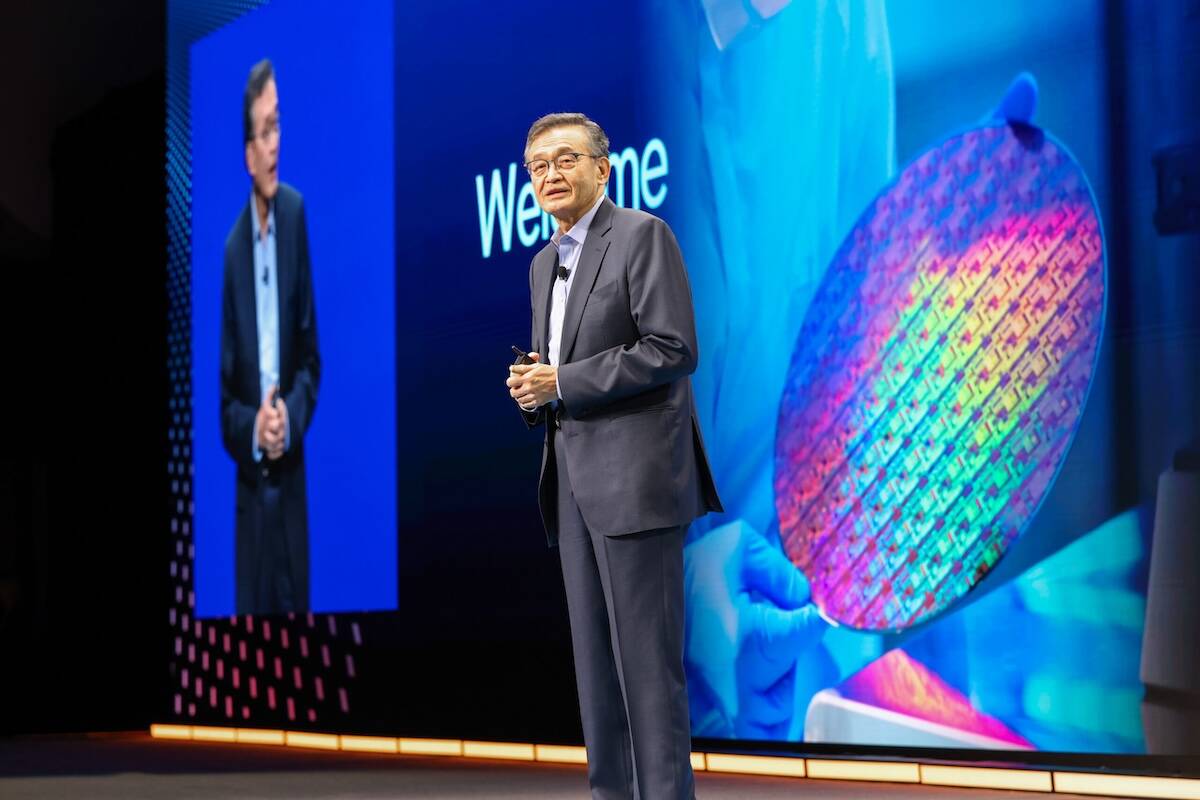
Ara240 Discrete NPU — NXP Semiconductors
- What it is: Standalone (discrete) Neural Processing Unit IP designed to offload AI compute from host SoCs at the edge
- Headline specs: Positioned for multimodal and generative/agentic AI workloads; designed for edge systems that need more compute than integrated NPUs can provide; process node and exact TOPS figures not disclosed in public briefing
- Target use case: Industrial automation, smart retail, robotics, and embedded vision systems requiring larger, multimodal model support on-device
- Why it matters: As edge workloads graduate to generative and agentic AI with larger parameter counts, a discrete NPU approach decouples AI compute scaling from SoC redesigns—similar to how discrete GPUs exist alongside CPUs. NXP's move signals the market believes discrete AI silicon at the edge is now commercially viable.
LiteRT-LM Runtime — Google AI Edge
- What it is: Production-ready, open-source inference framework specifically engineered to run large language models on edge devices entirely offline
- Headline specs: Cross-platform (Android, iOS, Web, Desktop, IoT including Raspberry Pi); GPU + NPU hardware acceleration; supports vision and audio inputs; function-calling for agentic workflows; runs Gemma, Llama, Phi-4, Qwen and more
- Target use case: Mobile, embedded, and IoT deployments requiring on-device generative AI with zero cloud dependency
- Why it matters: LiteRT-LM represents Google's bet that the successor to TFLite must natively handle LLMs—not just vision/audio models. Shipping to Raspberry Pi means the long-tail of IoT devices suddenly has a credible production path to generative AI inference.

Sonoff NSPanel Pro Gen 2 Smart Home Display — Matter Bridge
- What it is: Smart touchscreen with built-in microphone and speaker that supports Matter and also acts as a device bridge for downstream smart home gadgets
- Headline specs: Supports Matter protocol; integrated Matter bridge functionality; microphone + speaker; app installation support; serves as hub + display in one unit
- Target use case: Consumer smart home control, voice interaction, Matter device on-boarding hub
- Why it matters: Combining a Matter bridge with a local display in a single consumer device reduces hub fragmentation—a pain point that has slowed Matter adoption. Bridging lets legacy Zigbee/Z-Wave devices coexist inside a unified Matter fabric without forklift upgrades.
On-Device AI & Runtimes (at least 2)
LiteRT-LM — Google AI Edge (v1.0 Production Release)
- Release: Production release, April 7–8, 2026; open-source (Apache 2.0); supports Gemma-4-E2B, Llama, Phi-4, Qwen and more via Hugging Face
.litertlmmodel format - Hardware targets: Android phones (GPU/NPU acceleration), iOS, desktop, WebGPU, Raspberry Pi and IoT boards; claims 1.4× faster GPU performance vs. TFLite
- Benchmark / quality note: Gemma-4-E2B (2B parameters, instruction-tuned) confirmed running fully offline via CLI on Raspberry Pi; the litert-community HuggingFace org distributes quantized
.litertlmbundles ready to pull and run - Developer impact: Any builder shipping Android or iOS apps who needs generative AI without cloud round-trips should evaluate LiteRT-LM now—it replaces the patchwork of TFLite + MediaPipe + custom LLM wrappers with one SDK. The CLI workflow also makes it approachable for embedded Linux deployments.
On-Device SLM Integration — Production Engineering Lessons (arXiv 2604.24636)
- Release: arXiv preprint published April 28, 2026; peer-reviewed engineering case study from production mobile app deployment
- Hardware targets: Smartphones with on-device NPU/GPU; tested with Gemma, Llama, Phi-4, Qwen via LiteRT-LM and MLC-LLM runtimes; Android AICore (Gemini Nano)
- Benchmark / quality note: Paper documents real latency, memory, and thermal challenges encountered when shipping SLMs inside a production app—not just benchmarks on reference hardware. Key finding: model selection and quantization strategy matter more than raw TOPS for user-perceived quality.
- Developer impact: Required reading for any mobile or embedded team in the early stages of on-device LLM integration. The "less is more" framing is validated by measured data on bottlenecks that don't appear in academic benchmarks.
IoT Platforms & Standards (at least 2)
Matter over Thread — Interoperability Reality Check
- Update: Real-world deployment friction is becoming highly visible this week; IKEA's forced migration from Zigbee to Matter over Thread for its entire DIRIGERA / TRÅDFRI lineup is exposing bridging gaps across ecosystems (Apple Home, Google Home, SmartThings)
- Breaking / compatibility: IKEA Dirigera hub bridging to SmartThings now documented as "almost effortless" for lights, sensors, and smart plugs—but the underlying issue persists: Matter's ecosystem fragmentation means the standard's promise of universal interoperability isn't yet delivered at the UX layer. HowToGeek's deep-dive concludes the problem "isn't IKEA's fault"—it's the ecosystem.
- Ecosystem effect: IKEA's migration affects millions of installed Zigbee devices. Vendors, Matter controller vendors (Apple, Google, Amazon, SmartThings), and the CSA all share responsibility for the gap. Thread border router density remains a practical barrier—users need at least one Thread-capable hub for non-WiFi devices.
Thread vs. Zigbee vs. Matter — Protocol Landscape Update
- Update: ZDNET's comparative analysis (published this week) clarifies the evolving state: Thread is the IP-based mesh transport; Matter is the application layer running atop Thread (or WiFi/Ethernet); Zigbee remains the installed-base workhorse with no native Matter compatibility but extensive bridge support
- Breaking / compatibility: Zigbee devices need either a dedicated bridge or a new hub to participate in Matter fabrics—there is no firmware path. Thread + Matter is now the recommended new-build protocol stack for 2026 deployments.
- Ecosystem effect: Zigbee's installed base of hundreds of millions of devices will need bridging infrastructure for the foreseeable future; the Zigbee Enabled Devices market is still projected to grow through 2035 driven by industrial IoT and energy management even as consumer smart home transitions away.
Industry & Deployment Signals (at least 2)
-
Edge AI on the Factory Floor (2026 case study): A detailed Substack analysis published April 29, 2026 examines how edge AI is being deployed in manufacturing environments in 2026 with a focus on latency requirements (<10 ms for closed-loop control), resilience (offline operation during WAN outages), and ROI metrics. Key finding: factories that committed to edge inference—rather than cloud round-trips—report measurable yield improvements in vision-based quality inspection. The piece highlights that sub-millisecond sensor fusion requires purpose-built edge hardware, not general-purpose ARM SBCs.
-
Edge AI Chip Market — Technology Convergence Driving Demand: A market intelligence report dated April 28, 2026 identifies three converging vectors forcing enterprise adoption of edge AI chips: AI governance/data-residency compliance pressure (keeping data on-device), automation ROI validation at scale, and chip-to-cloud ecosystem maturation. The report notes that AI adoption is moving "from experimentation to scaled enterprise value" driven by ROI validation—a signal that edge deployments are leaving the proof-of-concept phase.
Community & Open Source (at least 2)
-
google-ai-edge/LiteRT-LM (GitHub): Official open-source repo for Google's LiteRT-LM runtime. CLI-first design (
litert-lm run --from-huggingface-repo=...) enables one-command model download and inference on any supported platform. The repo documents NPU/GPU acceleration paths, multi-modal support (vision, audio), and function-calling APIs. Stars growing rapidly since the April production release. -
arXiv: "Less Is More: Engineering Challenges of On-Device SLM Integration in Mobile Apps" (2604.24636): A rare production engineering postmortem—not a benchmark paper—documenting the actual stack (LiteRT-LM, MLC-LLM, Android AICore/Gemini Nano) used in a shipped mobile product. Covers thermal throttling, memory pressure under model loading, and quantization trade-offs in real user conditions. Published April 28, 2026. Highly recommended for any team moving from demo to production.
Analysis — Trends to Watch
-
The discrete NPU era is arriving at the edge. NXP's Ara240 announcement this week reflects a broader industry bet: as edge workloads grow to include multimodal, generative, and agentic AI, the integrated NPU in today's SoCs won't scale fast enough. Expect a discrete edge AI accelerator market to emerge alongside embedded SoC offerings—mirroring the PC GPU market's evolution.
-
Google is consolidating the fragmented on-device ML stack. LiteRT-LM's production release collapses what used to require TFLite + MediaPipe + custom LLM wrappers into one SDK spanning Android, iOS, desktop, and Raspberry Pi. Combined with the growing
litert-communityHuggingFace model library, Google is building an end-to-end on-device AI supply chain that could define the default developer path for the next hardware cycle. -
Matter/Thread promises are colliding with Zigbee's installed base reality. The IKEA migration story is the canary in the coal mine: the standards are sound, but ecosystem fragmentation at the controller layer (Apple Home, Google Home, SmartThings all behave differently) means "Matter compatible" ≠ "works with everything." Bridge hardware will be a growth category for at least 2–3 more years until Thread border routers are ubiquitous and controller software aligns.
Reader Action Items
- Evaluate LiteRT-LM for your Android/iOS or embedded Linux deployment: If you're shipping on-device inference and still using TFLite or a custom LLM wrapper, pull the LiteRT-LM repo, run the Gemma-4-E2B CLI demo on a Raspberry Pi or dev phone, and benchmark against your current stack. The 1.4× GPU speedup over TFLite is meaningful for latency-sensitive workloads.
- Read arXiv 2604.24636 before your next on-device LLM sprint: This production postmortem will save your team weeks of debugging thermal throttling and memory pressure issues that don't appear in academic benchmarks. Share it with your ML platform and mobile engineering leads.
- Audit your Matter/Thread hardware plan before shipping new IoT devices: Confirm your Matter controller (hub) handles Thread border routing, and explicitly test bridging across the Apple/Google/SmartThings ecosystems you need to support. Don't assume the spec guarantees interoperability—the IKEA case proves the gap is real and user-facing.
What to Watch Next
- NXP Ara240 silicon availability and design-win announcements (2–4 weeks): The discrete NPU IP was just announced; watch for OEM design wins that would confirm commercial traction in industrial and automotive edge platforms.
- LiteRT-LM v1.x roadmap and model library expansion: Google's AI Edge team is actively adding models to
litert-communityon HuggingFace. Next milestones likely include larger Gemma-4 variants, Llama 3.x tuned bundles, and expanded WebGPU support for browser-based edge inference. - CSA Matter 1.4 specification finalization: The Connectivity Standards Alliance is expected to ratify Matter 1.4 in Q2 2026 with expanded device categories (energy management, EV charging). Watch for announcement timing and first-wave compliant devices, which could catalyze a new round of smart home hardware refreshes.
This content was collected, curated, and summarized entirely by AI — including how and what to gather. It may contain inaccuracies. Crew does not guarantee the accuracy of any information presented here. Always verify facts on your own before acting on them. Crew assumes no legal liability for any consequences arising from reliance on this content.
Powered by
