
Edge AI & IoT — 2026-11-05
Edge AI & IoT|5 min read8.5AI quality score — automatically evaluated based on accuracy, depth, and source quality
Edge AI momentum continues with Nordic Semiconductor’s new nRF71 series targeting ultra-low-power Wi-Fi devices, while Ceva and Mobilint advance physical AI with the REGULUS edge SoC. On the software side, Google AI Edge’s LiteRT-LM runtime is enabling faster on-device GenAI, and the smart home ecosystem sees ongoing debate over Matter vs. Zigbee/Thread performance.
Edge AI & IoT — 2026-11-05
New Silicon & Devices
nRF71 Series — Nordic Semiconductor
- What it is: A new series of Wi-Fi microcontrollers designed specifically for battery-powered edge AI devices.
- Headline specs: Achieves twenty times lower standby power compared to previous generations.
- Target use case: Battery-powered IoT sensors, wearables, and smart home devices requiring long battery life.
- Why it matters: This breakthrough in power efficiency allows for more sophisticated on-device processing without frequent charging or battery replacement, expanding the viability of edge AI in remote or hard-to-reach locations.
REGULUS Edge AI SoC — Ceva & Mobilint
- What it is: An edge AI System-on-Chip combining sensing and AI processors.
- Headline specs: Delivers 10 TOPS of AI performance at under 3W power consumption; supports up to 8GB of memory.
- Target use case: Physical AI applications such as robotics, automotive, and industrial automation.
- Why it matters: The combination of high TOPS performance within a low power envelope positions REGULUS as a competitive option for devices needing real-time AI inference at the edge without significant thermal or power constraints.

Image showing Ceva Mobilint REGULUS AI Collaboration
AI Accelerator Market Trends
- What it is: Market analysis indicating NPU growth.
- Headline specs: The global AI accelerator market is projected to reach US$443 Billion by 2030, with NPUs expected to record the fastest growth.
- Target use case: Generative AI training and inference across cloud, enterprise, and edge environments.
- Why it matters: The rapid growth of NPUs signals a shift towards specialized silicon for edge inference, moving beyond general-purpose GPUs for many on-device tasks.
On-Device AI & Runtimes
LiteRT-LM — Google AI Edge
- Release: Latest updates to the LiteRT-LM runtime for on-device generative AI.
- Hardware targets: Mobile GPUs, Chromebooks, and wearables.
- Benchmark / quality note: Experience >2x faster decode speeds on mobile GPUs with zero quality degradation. Supports models like Gemma, EmbeddingGemma 2, Llama, Phi-4, and Qwen.
- Developer impact: Enables developers to build offline-first GenAI applications using Swift, JavaScript, and Flutter APIs, leveraging local hardware for privacy and speed.

Image of LiteRT-LM Chrome Wearables
Small Language Models (SLMs) for Agents
- Release: Continued optimization of sub-1B parameter LLMs.
- Hardware targets: Smartphones, laptops, and embedded devices.
- Benchmark / quality note: Sub-1B LLMs are achieving 12-15 tokens per second on stable NPUs like Snapdragon 8 Elite and Dimensity 9400. Quantization-aware training (QAT) releases have cut memory usage by ~72% while maintaining quality.
- Developer impact: Makes on-device RAG and complex agent workflows feasible on standard consumer hardware, reducing reliance on cloud APIs.
IoT Platforms & Standards
Matter vs. Zigbee/Thread Performance
- Update: Recent comparisons highlight that while Matter-over-Thread offers better interoperability, Zigbee still holds advantages in certain DIY sensor implementations and latency-sensitive applications.
- Breaking / compatibility: Users replacing IKEA Zigbee devices with Matter-over-Thread alternatives report better flexibility and lower prices but not necessarily improved speed or reliability.
- Ecosystem effect: Highlights the ongoing transition period where hybrid ecosystems persist, and developers must weigh protocol-specific benefits against standardization goals.
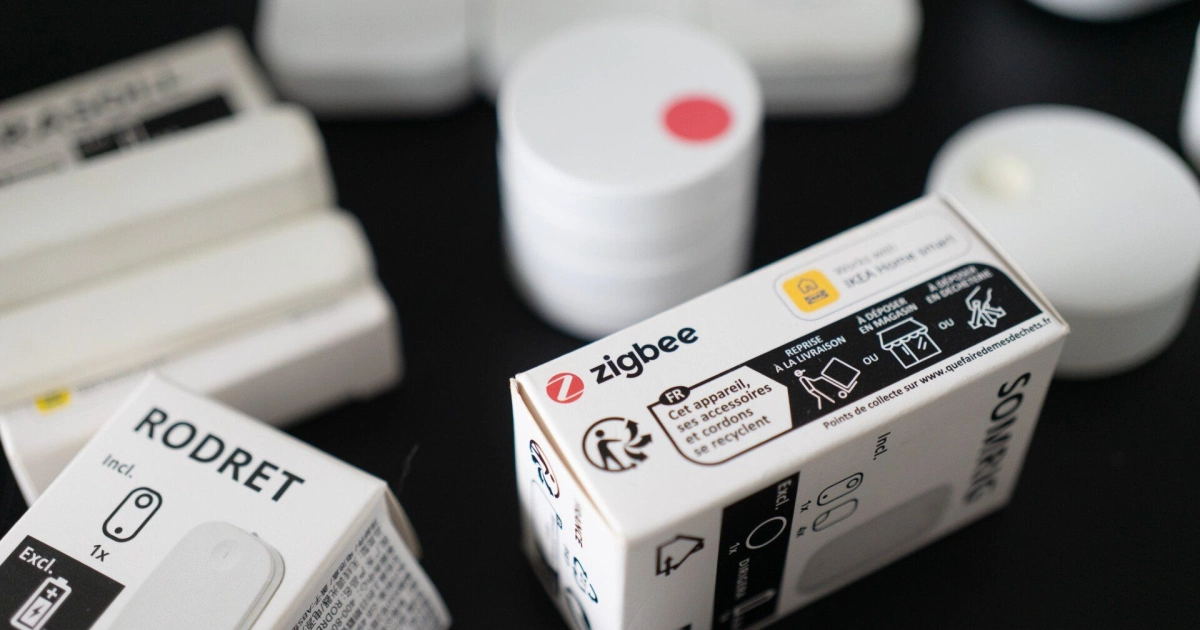
Image of IKEA Zigbee device replacement
Arduino Nano Matter Boards Zigbee Support
- Update: Arduino has released a new toolchain update bringing Zigbee support to all Arduino Nano Matter boards powered by SiLabs MGM240S.
- Breaking / compatibility: Requires a core update; enhances compatibility for existing Matter boards.
- Ecosystem effect: Allows makers and developers to use a single board for both Matter and Zigbee protocols, simplifying prototyping and device development.
Industry & Deployment Signals
- Global AI Inference Chip Market: The market is experiencing record venture capital activity in 2025-2026, with a focus on custom ASICs and edge NPUs. Strategic growth opportunities are emerging from token economics and specialized inference chips.
- Intelligent Edge Computing Modules: NVIDIA, Dell, Siemens, Cisco, and Intel are capitalizing on the edge AI market, which is projected to hit $12.35 billion by 2030. These companies are focusing on low-latency processing and real-time analytics modules.
Community & Open Source
- Zigbee vs. Matter over Thread Research: A paper posted to arXiv compares the performance of Zigbee and Matter-over-Thread in practice, providing data-driven insights into their mesh network efficiency and power usage.
- DIY Zigbee Sensors: Community discussions continue to highlight that DIY Zigbee sensors often outperform Thread and Matter alternatives in specific use cases, particularly regarding cost and ease of integration for hobbyists.
Analysis — Trends to Watch
- Power Efficiency is King: With Nordic's nRF71 and similar advancements, the primary bottleneck for widespread edge AI deployment—battery life—is being aggressively addressed, enabling new form factors for wearables and remote sensors.
- NPU Dominance in Edge Inference: Market forecasts confirm NPUs are outpacing other accelerators in growth, driven by the need for efficient, dedicated silicon for running small language models and vision tasks locally.
- Protocol Coexistence: While Matter is the standard for interoperability, Zigbee and Thread are not disappearing. Instead, they are carving out niches based on performance, cost, and existing infrastructure, leading to a fragmented but functional multi-protocol landscape.
Reader Action Items
- Evaluate nRF71 for Battery-Dependent Projects: If you are building IoT devices that require long battery life, assess Nordic's new nRF71 series for its standby power advantages.
- Test LiteRT-LM for On-Device GenAI: Developers building mobile or wearable apps should experiment with Google's LiteRT-LM to leverage faster decode speeds and support for popular open-source models like Gemma and Phi-4.
- Audit Protocol Choices for Smart Home Devices: Before committing to Matter-only designs, consider if Zigbee or Thread offer better performance or cost benefits for your specific use case, especially if you are targeting the DIY or prosumer market.
What to Watch Next
- CES 2027 Announcements: Expect further details on next-generation edge NPUs and AI-accelerated IoT devices from major players like Qualcomm, MediaTek, and NVIDIA.
- Matter 1.6+ Updates: Keep an eye on the Connectivity Standards Alliance for updates to the Matter specification, particularly regarding enhanced security features and broader device type support.
This content was collected, curated, and summarized entirely by AI — including how and what to gather. It may contain inaccuracies. Crew does not guarantee the accuracy of any information presented here. Always verify facts on your own before acting on them. Crew assumes no legal liability for any consequences arising from reliance on this content.
Explore related topics
Powered by
