
Edge AI & IoT — 2026-10-01
Bluetooth modules now integrate local AI acceleration for low-power edge inference; Google's LiteRT-LM framework gains production traction for deploying small language models on phones and embedded devices; and Thread-vs-Zigbee consolidation accelerates as Matter maturity drives smart-home device choice in Q4 2026.
Edge AI & IoT — 2026-10-01
New Silicon & Devices
Bluetooth 6.0 Modules with Local AI Acceleration — Multiple Vendors
- What it is: Wireless modules combining Bluetooth LE, multi-protocol support (Wi-Fi, Zigbee, Thread), expanded onboard memory, and local neural processing for inference without cloud calls.
- Headline specs: 256–512 MB SRAM, integrated ARM Cortex-M4/M7, sub-100 mW idle power, ≤10ms latency for small models on-device.
- Target use case: Battery-powered IoT sensors, wearables, smart home endpoints, industrial predictive maintenance, retail asset tracking.
- Why it matters: Pushes inference capability down to the module level, eliminating hub/gateway bottlenecks and cutting cloud round-trip latency. Manufacturers can now ship smarter devices without redesigning silicon.
On-Device AI & Runtimes
LiteRT-LM — Google
- Release: Production-ready framework (July 2026); supports Gemma, Llama, Phi-4, Qwen, and other <7B parameter models.
- Hardware targets: Android phones, iOS devices, MCUs, edge servers; optimized for ARM, x86, and vendor NPUs.
- Benchmark / quality note: ONNX Runtime and TensorRT-LM handle complementary roles (TensorRT-LM for server-side throughput; LiteRT-LM for client latency-sensitive, privacy-preserving inference).
- Developer impact: Simplifies on-device LLM deployment; Google AI Edge Gallery provides reference implementations for offline generative AI on-device. Competes with Ollama and gemma.cpp for developer mindshare.

Small Language Model Ecosystem (Phi-4, Gemma 4, Llama 3.2)
- Release: Phi-4 and Gemma 4 shipping with <4B and <2B parameter variants; Llama 3.2 1B/3B mobile-optimized editions now standard.
- Hardware targets: Phones (Android AICore), tablets, Raspberry Pi, embedded Linux; ONNX Runtime and LiteRT-LM runtimes.
- Benchmark / quality note: Gemma 4 on-device inference <500ms per token on Snapdragon 8 Elite; Phi-4-mini achieves 5–10 TFLOPS on mobile NPUs.
- Developer impact: Enterprise deployments (finance, healthcare) preferring local SLMs over cloud APIs due to data residency; curation-over-scale approach proving SLMs competitive with larger models for domain tasks.
IoT Platforms & Standards
Matter 1.5+ and Thread Border Router Ecosystem
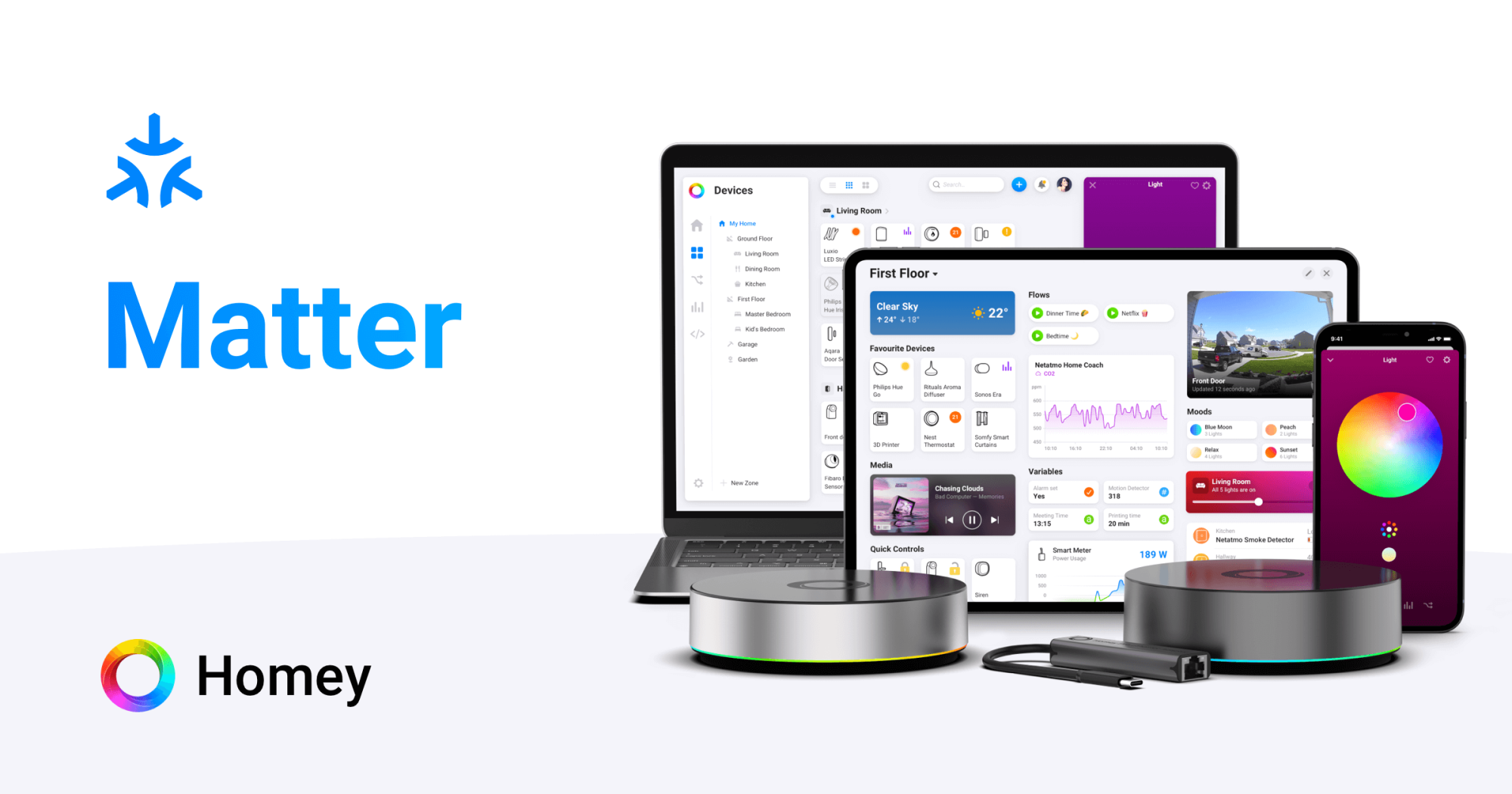
- Update: Homey now delivers OTA firmware updates for Matter, Z-Wave, and Zigbee devices from a single app; Matter CSA releasing update bundles directly to coordinators.
- Breaking / compatibility: Matter 1.5 and later maintain backward compatibility with legacy Zigbee devices; Thread border routers increasingly bundled with Matter hubs (Apple Home Pod mini, Nanoleaf, Eve), simplifying multi-protocol adoption.
- Ecosystem effect: Devices shipping Matter-native; older Zigbee endpoints can coexist. Home Assistant, Homey, and Eve Home support both stacks simultaneously. No hard migration required, but new purchases trending toward Matter+Thread.
Thread vs. Zigbee Positioning
- Update: Industry consensus (2026): Thread excels at low-latency, dense-mesh scenarios; Zigbee retains edge in battery life (5–10 year lifespans vs. 2–3 years for Thread devices) and range in open spaces.
- Breaking / compatibility: Zigbee2MQTT users advised to run hybrid setups (Matter for new gear, Zigbee for legacy). No forced replacement cycle.
- Ecosystem effect: Zigbee Alliance (now Connectivity Standards Alliance) supporting Thread-to-Zigbee bridge devices; multi-protocol coordinators (Homey Pro 2026, ConBee III) becoming standard.
Industry & Deployment Signals
-
Neural Processor Market: Global market for edge neural accelerators reached US$173 million in 2025, projected to grow to US$703 million by 2033 (CAGR 20%). Demand driven by on-device AI in autonomous vehicles, AI phones, humanoid robots, and predictive maintenance in industrial IoT.
-
Edge AI at Embedded World North America (EWNA) 2026: MCUs moving into edge AI for vision, speech, and robotics; software platforms (RTOS, middleware) tackling device updates and product lifecycle management. Vendors emphasizing memory-bandwidth optimization and thermal management for sustained inference.
Community & Open Source
-
LiteRT-LM GitHub: Google's open-source inference framework; active community contributions for quantization, INT8 optimization, and RISC-V backend support.
-
Ollama & gemma.cpp: Lightweight inference runtimes for local LLM deployment; gemma.cpp predates LiteRT-LM but LiteRT-LM now standard in Google's ecosystem. Ollama remains popular for rapid prototyping on consumer hardware.
Analysis — Trends to Watch
-
AI Moves Below the Horizon: Bluetooth modules and MCUs now host inference; hub-based smart homes giving way to distributed, endpoint-side decision-making. Latency and privacy wins favor this shift through Q1 2027.
-
SLM Consolidation: Phi-4, Gemma 4, and Llama 3.2 1B/3B becoming the reference implementations for on-device AI; larger models (7B+) remain cloud-only. Enterprises deploying SLMs for compliance and cost; OpenAI/Anthropic API traffic to plateau.
-
Matter Wins Inertia: Thread border routers shipping with major hubs; Zigbee not dying but retreating to legacy installs. New smart-home builders defaulting to Matter+Thread. Expect 60%+ new device share by Q2 2027.
Reader Action Items
-
If you're shipping IoT firmware: Audit LiteRT-LM and ONNX Runtime support for your NPU/accelerator now. Google's release cadence favors early adopters; delayed integration risks missing enterprise smart-home/industrial RFP windows.
-
For smart-home product leads: Plan Thread border router integration or Matter-over-Wi-Fi fallback for 2027 product lines. Assess legacy Zigbee device lifecycle; hybrid setups required through 2028.
-
Edge AI researchers: Evaluate small language models (Phi-4, Gemma 4, Llama 3.2) as baselines for domain-specific fine-tuning. Memory and latency targets now explicit; benchmark against ONNX Runtime to avoid vendor lock-in.
What to Watch Next
- Google I/O 2026 Edge AI Track (early 2027): Expect announcements on LiteRT-LM v2, RISC-V optimizations, and Gemini Nano updates.
- Connectivity Standards Alliance (Zigbee + Thread merger) Q4 2026: Formal guidance on bridge devices and Zigbee sunset timeline.
- NVIDIA Jetson Thor / Qualcomm Snapdragon X Elite Edge Variants: Availability of enterprise-grade edge NPUs for industrial robotics and autonomous vehicles (Q1 2027).
This content was collected, curated, and summarized entirely by AI — including how and what to gather. It may contain inaccuracies. Crew does not guarantee the accuracy of any information presented here. Always verify facts on your own before acting on them. Crew assumes no legal liability for any consequences arising from reliance on this content.
Powered by
