
Edge AI & IoT — 2026-04-28
Google's LiteRT-LM framework continues to gain momentum as the reference runtime for on-device LLM inference, with Gemma 4's 2.3B E2B variant now running in under 1.5 GB RAM on edge hardware. On the silicon front, Intel publicly staked its CPU roadmap on edge AI inference for agents and robotics, while semiconductor analysts confirm the edge AI chip segment is expanding rapidly alongside data-center AI. In the smart-home standards arena, Samsung SmartThings deepened its IKEA Matter integration this week, underscoring Thread + Matter's growing grip on the consumer IoT stack.
Edge AI & IoT — 2026-04-28
New Silicon & Devices
Intel CPU Road-Map Pivot to AI Inference — Intel
- What it is: Intel's updated CPU strategy explicitly targeting AI inference demand from agents, robotics, and edge devices.
- Headline specs: Not disclosed; Intel CEO Lip-Bu Tan framing inference as the primary CPU demand driver going forward.
- Target use case: Edge robots, agentic systems, industrial IoT nodes, and on-device AI endpoints.
- Why it matters: Intel's pivot signals that general-purpose x86 CPUs are being repositioned as inference accelerators for the growing fleet of edge AI workloads — a significant change in product messaging that will influence SoC road-maps across the industry. The public acknowledgement that Chipzilla "has to build the chips" for this use case is an admission the company is playing catch-up to Arm-based designs.
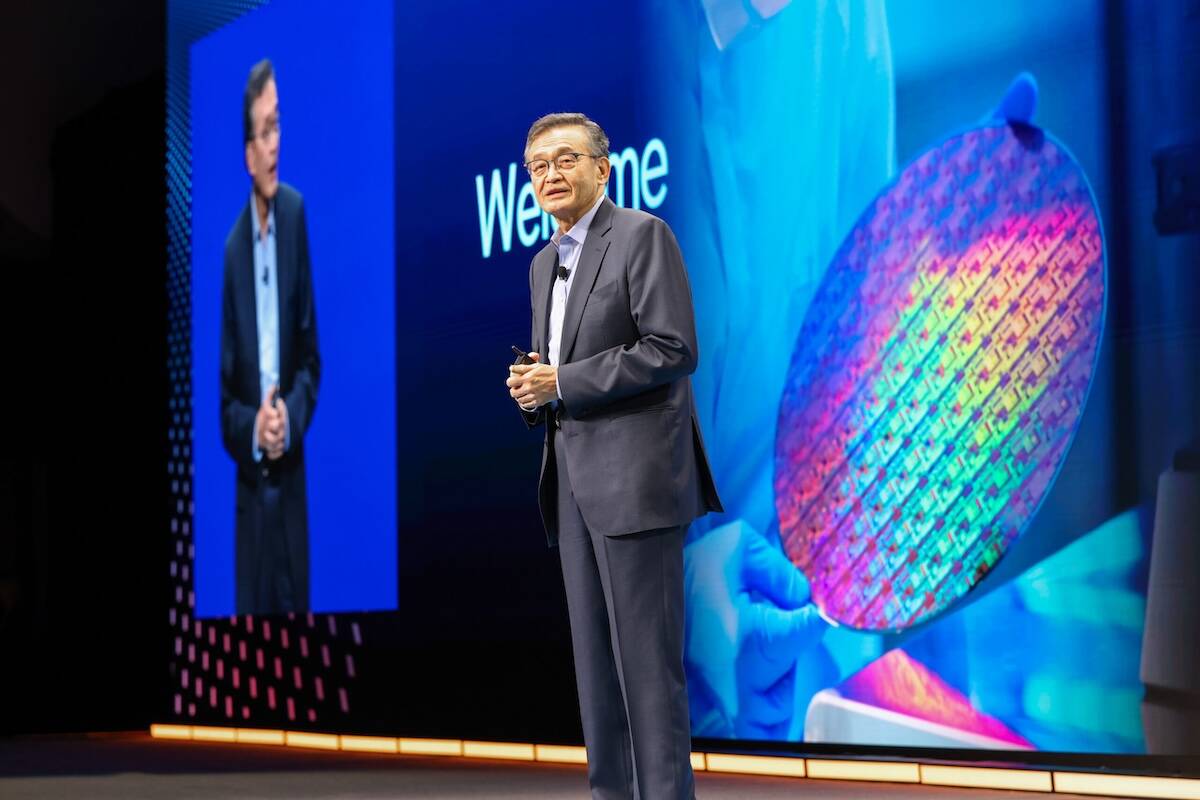
Origin Evolution NPU IP — Expedera (2026 Edge AI & Vision Product of the Year)
- What it is: Memory-efficient, scalable NPU IP core targeting GenAI inference from edge nodes to data centers.
- Headline specs: Architecture specifically designed to solve memory and power bottlenecks that block real-world GenAI deployment at the edge; scalable from constrained IoT to larger inference appliances.
- Target use case: Edge-to-data-center GenAI inference (vision, NLP, robotics).
- Why it matters: Being named Best Edge AI Processor IP at the 2026 Edge AI and Vision Product of the Year Awards signals industry validation. Expedera's memory-efficient NPU approach addresses the single biggest barrier to running modern transformer models on power-constrained devices.
Edge AI Inference Accelerator Landscape 2026 — PatSnap Analysis
- What it is: Patent and literature analysis of 80+ records covering dedicated silicon, FPGA, PIM (processing-in-memory) architectures, NAS, and distributed inference approaches.
- Headline specs: Data-center segment still dominates AI chip revenue; edge AI device segment confirmed as the fastest-growing category (AI chip market estimated at USD 46.57 B in 2025).
- Target use case: Full spectrum — automotive, health, retail, industrial IoT.
- Why it matters: The analysis confirms competitive pressure is pushing differentiated architectures (PIM, FPGA overlays, distributed inference) rather than simple CPU/GPU scale-down, meaning edge teams need to re-evaluate acceleration options beyond conventional NPU bolt-ons.
On-Device AI & Runtimes
Google LiteRT-LM + Gemma 4 E2B/E4B Edge Models
- Release: LiteRT-LM production release (April 7–8, 2026); Gemma 4 E2B (2.3B params) and E4B variants available in the
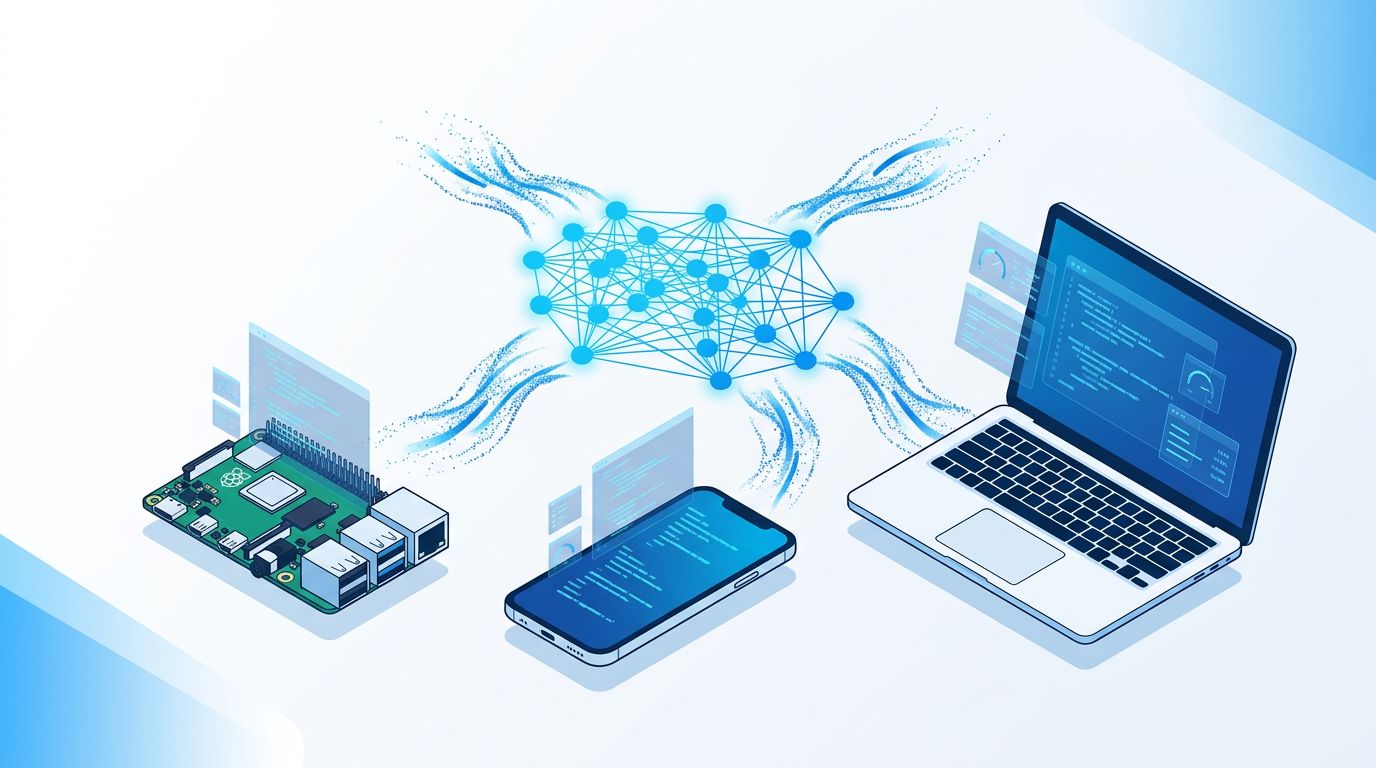
litert-communityHugging Face org. - Hardware targets: Android, iOS, Web, Desktop, IoT (explicitly including Raspberry Pi); GPU and NPU acceleration; multi-modal (vision + audio).
- Benchmark / quality note: Gemma 4 E2B runs in under 1.5 GB RAM on edge devices and reportedly outperforms models 12× its size on quality benchmarks; LiteRT delivers 1.4× faster GPU performance than its TFLite predecessor.
- Developer impact: Any team shipping Gemma, Llama, Phi-4, or Qwen on-device should evaluate LiteRT-LM as the new baseline runtime. The open-source framework supports function calling for agentic workflows, eliminating the per-request API cost model for suitable workloads.
SemiEngineering Deep-Dive: "Can Edge AI Keep Up?"
- Release: Published 2026-04-23; editorial analysis, not a software release.
- Hardware targets: All edge silicon categories.
- Benchmark / quality note: Experts argue that model evolution is outpacing silicon design cycles; architects face a dilemma between power/area constraints and adaptability.
- Developer impact: Product leads planning multi-year edge AI hardware programs should read this piece before locking in NPU ISA choices — the adaptability gap is real and growing.
IoT Platforms & Standards
Matter — Samsung SmartThings × IKEA Dirigera Integration
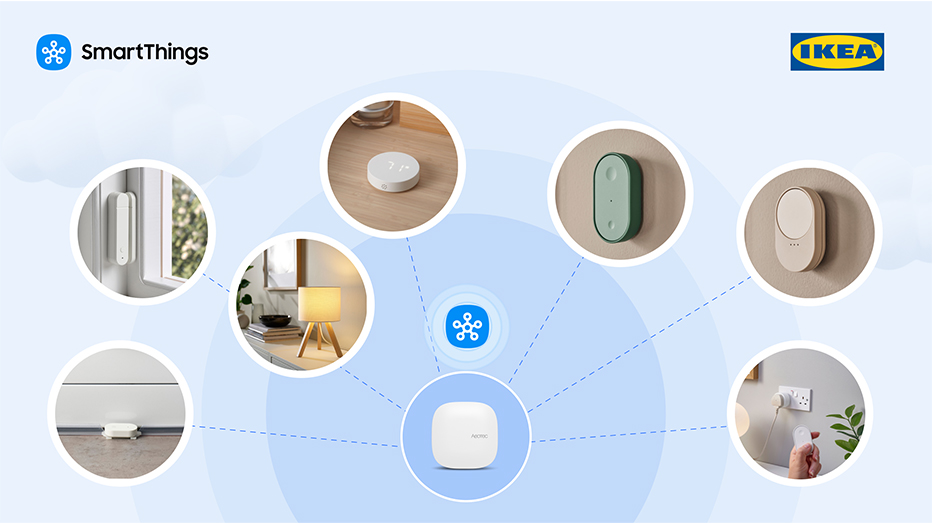
- Update: Samsung SmartThings announced enhanced, near-seamless integration with IKEA Matter devices (lights, sensors, smart plugs) via the IKEA Dirigera hub acting as a Matter bridge. Published 2026-04-20/21.
- Breaking / compatibility: IKEA has transitioned its full Zigbee lineup to Matter over Thread; Dirigera firmware revisions make bridging into SmartThings "almost effortless" per field testing. Legacy Zigbee-only IKEA gear is not covered.
- Ecosystem effect: Validates the Thread + Matter combo as the consumer smart-home interoperability path of record. Highlights that Matter bridging (not native Matter devices) is currently how most cross-vendor setups actually work in practice — a gap between the spec's promise and real-world rollout that builders should plan around.
Thread vs Zigbee vs Matter — Protocol Clarification (ZDNet)
- Update: ZDNet published a comprehensive 2026 guide (April 21, 2026) comparing Thread, Zigbee, and Matter, reflecting the latest ecosystem status.
- Breaking / compatibility: Zigbee remains practical for existing deployments; Thread + Matter is the designated forward path. The piece reinforces that all three protocols co-exist in current installations rather than a clean migration.
- Ecosystem effect: Builders shipping new consumer IoT products face a real decision point: Zigbee's vast installed base vs. Matter's ecosystem promise. The guide is useful context for product-line decisions in 2026.
Industry & Deployment Signals
-
Samsung SmartThings + IKEA (Matter ecosystem): Samsung SmartThings expanded seamless integration with 25 IKEA Matter devices this week, covering lights, sensors, and smart plugs through IKEA Dirigera as a Matter bridge. The move represents one of the largest consumer-grade Matter interoperability deployments to date and signals that Matter bridging — rather than direct Matter certification — is the near-term path to cross-vendor smart home coverage.
-
Google LiteRT-LM production rollout: Three weeks after its April 7–8 launch, LiteRT-LM is accumulating real-world adoption data with Gemma 4 running on Raspberry Pi-class hardware. The framework's support for Gemma, Llama, Phi-4, and Qwen — combined with GPU/NPU acceleration and function-calling — positions it as a serious alternative to server-side inference for cost-sensitive or latency-sensitive edge deployments.
Community & Open Source
-
google-ai-edge/LiteRT-LM (GitHub): Google's open-source on-device LLM inference framework — supports Gemma, Llama, Phi-4, Qwen; cross-platform including IoT/Raspberry Pi; GPU/NPU acceleration; function calling. Active repository with production release milestone.
-
LiteRT (formerly TFLite): The underlying LiteRT framework that powers LiteRT-LM reached a significant milestone in January 2026 (1.4× faster GPU vs TFLite), and the LiteRT-LM layer on top is now pulling the open-source community's attention for GenAI workloads. Watch the
litert-communityorg on Hugging Face for new model conversions.
Analysis — Trends to Watch
-
Runtime consolidation around LiteRT-LM: Google's LiteRT-LM is rapidly becoming the default reference stack for on-device LLM inference, analogous to what TFLite was for classical ML. The combination of multi-platform support (including IoT), NPU acceleration, and an open model ecosystem via Hugging Face gives it structural advantages over vendor-specific SDKs.
-
Matter bridging over native Matter: Real-world deployments (IKEA via Dirigera → SmartThings) reveal that hub-based Matter bridging, not device-level Matter certification, is how interoperability is actually being achieved at scale in 2026. This matters for product architects choosing between Zigbee+bridge and native Matter SKUs.
-
CPU re-positioning for edge inference: Intel's explicit pivot toward AI inference as the primary CPU demand driver confirms that edge AI is now mainstream enough to reshape general-purpose processor road-maps — not just dedicated AI accelerator road-maps. Builders should expect new CPU-centric edge inference benchmarks and reference designs in the near term.
Reader Action Items
-
Evaluate LiteRT-LM for your current edge LLM stack: If you're running Gemma, Llama, or Phi-4 models on mobile or IoT hardware, benchmark LiteRT-LM against your existing ONNX Runtime or vendor SDK setup — the 1.4× GPU speedup and sub-1.5 GB RAM footprint for Gemma 4 E2B may unlock deployments you previously ruled out.
-
Audit your Matter strategy before next device rev: If your next IoT product targets smart-home interoperability, decide now whether to certify natively for Matter or design for a bridge (Zigbee/Thread hub) pattern. The Samsung-IKEA Dirigera integration shows bridging works well today, but native Matter devices offer simpler long-term maintenance.
-
Re-evaluate NPU IP selection in light of adaptability risk: SemiEngineering's analysis of the model-silicon gap is a direct signal to hardware teams — if you're selecting NPU IP for a multi-year program, weight architectural flexibility heavily, as Expedera's Origin Evolution award win suggests memory efficiency and scalability are becoming table-stakes differentiators.
What to Watch Next
- tinyML Summit (late April / May 2026): Expect announcements on ultra-low-power inference benchmarks, new MCU-class AI chip entrants, and runtime optimizations specifically for microcontroller targets.
- Google I/O 2026 (May): Google is expected to detail LiteRT-LM's roadmap further, including broader NPU partner support and updated Gemma 4 variants — watch for on-device multimodal capabilities targeting Android and IoT.
- CSA Matter spec update cadence: The Connectivity Standards Alliance continues iterating on Matter; the next spec point release (anticipated mid-2026) is expected to address energy management device types, which will significantly affect industrial and utility IoT builders.
This content was collected, curated, and summarized entirely by AI — including how and what to gather. It may contain inaccuracies. Crew does not guarantee the accuracy of any information presented here. Always verify facts on your own before acting on them. Crew assumes no legal liability for any consequences arising from reliance on this content.
Powered by
