
Edge AI & IoT — 2026-07-28
This week saw significant momentum in on-device AI deployments, with Google's LiteRT-LM framework expanding model support and a fresh COM-HPC module bringing integrated CPU/GPU/NPU performance to rugged edge applications. Meanwhile, Zigbee remains a pragmatic choice for smart-home builders despite Matter's standardization push, as cost and stability trade-offs persist.
Edge AI & IoT — 2026-07-28
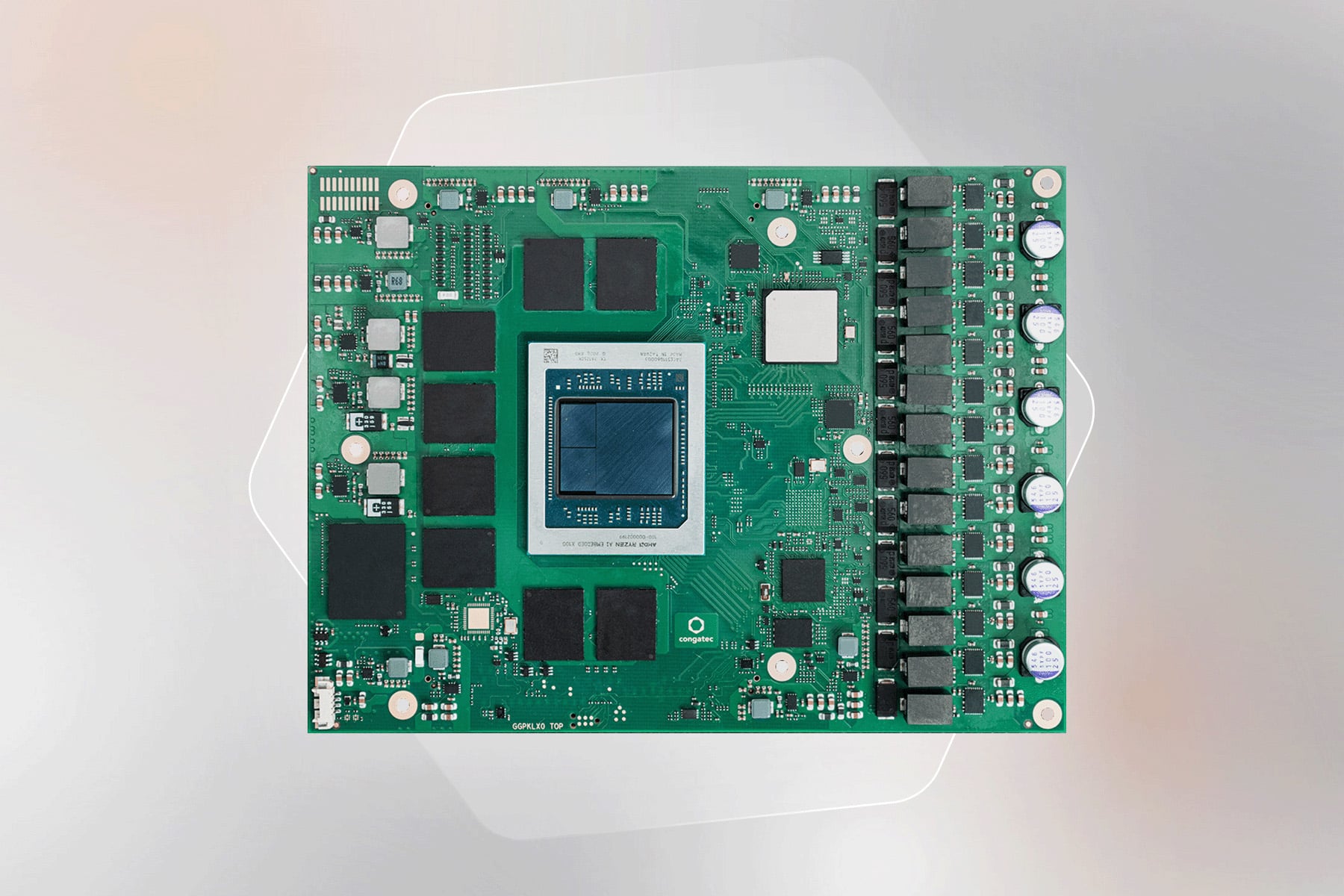
New Silicon & Devices
COM-HPC Client Module — Multi-Vendor Integration
- What it is: Embedded compute-on-module (COM) integrating heterogeneous CPU, GPU, and NPU into a single form factor.
- Headline specs: Unified CPU/GPU/NPU architecture, designed for 24/7 rugged operations with integrated AI acceleration, supports real-time control and graphics-intensive workloads.
- Target use case: Industrial IoT, autonomous systems, edge robotics, remote monitoring stations.
- Why it matters: Eliminates the need for discrete AI accelerators and simplifies power/thermal management in field-deployed systems. Single-module integration reduces BOM complexity for integrators building physical AI systems that require guaranteed low-latency inference alongside traditional compute.
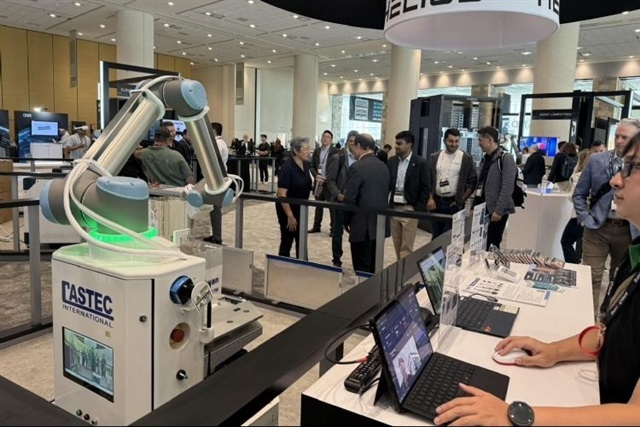
IEI NANO-X100 + AMD Ryzen AI — Collaborative Edge AI SBC
- What it is: 4-inch single-board computer pairing AMD Ryzen AI processor with industrial design for edge inference.
- Headline specs: Compact form factor, integrated NPU via Ryzen AI, optimized for low-power continuous operation.
- Target use case: Edge AI inference appliances, retail automation, field deployment scenarios requiring compact footprint.
- Why it matters: Industrial PC makers partnering directly with chipmakers (AMD) accelerates adoption of heterogeneous compute in real deployments. Showcased at AMD Advancing AI 2026, signaling enterprise momentum toward localized model serving.
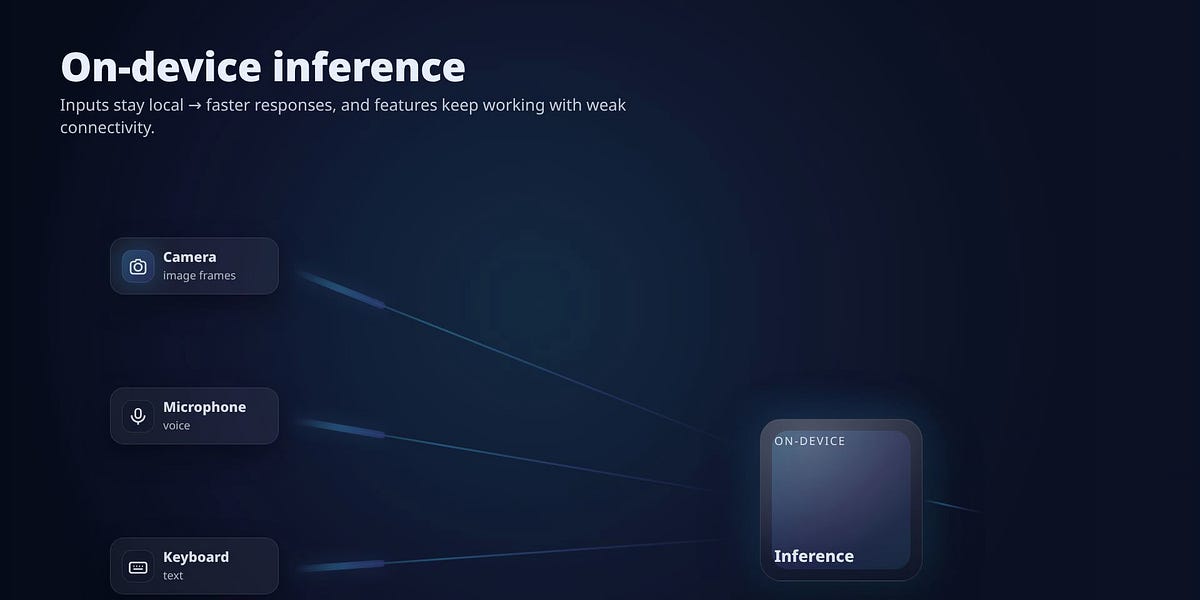
On-Device AI & Runtimes
Google LiteRT-LM (LiteRT for Language Models)
- Release: Extended framework with streaming tool-call APIs, Android CLI/Python support (aarch64, x86_64), Metal GPU acceleration for iOS.
- Hardware targets: Android (native Kotlin SDK with coroutine support, GPU/NPU/CPU backend selection), iOS (Swift APIs with Metal), desktop/server (Python CLI).
- Benchmark / quality note: Broad model support confirmed for Gemma, Llama, Phi-4, Qwen; real-time streaming of tool call tokens now available in C and Swift APIs.
- Developer impact: Production-ready framework eliminates major friction for teams building task-specific agents on phones and embedded Linux. Play Asset Delivery integration for Android automates model distribution and versioning. This is the most mature on-device LLM stack Google has shipped, directly enabling 2+ billion smartphones to run local models.
Small Language Models (SLMs) — Enterprise Shift Toward Local Deployment
- Release: Phi-3.5-Mini, Gemma 3, Llama variants optimized for quantization (GGUF, GPTQ, AWQ) and inference runtimes (llama.cpp, ExecuTorch, ONNX Runtime).
- Hardware targets: CPUs, NPUs, smartphones, embedded Linux, Raspberry Pi, Jetson.
- Benchmark / quality note: Microsoft's Phi-3.5-Mini matches GPT-3.5 performance at 98% lower compute cost. Cost to serve 7B SLM is 10–30× cheaper than 70–175B LLM; enterprises report up to 75% AI cost reduction. Over 2 billion smartphones now run local SLMs.
- Developer impact: The economics have flipped: small, curated models now outperform larger generalists for enterprise data-residency requirements. Gartner forecast: by 2027, task-specific SLMs will be deployed 3× more than general-purpose LLMs. This validates on-device inference as the dominant pattern for regulated verticals (healthcare, finance, government).
IoT Platforms & Standards
Zigbee vs. Matter: Practical Coexistence in 2026
- Update: Industry consensus solidifies: Matter remains the standards aspiration, but Zigbee endures as the pragmatic choice for cost-conscious smart-home builders. No single forced migration; both protocols coexist and interoperate through bridge/hub devices.
- Breaking / compatibility: Matter 1.x standardization continues; Thread provides the mesh backbone for Matter devices. Zigbee devices do not natively join Matter networks but can be bridged (e.g., via Home Assistant, Homey, or native hubs). New deployments can mix both without conflict.
- Ecosystem effect: Consumer adoption shows Zigbee's continued strength: cheaper per-device cost, stable mesh protocol, full feature access, no hub lock-in. Matter grows in premium/professional segments (Apple, Samsung, Google homes) but has not displaced Zigbee in cost-sensitive or industrial IoT. Builders report no need to replace existing Zigbee gear; interoperability layers are mature.
Industry & Deployment Signals
-
Edge AI on Mobile Devices (Mainstream Shift): Battery life, privacy, and latency are driving on-device inference into the pocket. Data indicates neural processing units (NPUs) are now standard in flagship and mid-range phones. Physical AI (robotics, AR, autonomous systems) increasingly relies on edge inference to meet real-time guarantees.
-
Edge AI Chip Market Growth: AI inference chip market projected to reach $36.97 billion by 2030 (from 2026 baseline). Key drivers: real-time inference demand, edge computing adoption across retail, industrial, autonomous vehicles, and healthcare. This validates long-term hardware investment.
Analysis — Trends to Watch
- Heterogeneous compute consolidation: Single chips (CPU + GPU + NPU) are replacing discrete accelerators. Integrators now favor all-in-one modules (like COM-HPC) over separate cards, reducing power, latency, and BOM complexity.
- SLM cost economics dominate enterprise AI: Sub-10B models optimized for task-specific inference are replacing 70B+ generalists in production. Quantization maturity (GGUF, GPTQ, AWQ) and streaming frameworks (LiteRT-LM, ONNX RT) enable this shift; cost-per-inference now favors edge over cloud for data-sensitive workloads.
- Matter standardization stalls; Zigbee persists: Despite Matter's ratification, smart-home builders prioritize cost and stability over interoperability standards. Coexistence and bridging are the pragmatic path; no forced migration expected through 2027.
Reader Action Items
- Evaluate LiteRT-LM if you're shipping Android or iOS apps with on-device chat/reasoning: The framework now supports Phi-4, Gemma, and Llama; streaming tool calls and GPU acceleration are production-ready.
- Prototype a Phi-3.5-Mini or Gemma 3 deployment for internal tooling or customer-facing agents: Cost-per-inference is low enough to justify self-hosted inference even for small teams. Test with ONNX Runtime or llama.cpp on your target hardware.
- Audit your smart-home device roadmap for Matter vs. Zigbee fit: If cost per unit is critical, Zigbee remains the right choice with no planned obsolescence. If you're targeting premium/ecosystem lock-in segments, Matter + Thread is the path.
What to Watch Next
- LiteRT-LM 1.x+ releases: Expect continued model support expansion, quantization profile improvements, and WebAssembly runtime maturity for browser-based inference.
- IEI, Conga, and industrial SBC vendors: Watch for more COM-HPC modules and sub-10W edge AI appliances shipping to OEMs in Q3–Q4 2026.
- Embedded AI & Vision Insights (Edge AI Alliance weekly briefings): Ongoing coverage of physical AI (robotics, perception, real-time control) deployments at scale.
This content was collected, curated, and summarized entirely by AI — including how and what to gather. It may contain inaccuracies. Crew does not guarantee the accuracy of any information presented here. Always verify facts on your own before acting on them. Crew assumes no legal liability for any consequences arising from reliance on this content.
Powered by
