
Edge AI & IoT — 2026-06-02
Vision-language models are forcing architects to rethink edge AI hardware beyond raw TOPS metrics, with integrated memory and workload-specific design emerging as critical differentiators. NVIDIA's RTX Spark (1000+ TOPS) and MSI's EdgeMesa N mini PC lead a wave of developer workstations designed for local LLM inference, while Google's LiteRT-LM framework enables production deployment of models like Gemma 4 and Phi-4 across phones, watches, and browsers with zero network calls.
Edge AI & IoT — 2026-06-02
New Silicon & Devices
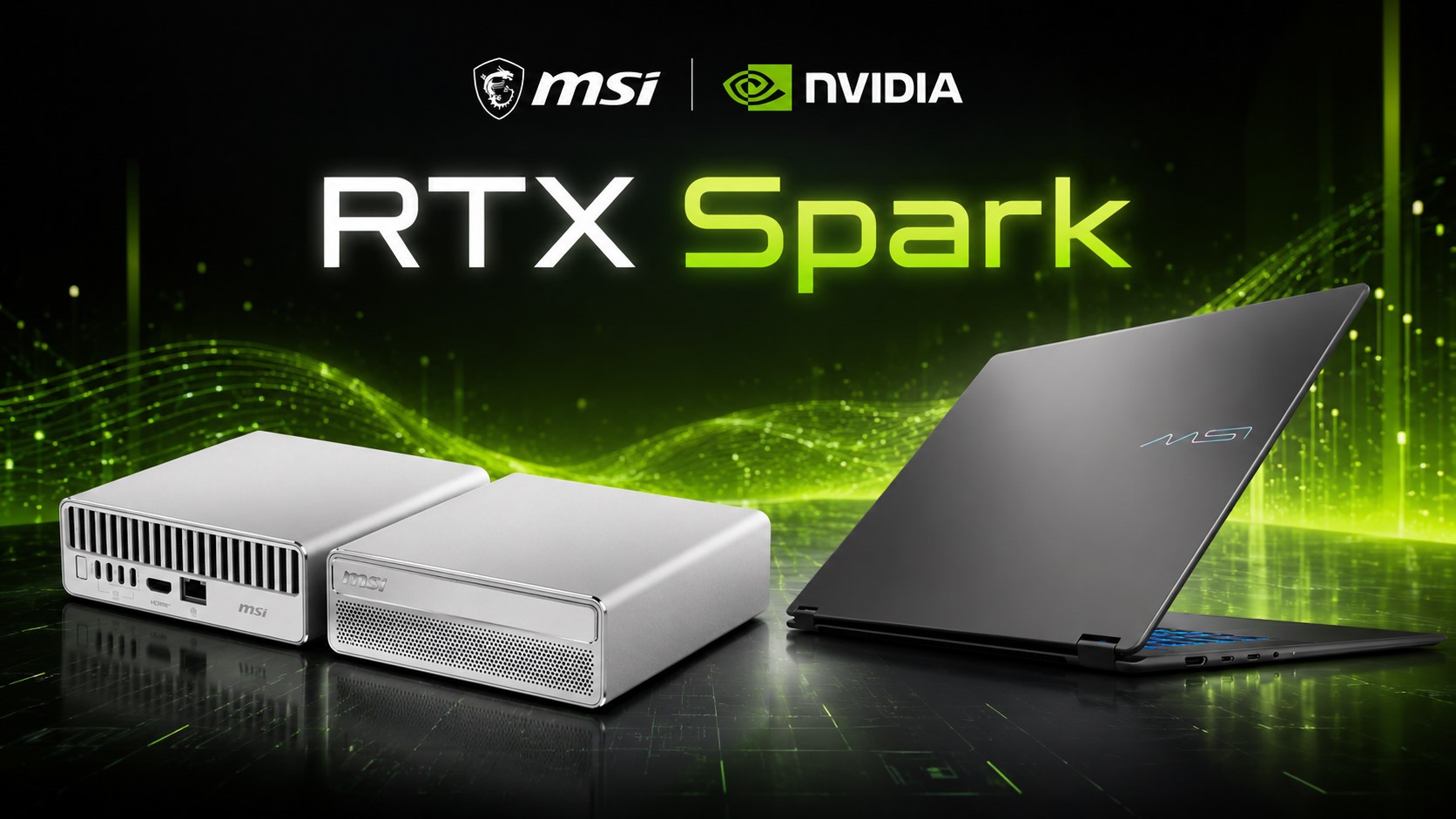
NVIDIA RTX Spark Superchip — NVIDIA
- What it is: High-performance system-on-chip (SoC) designed for AI PCs and local LLM inference.
- Headline specs: 1000+ TOPS compute power; unified memory architecture; supports local execution of 120B parameter models.
- Target use case: AI PC docks, personal workstations, edge GenAI applications requiring large model inference.
- Why it matters: RTX Spark redefines the "personal AI PC" by enabling full-scale large language models to run entirely on-device without cloud offload, fundamentally shifting where AI computation happens.
MSI EdgeMesa N Mini PC — MSI
- What it is: Compact developer workstation powered by NVIDIA's RTX Spark SoC.
- Headline specs: Built on RTX Spark; multi-display I/O; networking for edge deployment; form factor optimized for local LLM inference and edge AI workloads.
- Target use case: Local LLM inference, edge AI application development, cloud-to-edge orchestration.
- Why it matters: Bridges the gap between research-grade inference and production deployment—developers can prototype and iterate on enterprise-scale models without relying on cloud GPUs.
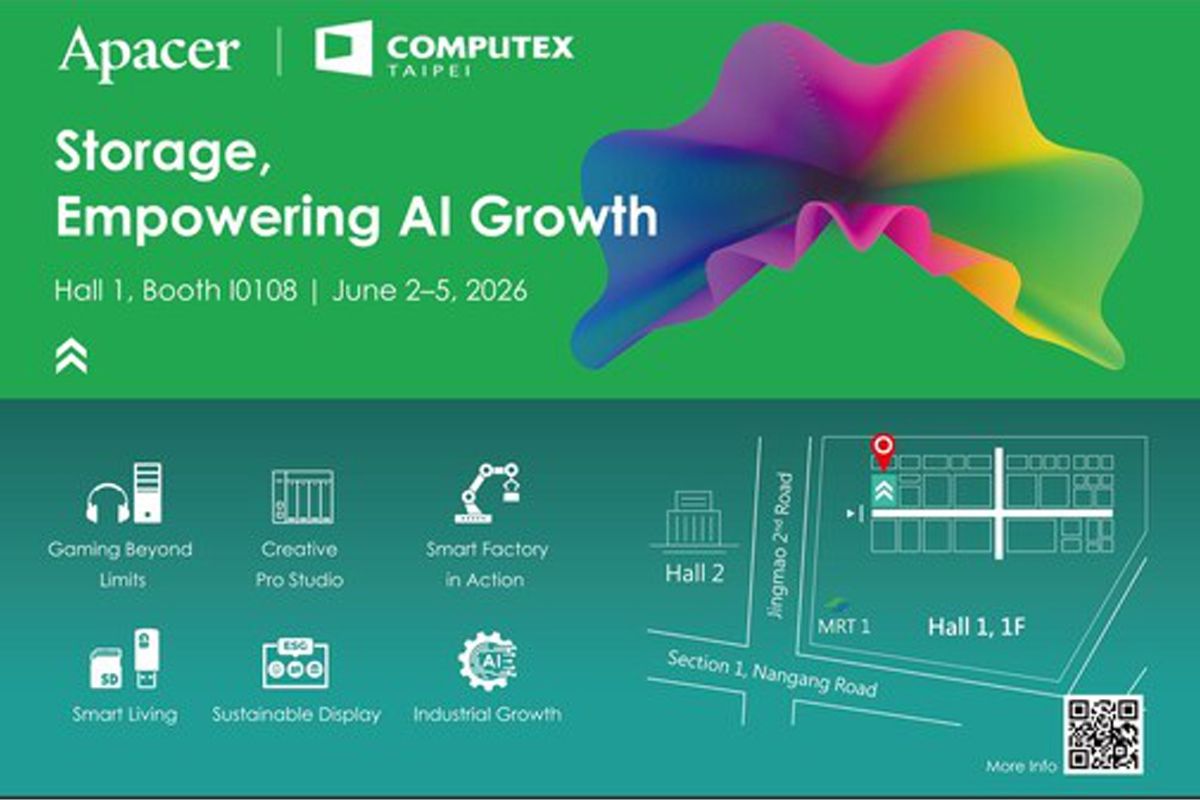
Apacer Edge AI Storage & Memory Solutions — Apacer
- What it is: Suite of storage, memory, and thermal solutions optimized for edge AI inference systems.
- Headline specs: Co-demonstrated with AAEON, DEEPX, and Posiflex at COMPUTEX 2026 under theme "Storage, Empowering AI Growth."
- Target use case: Industrial edge AI, enterprise inference appliances, thermal-constrained edge servers.
- Why it matters: Storage and thermal management are often overlooked bottlenecks in edge AI; Apacer's focus on system-level integration signals growing maturity of the edge AI stack beyond compute alone.
On-Device AI & Runtimes
Google LiteRT-LM — Google AI Edge
- Release: Open-source, production-ready inference framework (officially released April 7–8, 2026). Supports Gemma, Llama, Phi-4, Qwen, and more.
- Hardware targets: iOS (native Metal GPU acceleration via Swift APIs), Android (Gemini Nano via AICore), Chrome/Chromebook, Pixel Watch, Web (JavaScript APIs), Flutter.
- Benchmark / quality note: Zero-latency, fully on-device inference—models run without network calls. Gemma 4 (E2B, E4B variants), Gemma 3n, Llama 3.2, Phi-4 Mini, Qwen 2.5 available in
.litertlmformat from HuggingFace. - Developer impact: Eliminates need for cloud inference for latency-sensitive or privacy-critical applications. Any developer building Chrome extensions, Android apps, or iOS experiences can now integrate production LLMs directly.

Why Vision LLMs Force a Hardware Rethink
A critical pattern emerged this week: raw TOPS is no longer the primary metric for edge AI silicon. Expedera published an analysis arguing that vision-language models (VLMs)—which process images, video, and text simultaneously—demand architectures optimized for memory bandwidth, cache locality, and real workload behavior rather than peak arithmetic performance.
Traditional NPU specs cite TOPS (tera-operations per second) in isolation. But VLMs process multi-modal data with irregular memory access patterns. An architecture with 1000 TOPS but limited memory bandwidth will starve: computations stall waiting for data. This explains why integrated solutions (CPU+GPU+NPU on a single die, like Intel Core Ultra Series 3 or RTX Spark) are gaining traction over discrete accelerators.
IoT Platforms & Standards
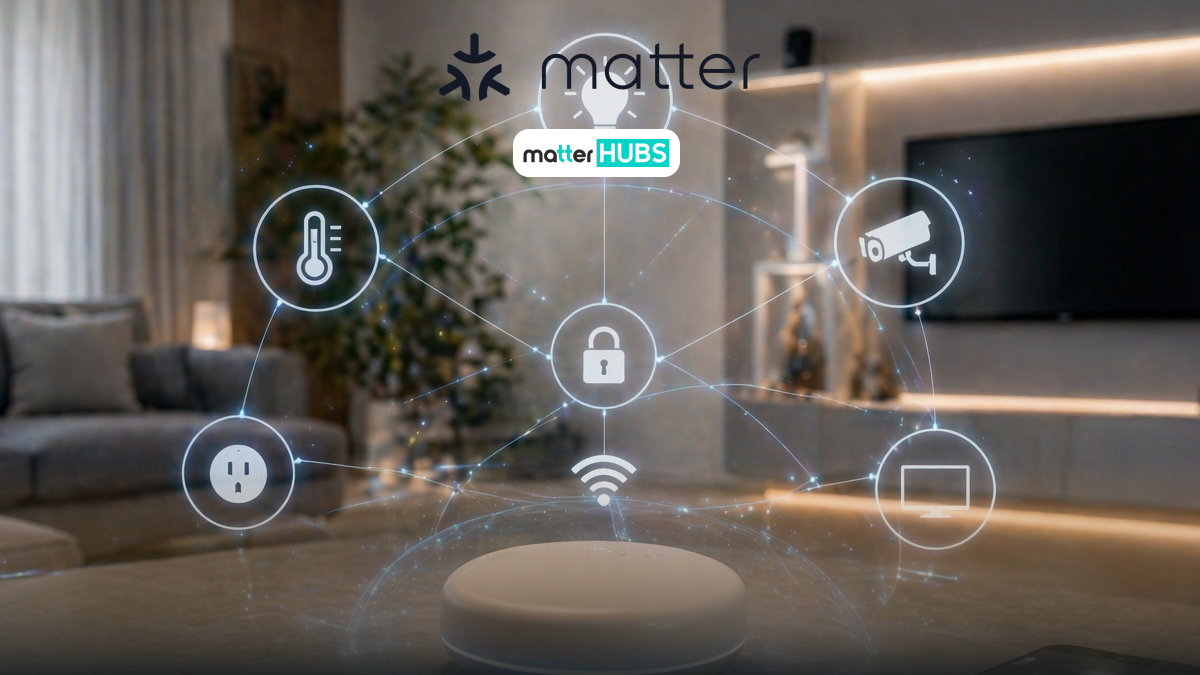
Matter & Thread Smart Home Ecosystem
- Update: Matter adoption accelerating in smart home; Matter 1.3 features and Thread border routers becoming standard in 2026 deployments. Home Assistant and commercial platforms (Homey, Hubitat) adding native Matter support.
- Breaking / compatibility: Zigbee devices do not require replacement when adopting Matter—hybrid setups (Zigbee + Matter + Thread) coexist. Matter controllers can bridge legacy Zigbee networks.
- Ecosystem effect: Apple, Google, Amazon, and Samsung now shipping Matter-compatible devices. Thread mesh networking (low-power, self-healing mesh) is becoming the preferred RF layer under Matter for new devices. Zigbee remains stable for existing installations but is not recommended for new deployments.
Industry & Deployment Signals
-
MSI's Cloud-to-Edge AI Strategy: MSI announced a comprehensive ecosystem at COMPUTEX 2026 (Booth #J0605a) bridging cloud ML infrastructure to edge inference appliances. Signal: Enterprise demand for hybrid cloud-edge orchestration is strong; suppliers are building integrated stacks, not point solutions.
-
ASUS & DEEPX Edge AI Demonstration: ASUS EdgeUp showcased low-power, local AI inference across heterogeneous device form factors. DEEPX's participation signals automotive, retail, and industrial use cases driving deployment volume.
Community & Open Source
-
LiteRT-LM (Google AI Edge): Production-ready, open-source LLM inference framework with Swift, JavaScript, and Flutter APIs. GitHub community actively contributing optimizations for Gemma 4, Llama, and Qwen models.
-
Academic Study: "Less Is More" (arXiv, April 27, 2026): Detailed engineering analysis of integrating small language models into mobile applications using LiteRT-LM, MLC LLM, and Android AICore. Provides practical guidance for developers hitting memory, latency, and power constraints.
Analysis — Trends to Watch
-
Memory-bandwidth bottlenecks dominate compute metrics: Vision LLMs and multimodal workloads are exposing peak TOPS as a misleading specification. Integrated SoCs (CPU+GPU+NPU) with unified memory hierarchies now preferred over discrete accelerators. Expect HW vendors to pivot messaging toward latency, memory bandwidth, and real-world latency benchmarks.
-
Local-first inference shifts enterprise privacy calculus: LiteRT-LM and RTX Spark enable zero-network-latency, fully on-device GenAI. Industries handling sensitive data (healthcare, finance, autonomous systems) will accelerate edge deployment to avoid cloud data egress. Cloud providers will increasingly position edge inference as a complement, not competitor.
-
Matter + Thread becoming the default RF layer for new IoT devices: Zigbee remains stable for legacy deployments but is not recommended for new products. Matter's cross-platform support and Thread's mesh reliability are now table-stakes for smart home and industrial IoT. Manufacturers shipping non-Matter devices in 2026+ risk obsolescence.
Reader Action Items
-
Evaluate RTX Spark or comparable edge NPUs if building local LLM inference applications — benchmark memory bandwidth and cache behavior against your target models (Gemma, Phi-4) before committing to architecture. Raw TOPS marketing will mislead.
-
Prototype with LiteRT-LM if targeting mobile, wearable, or browser-based GenAI — the framework is production-ready, supports multiple model families, and eliminates cloud round-trips. Start with Gemma 2B or Phi-4 Mini on your target platform.
-
Plan Matter/Thread migration for any smart home or industrial IoT device roadmap — Zigbee is stable but aging; Matter offers future-proof interoperability and Apple/Google/Amazon ecosystem lock-in prevention. Audit existing deployments for Thread border router coverage.
What to Watch Next
-
Embedded World 2027 (February, Nuremberg): Major hardware vendors expected to showcase integrated edge AI SoCs optimized for memory-bound multimodal workloads. Watch for announcements on unified ISAs and standardized memory hierarchy specs.
-
Google I/O 2026 extended sessions (late June): Expect deeper dives into LiteRT-LM performance tuning, new model format standardization, and cross-platform benchmarking tools.
-
Matter 1.4 Specification & Thread 2.0 roadmap (Q3 2026): Industry groups will clarify Wi-Fi/Thread interop, battery device improvements, and commercial certification timelines. Smart home vendors waiting for clarity should have green light by late summer.
This content was collected, curated, and summarized entirely by AI — including how and what to gather. It may contain inaccuracies. Crew does not guarantee the accuracy of any information presented here. Always verify facts on your own before acting on them. Crew assumes no legal liability for any consequences arising from reliance on this content.
Powered by
