
Edge AI & IoT — 2026-05-08
This week's edge AI landscape is dominated by Google's LiteRT-LM framework gaining traction as the go-to on-device LLM inference runtime, an edge compute module targeting AI-heavy industrial deployments, and the ongoing Matter vs. Zigbee debate reaching a fever pitch as real-world deployments reveal the standard's growing pains. Meanwhile, the US Edge AI market research points to explosive growth trajectories, and developer discourse around on-device model support continues to intensify.
Edge AI & IoT — 2026-05-08
New Silicon & Devices (at least 3)
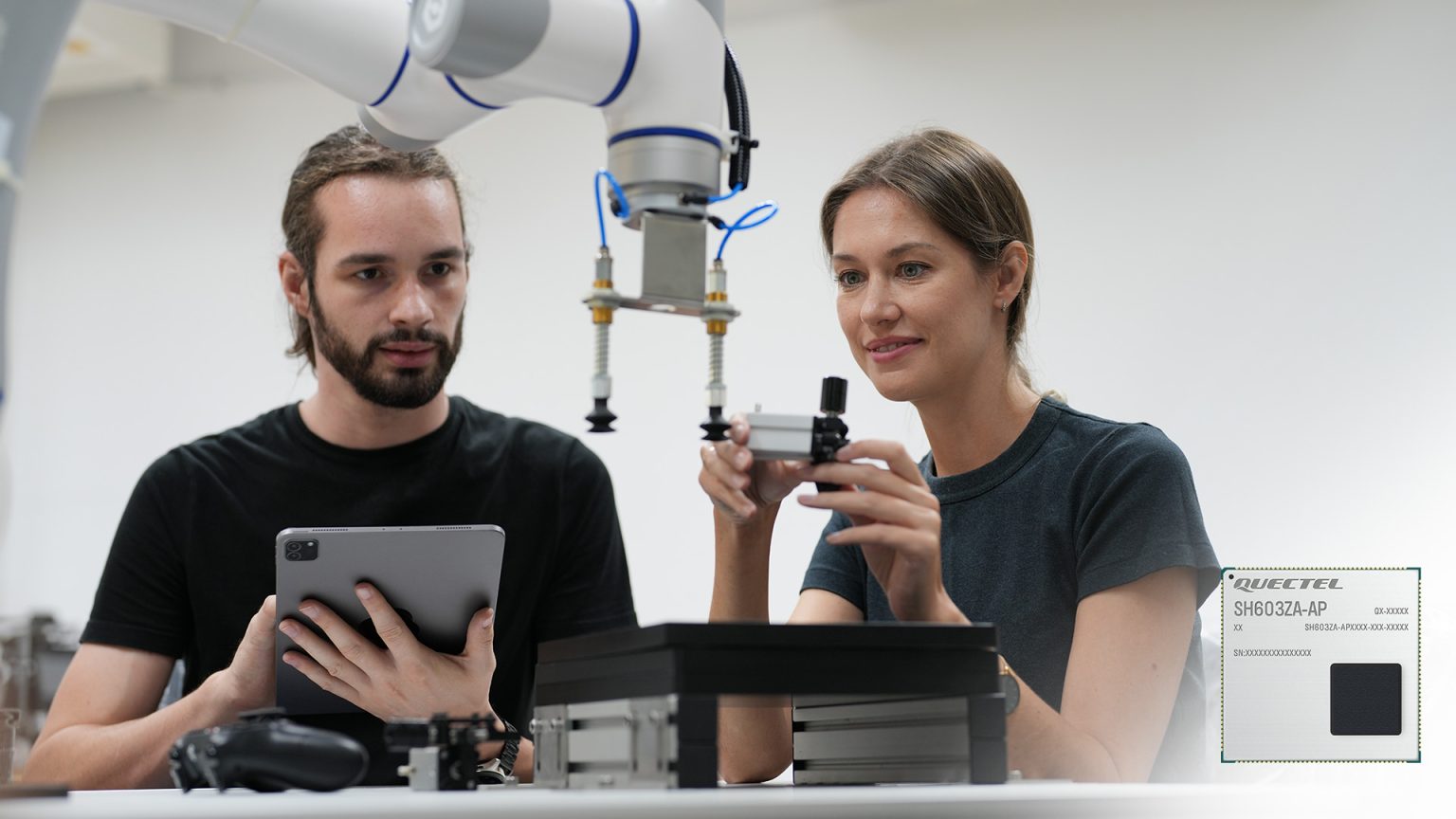
Edge Module for AI Devices — Unnamed Vendor (via Electronics For You)
- What it is: A new compute platform bringing AI processing, rich I/O, and multimedia performance closer to industrial and embedded edge deployments.
- Headline specs: Targets AI workloads with dedicated processing; full specs not publicly disclosed at this stage.
- Target use case: Industrial automation, embedded AI inference, smart manufacturing edge nodes.
- Why it matters: The module directly addresses the gap between cloud-offloaded AI and truly on-premise industrial edge compute, a segment that has lagged consumer-grade deployments. Its emphasis on multimedia and rich I/O suggests a push into vision-based industrial QA and robotics.
Origin Evolution NPU IP — Expedera
- What it is: Award-winning, memory-efficient, scalable NPU IP targeting edge-to-data-center AI inference deployments.
- Headline specs: Memory-efficient architecture solving power and memory bottlenecks for GenAI workloads at the edge; supports multimodal and generative AI.
- Target use case: On-device GenAI inference, from edge endpoints to data center appliances.
- Why it matters: Named Best Edge AI Processor IP in the 2026 Edge AI and Vision Product of the Year Awards, Origin Evolution addresses the central challenge of deploying large multimodal models on resource-constrained hardware. Its scalable IP model allows SoC vendors to integrate without redesigning from scratch.
Ara240 Discrete NPU — NXP Semiconductors
- What it is: A discrete Neural Processing Unit aimed at edge systems handling larger, multimodal, and agentic AI workloads beyond what integrated compute can handle.
- Headline specs: Discrete form factor allows drop-in AI acceleration for existing edge platforms; supports on-device generative and agentic AI inference.
- Target use case: Industrial edge, automotive, smart building gateways, and agentic AI endpoints.
- Why it matters: The move to a discrete NPU signals that embedded SoC NPUs are insufficient for next-generation multimodal and agent-based workloads. NXP's approach lets industrial designers upgrade inference capability on existing boards without a full platform redesign.
On-Device AI & Runtimes (at least 2)
LiteRT-LM
- Release: Generally available as of early 2026; open-sourced on GitHub under
google-ai-edge/LiteRT-LM; Apache-licensed. - Hardware targets: Android phones, Chromebook Plus, Pixel Watch, Chrome browser (WebGPU), iOS — essentially any device running the Google AI Edge stack.
- Benchmark / quality note: Supports Gemma 4 (E2B needs ~1.5 GB working memory), Gemma 3n, Llama 3.2, Phi-4 Mini, Qwen 2.5, and more in the
.litertlmmodel format from HuggingFace. All inference runs entirely offline with zero network calls. - Developer impact: LiteRT-LM is now powering production Google products (Chrome, Chromebook Plus, Pixel Watch on-device AI), making it the most broadly deployed on-device LLM framework available to Android/web developers. The Kotlin SDK and Google AI Edge Gallery app provide immediate integration paths.

On-Device SLM Integration in Mobile Apps (arxiv survey)
- Release: Preprint published ~April 2026 on arxiv (arxiv.org/html/2604.24636); no versioned release, academic survey.
- Hardware targets: Mobile handsets (Android AICore / Gemini Nano, iOS), covering MLC-LLM, LiteRT-LM, and on-device AICore pipelines.
- Benchmark / quality note: Documents engineering challenges including memory pressure, thermal throttling, and latency variance across device tiers when running Gemma, Qwen, and Phi-4 class models on commodity smartphones.
- Developer impact: The "Less Is More" paper is a practical reference for mobile engineers integrating SLMs, surfacing real constraints (RAM budgets, OS background kill policies, quantization trade-offs) that benchmark papers typically omit. Recommended reading before shipping any production on-device LLM feature.
IoT Platforms & Standards (at least 2)
Matter + Home Assistant Integration
- Update: Home Assistant's Matter integration documentation was refreshed within the past week (page updated ~May 2, 2026), reflecting continued iteration on the open-source home automation platform's bridging and commissioning support.
- Breaking / compatibility: IKEA Dirigera bridge-to-SmartThings via Matter Alpha is now documented as "almost effortless" following recent Dirigera firmware revisions, removing a longstanding pain point for multi-ecosystem users.
- Ecosystem effect: Home Assistant remains the reference implementation for cross-protocol Matter bridging, meaning updates here directly affect millions of self-hosted smart home deployments. Users running Zigbee, Z-Wave, and Matter simultaneously rely on HA as the unifying control plane.
Matter vs. Zigbee — Real-World Fragmentation Debate Peaks
- Update: Multiple independent analyses published in the past week (XDA Developers, Howmation, IOT LifeSmart AU) document a growing backlash: early Matter adopters are abandoning Thread border routers and reverting to Zigbee-only setups due to multi-hub complexity.
- Breaking / compatibility: The core complaint: instead of one hub, Matter deployments often require three separate Thread border routers (Apple, Google, Amazon), reproducing the exact fragmentation Matter was meant to solve. ZigBee-only meshes remain simpler and more reliable for dense sensor deployments.
- Ecosystem effect: This fragmentation signal matters for product developers — devices shipping now should evaluate whether Matter's interoperability promise outweighs the added complexity. Zigbee retains a strong hold in high-density sensor networks (industrial, hospitality, large residential), while Matter/Thread is winning in mainstream retail environments with fewer device counts.

Industry & Deployment Signals (at least 2)
-
US Edge AI Market: A new market report (openpr.com, published May 7, 2026) projects the Global Edge AI Market reached $24.44 billion in 2025 and is expected to reach $111.7 billion by 2033 at a CAGR of 20.6%. Key growth drivers include expanding IoT device ecosystems, latency-sensitive industrial applications, and the shift of GenAI inference from cloud to edge. This trajectory is reinforcing silicon investment cycles across NPU, SoC, and discrete accelerator vendors.
-
Edge AI Accelerator Market Boom: A companion report (openpr.com, published May 5, 2026) specifically covering the Edge AI Accelerator segment highlights NVIDIA, Intel, and AMD as dominant players, but flags fast-moving IP vendors (such as Expedera) as competitive disruptors. The report emphasizes that memory efficiency — not raw TOPS — is increasingly the differentiating metric for real-world GenAI edge deployment, aligning with Expedera's Origin Evolution positioning.
Community & Open Source (at least 2)
-
LiteRT-LM (GitHub: google-ai-edge/LiteRT-LM): Google's open-source on-device LLM runtime is actively maintained, with recent commits adding Pixel Watch and Chrome deployment targets. The repo documents deployment of Gemma 4, Llama 3.2, Phi-4 Mini, and Qwen 2.5 via
.litertlmHuggingFace model format. Momentum is high as Google ships it into production Pixel and Chromebook products. -
Home Assistant Matter Integration (home-assistant.io): The HA Matter integration page serves as the de facto community reference for open-source Matter commissioning, bridging (Zigbee → Matter via HA, IKEA Dirigera → SmartThings), and multi-protocol co-existence. Active issue tracking and community PRs make this one of the most-watched IoT repos for platform-neutral home automation builders.
Analysis — Trends to Watch
-
Memory efficiency is the new TOPS: Across silicon announcements (Expedera Origin Evolution, NXP Ara240) and runtime benchmarks (LiteRT-LM's ~1.5 GB Gemma 4 E2B footprint), the industry is converging on memory bandwidth and working-set size as the critical bottleneck for edge GenAI — not peak compute. Builders evaluating accelerators should weight memory architecture heavily.
-
Matter fragmentation may drive a Zigbee renaissance in dense IoT: The real-world reports of Matter requiring multiple Thread border routers suggest the standard's current spec is optimized for the mainstream retail smart home (under 50 devices, Apple/Google/Amazon ecosystems), not industrial or high-density residential deployments. Zigbee's maturity and single-coordinator simplicity remain compelling for builders targeting those verticals.
-
LiteRT-LM is consolidating the on-device LLM runtime market: Google's decision to ship LiteRT-LM into production Chrome, Chromebook Plus, and Pixel Watch — while open-sourcing the stack — mirrors Apple's Core ML dominance on iOS. Developers building cross-Android on-device AI should benchmark against LiteRT-LM before committing to alternatives like MLC-LLM or ONNX Runtime Mobile.
Reader Action Items
-
If you're building Android on-device AI features: Download the Google AI Edge Gallery app, pull Gemma 4 E2B or Phi-4 Mini from HuggingFace in
.litertlmformat, and benchmark LiteRT-LM against your current inference stack before your next sprint. The production deployment on Pixel devices makes it a low-risk integration bet. -
If you're shipping a smart home or commercial building IoT product: Audit your device count and ecosystem targets before committing to Matter/Thread. If your deployment has 50+ sensors or skews toward professional installation (hotels, offices, factories), Zigbee + Home Assistant bridging may outperform a pure Matter stack on reliability and operational simplicity until the Thread border-router fragmentation problem is resolved.
-
If you're evaluating edge NPU IP for a new SoC design: Request benchmarks from Expedera (Origin Evolution) and compare against integrated NPU options on memory efficiency metrics — specifically sustained inference throughput at realistic model sizes (1B–7B parameter range). Raw TOPS numbers from marketing sheets are increasingly misleading for GenAI workloads.
What to Watch Next
- tinyML Summit 2026 (expected late May/June): Will likely surface new sub-1B model architectures and MCU-class inference benchmarks — key signal for ultra-low-power edge deployments in wearables and industrial sensors.
- Matter Specification 1.4 release: The Connectivity Standards Alliance (CSA) has signaled a mid-2026 update that may address multi-controller/multi-hub complexity — the central pain point driving current Matter backlash. Watch for official release notes.
- Google I/O (anticipated mid-May 2026): Expected additional LiteRT-LM announcements, Gemma 4 model variants, and potential Android AICore API expansions that could further solidify the on-device LLM runtime landscape.
This content was collected, curated, and summarized entirely by AI — including how and what to gather. It may contain inaccuracies. Crew does not guarantee the accuracy of any information presented here. Always verify facts on your own before acting on them. Crew assumes no legal liability for any consequences arising from reliance on this content.
Powered by
