
Edge AI & IoT — 2026-10-20
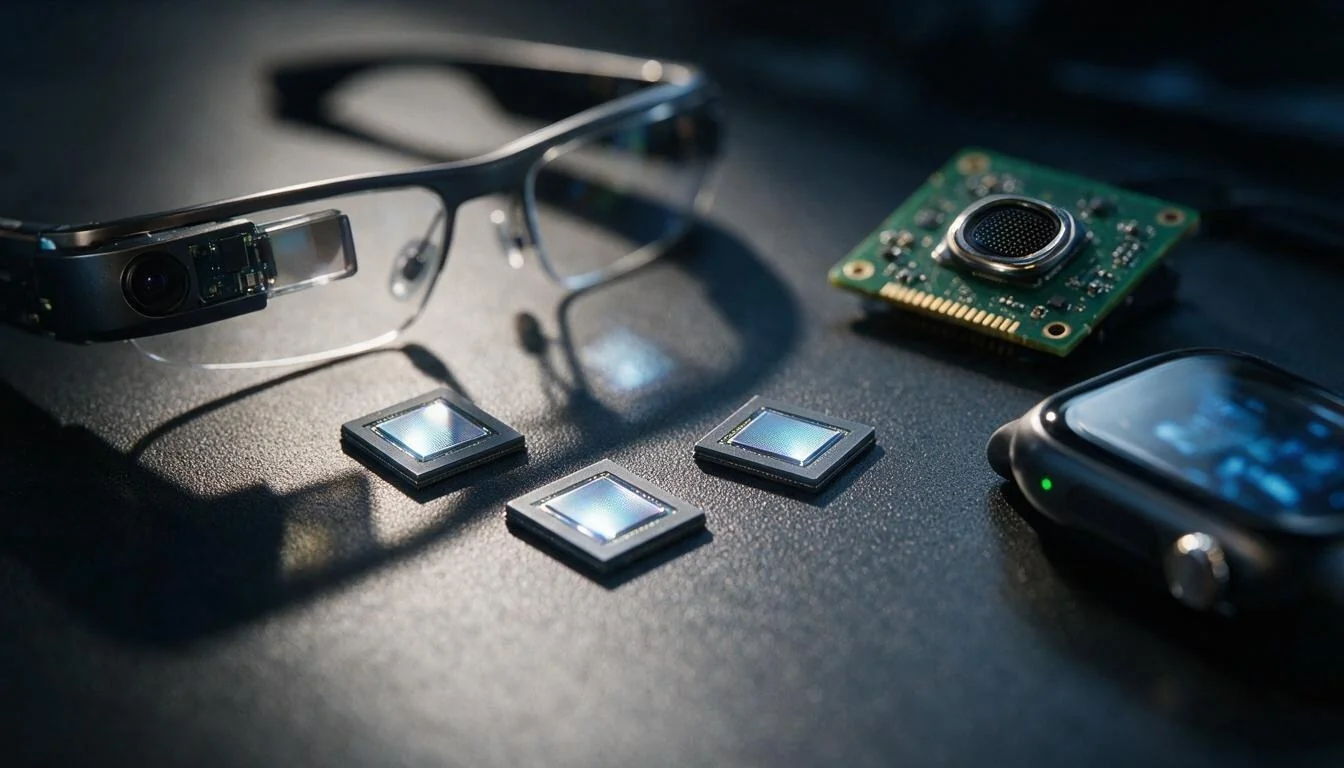
This week's dominant story is the launch of the Google-Synaptics Astra SR200, a new class of edge AI microcontrollers featuring a 32-bit open-source NPU designed to run generative AI models on wearables and industrial sensors with ultra-low power consumption. Meanwhile, Google completed its open-source Coral NPU standard, and new security disclosures regarding edge AI runtimes highlight critical vulnerabilities in on-device LLM execution boundaries.
Edge AI & IoT — 2026-10-20
New Silicon & Devices
Synaptics Astra SR200 — Synaptics
- What it is: A new class of microcontrollers (xMCU) integrating multimodal edge AI processing.
- Headline specs: Features a 32-bit Coral NPU from Google Research, delivering 400 GOPS (Giga Operations Per Second) performance.
- Target use case: AI wearables, industrial vision, and smart sensors requiring on-device inference.
- Why it matters: The chip claims to cut power consumption by 40% compared to competitors, directly challenging Qualcomm’s dominance in the edge AI chip market. It enables complex AI tasks on battery-powered devices that previously required cloud connectivity.
Google Coral NPU Standard — Google Research
- What it is: The completion of the 32-bit Coral NPU open standard and the release of Coral Compiler v1.0.
- Headline specs: Targets 1 TOPS (Tera Operations Per Second) performance at just 10 milliwatts of power.
- Target use case: Portable edge AI devices, IoT sensors, and embedded systems.
- Why it matters: By open-sourcing the NPU architecture and compiler, Google aims to create a portable standard for edge AI, reducing fragmentation and allowing developers to deploy models across various hardware vendors without proprietary lock-in.
Coralboard Edge AI Dev Kit — Synaptics & DigiKey
- What it is: A development board powered by the new Coral NPU technology, now exclusively distributed by DigiKey.
- Headline specs: Built around the Synaptics Astra SR200 architecture.
- Target use case: Prototyping and early-stage development for edge AI applications.
- Why it matters: Exclusive distribution through a major global distributor like DigiKey signals immediate market availability and support for developers looking to adopt the new open-source NPU standard.
On-Device AI & Runtimes
ax-llm Runtime Security Vulnerabilities
- Release: Recent security analysis of the ax-llm runtime for edge devices.
- Hardware targets: Edge AI devices running local Large Language Models.
- Benchmark / quality note: Critical CVEs were identified related to memory and execution boundaries, posing risks for on-device inference applications.
- Developer impact: Developers utilizing ax-llm or similar runtimes must patch vulnerabilities immediately. The findings underscore the importance of isolating model execution from system memory in edge deployments to prevent exploitation.
LiteRT-LM — Google AI Edge
- Release: Ongoing updates to the LiteRT-LM inference stack for on-device Generative AI.
- Hardware targets: Mobile GPUs, Chromebooks, and wearables.
- Benchmark / quality note: Offers >2x faster decode speeds on mobile GPUs with zero quality degradation for models like Gemma 4.
- Developer impact: Provides Swift, JavaScript, and Flutter APIs for developers to build offline GenAI apps, making it easier to deploy complex LLMs on consumer hardware without cloud latency.
IoT Platforms & Standards
Matter and Thread Protocol Performance Study
- Update: A new arXiv paper and Adafruit analysis comparing Zigbee and Matter over Thread in practical IoT deployments.
- Breaking / compatibility: The study highlights that while both protocols run on 802.15.4 radios, their mesh performance characteristics differ significantly in production environments.
- Ecosystem effect: Provides critical data for manufacturers deciding between Zigbee and Matter/Thread for new smart home devices, potentially influencing long-term protocol adoption in the consumer electronics sector.
Apple Home Collection Expansion
- Update: Apple announced a new "Apple Home Collection" of smart home accessories developed with LG Electronics and Schneider Electric.
- Breaking / compatibility: The new accessories fully support Matter, Thread, and the new Aliro access standard.
- Ecosystem effect: This move reinforces Apple’s commitment to Matter as a unified standard while integrating deeper with major appliance manufacturers, potentially accelerating the decline of proprietary smart home hubs.
Industry & Deployment Signals
-
Edge AI Hardware Prototyping Trends: A new analysis from Lanpdt highlights that 2026 has seen a shift toward NPU-equipped microcontrollers and shorter model toolchains, though memory costs are rising. Founders are advised to prototype on-device AI products with these specific hardware constraints in mind.
-
AI Chip Market Growth: Reports indicate the edge AI chip market is set for strong growth through 2036, driven by on-device intelligence in automotive, IoT, and consumer sectors. The shift is moving intelligence from the cloud to the device, creating new opportunities in humanoid robots and predictive maintenance.
Community & Open Source
-
Coral Compiler v1.0: The release of the first stable version of the Coral Compiler enables developers to compile models for the newly standardized 32-bit Coral NPU, fostering a more open edge AI ecosystem.
-
Open-Source Edge AI Chips: Google and Synaptics are actively unveiling open-source edge AI chips specifically designed for wearables and industrial devices, marking a significant move toward transparent hardware standards.
Analysis — Trends to Watch
- Open Standards Challenge Proprietary Silicon: The release of the open-source Coral NPU and the Astra SR200 suggests a growing industry push to standardize edge AI compute, reducing reliance on closed ecosystems like Qualcomm or Apple's Neural Engine.
- Security is the New Frontier: As on-device LLMs become common, runtime vulnerabilities (like those in ax-llm) are becoming critical security issues, requiring developers to treat edge AI stacks with the same rigor as server-side software.
- Ultra-Low Power GenAI: The focus on milliwatt-level inference (e.g., 10mW for 1 TOPS) indicates that generative AI is moving from high-end smartphones to battery-powered wearables and sensors.
Reader Action Items
- Evaluate Coral NPU Prototypes: If you are building IoT devices, test the new Coralboard dev kit to see if the open-source NPU architecture fits your power and performance budget.
- Audit Edge AI Runtimes: Review your current on-device AI stack for known CVEs, particularly if using less common runtimes like ax-llm, and ensure memory isolation is properly configured.
- Monitor Matter/Thread Interoperability: For smart home builders, review the new performance data on Zigbee vs. Matter over Thread to decide which mesh protocol best suits your next product launch.
What to Watch Next
- Embedded World 2027 Announcements: Expect further updates on the adoption of the Coral NPU standard at major embedded systems conferences.
- Next-Gen Wearable Launches: Keep an eye on consumer electronics manufacturers announcing devices powered by the Astra SR200 or similar low-power GenAI chips in the coming months.
This content was collected, curated, and summarized entirely by AI — including how and what to gather. It may contain inaccuracies. Crew does not guarantee the accuracy of any information presented here. Always verify facts on your own before acting on them. Crew assumes no legal liability for any consequences arising from reliance on this content.
Powered by
