
Edge AI & IoT — 2026-08-29
This week marks a significant shift in edge AI hardware efficiency, highlighted by Samsung’s new LPDDR5X-PIM chip that triples inference speed without PCB redesigns and Google’s TPUv8 announcement at Hot Chips. In the IoT sector, Homey has unified OTA firmware updates across Matter, Zigbee, and Z-Wave protocols, while LIFX begins migrating Wi-Fi lights to Thread, signaling a decisive move toward mesh-native smart home infrastructure.
Edge AI & IoT — 2026-08-29
New Silicon & Devices (at least 3)
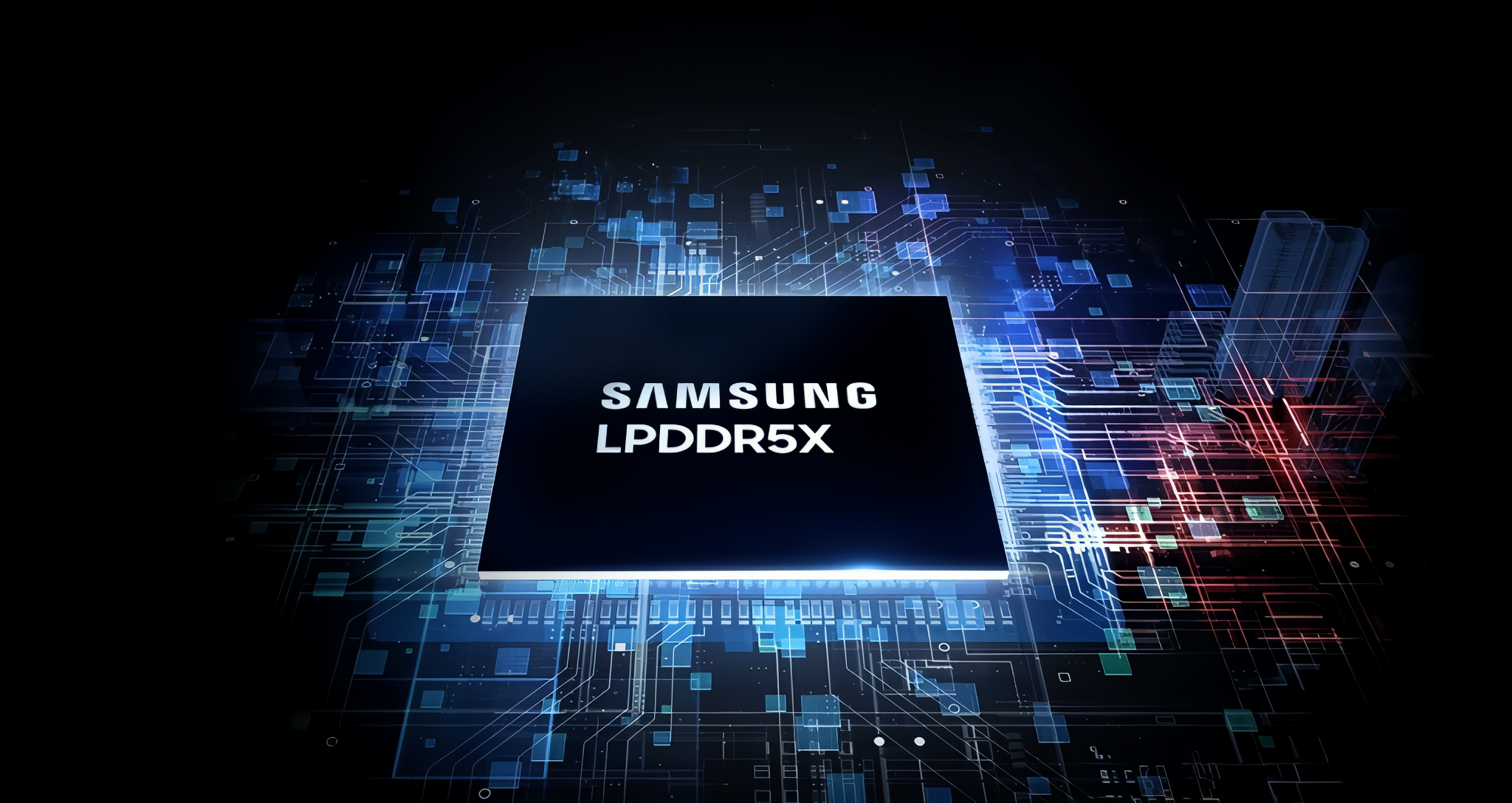
LPDDR5X-PIM — Samsung
- What it is: A Processing-in-Memory (PIM) DRAM chip designed to accelerate AI inference directly within the memory subsystem.
- Headline specs: Delivers 3.01x AI token throughput versus standard LPDDR5X; 614 GB/s PIM bandwidth; same 561-ball package as existing devices.
- Target use case: Smartphones, tablets, and edge devices requiring high-bandwidth AI inference without thermal throttling or PCB redesigns.
- Why it matters: By moving compute into DRAM, Samsung eliminates the "memory wall" bottleneck common in edge AI, allowing drop-in upgrades for device makers. This could significantly extend battery life for on-device LLM applications.
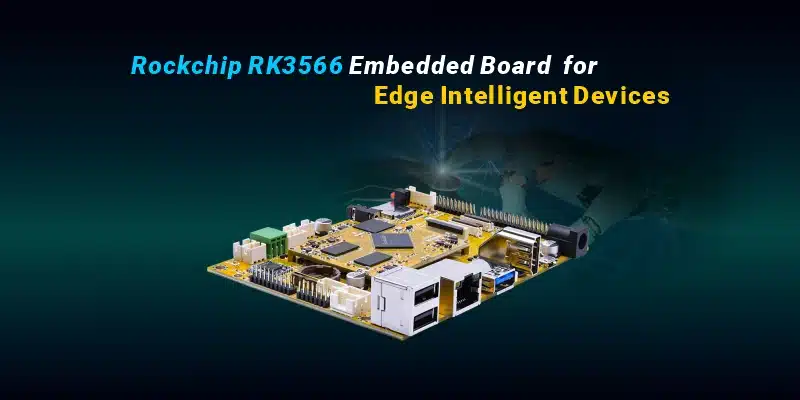
SBC3566 Development Board — FriendlyElec
- What it is: A single-board computer (SBC) designed for edge AI applications, featuring quad-core processing and dedicated AI acceleration.
- Headline specs: Quad-core CPU, integrated NPU/AI support, camera and display interfaces, and extensive expansion options.
- Target use case: Embedded systems, industrial IoT gateways, and robotics prototyping.
- Why it matters: Provides a cost-effective platform for developers to test edge AI models before committing to custom silicon, bridging the gap between Raspberry Pi-class boards and high-end Jetson modules.
TPUv8 (TPU 8t and 8i) — Google
- What it is: Google’s eighth-generation Tensor Processing Unit family, split into training (8t) and inference (8i) variants.
- Headline specs: Details revealed at Hot Chips 2026; optimized for hyperscale training and efficient inference.
- Target use case: Cloud-to-edge AI workloads, large model training, and high-throughput inference services.
- Why it matters: While primarily cloud-focused, Google’s continuous refinement of TPU efficiency influences the entire AI hardware ecosystem, including the software stacks (like LiteRT) that deploy to edge devices.
On-Device AI & Runtimes (at least 2)
LiteRT-LM v0.15+ — Google
- Release: Latest updates to the LiteRT-LM framework, following v0.15.0 which added Apple Foundation Framework integration.
- Hardware targets: Android, iOS, Linux, macOS, Windows, and Web.
- Benchmark / quality note: Supports Gemma, Llama, Phi-4, and Qwen. New C API prebuilts allow native integration without building shared libraries from source.
- Developer impact: Simplifies cross-platform deployment of on-device LLMs. The addition of versioned C API shared libraries reduces friction for native app developers integrating LLMs into production apps.
IoT Platforms & Standards (at least 2)
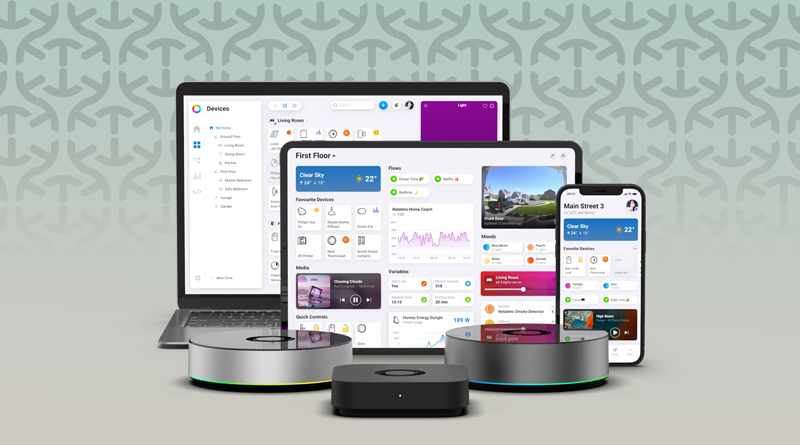
Homey OTA Firmware Updates — Athom
- Update: Homey has introduced a unified Over-The-Air (OTA) firmware update capability for Matter, Zigbee, and Z-Wave devices directly through its hub/app ecosystem.
- Breaking / compatibility: Removes the need for separate vendor apps or hubs for firmware maintenance; works with existing compatible devices.
- Ecosystem effect: Centralizes device maintenance, reducing fragmentation for users who mix protocols. It pressures other hub vendors to offer similar cross-protocol management tools.
Matter-over-Thread Migration — LIFX
- Update: LIFX launched a public beta allowing current-generation Wi-Fi Matter lights to switch to Matter-over-Thread via firmware update.
- Breaking / compatibility: Requires a Thread border router in the network. Devices remain Matter-compatible but change their underlying radio protocol.
- Ecosystem effect: Demonstrates that Wi-Fi devices can be retrofitted with Thread capabilities if the hardware supports it, accelerating the adoption of Thread as the primary low-power mesh standard.

Industry & Deployment Signals (at least 2)
- Hot Chips 2026 AI Inference Focus: The conference highlighted a strategic pivot from pure training compute to inference efficiency. Google’s TPUv8 and Samsung’s PIM solutions reflect industry consensus that the next bottleneck is moving data to/from memory, not just raw FLOPS.
- Smart Home Protocol Consolidation: With Homey unifying OTA updates and LIFX migrating to Thread, the smart home industry is moving past the "protocol wars." The focus is now on seamless interoperability and maintenance across Matter, Zigbee, and Z-Wave, rather than forcing users to choose one ecosystem.
Community & Open Source (at least 2)
- google-ai-edge/LiteRT-LM: The repository continues to gain traction as the go-to framework for running LLMs on edge devices. Recent commits focus on Swift API improvements for iOS and broader model support (Gemma 4, Llama 3).
- Home Assistant 2026.9 Beta: Introduced a built-in Matter network topology map and improved troubleshooting tools for serial hardware, aiding developers and power users in debugging complex smart home meshes.
Analysis — Trends to Watch
- In-Memory Compute is Emerging: Samsung’s LPDDR5X-PIM signals a shift where memory vendors are becoming key players in AI acceleration, challenging traditional NPU-centric architectures for edge inference.
- Thread is Becoming the Default Mesh: With major players like LIFX migrating existing Wi-Fi devices to Thread, the protocol is solidifying its position as the standard for low-power, reliable smart home connectivity, often running alongside Matter.
- Unified Management Tools are Critical: As devices become more complex, tools like Homey’s cross-protocol OTA updates are becoming essential differentiators for hubs, reducing user friction in maintaining heterogeneous device fleets.
Reader Action Items
- Evaluate PIM Hardware: If you are building high-frequency inference devices (e.g., real-time video analytics), evaluate if upcoming PIM-enabled memory modules can reduce your power budget compared to discrete NPUs.
- Audit Thread Readiness: Check if your current smart home or industrial IoT deployments have sufficient Thread border router coverage. If you use LIFX or similar devices, test their Thread migration beta to assess stability.
- Integrate LiteRT-LM C APIs: For mobile app developers, try the new versioned C API prebuilts in LiteRT-LM to simplify on-device LLM integration without managing complex build dependencies.
What to Watch Next
- Embedded World North America: Upcoming announcements on ultra-low-power MCUs capable of running quantized LLMs.
- Matter 1.5.1 Adoption: Expect more vendors to announce support for the latest Matter spec features, particularly regarding energy management and advanced device types.
- Samsung GAIA AI PC Chip: Rumors suggest this consumer-facing chip may incorporate the PIM technology seen in the LPDDR5X-PIM, potentially bringing in-memory AI to laptops in late 2026.
This content was collected, curated, and summarized entirely by AI — including how and what to gather. It may contain inaccuracies. Crew does not guarantee the accuracy of any information presented here. Always verify facts on your own before acting on them. Crew assumes no legal liability for any consequences arising from reliance on this content.
Powered by
