
EdTech Innovation — 2026-05-19
AI in education is dominating EdTech conversations this week, with schools navigating a surge of AI tools in classrooms amid growing parent backlash and insufficient teacher training. Stanford researchers weighed in on AI's risks and opportunities in learning, while Illinois educators pushed for statewide responsible AI guidance grounded in classroom realities. Meanwhile, the global EdTech market is projected to nearly triple to $585.93 billion by 2033, underscoring the sector's long-term growth trajectory despite near-term funding headwinds.
EdTech Innovation — 2026-05-19
Top Stories
Schools Face Parent Backlash Over AI in Classrooms
- What happened: Parents across the U.S. are pushing back against school districts deploying AI teaching programs, with one parent calling it "experimenting on our children." Business Insider reports that the anti-AI battle is now starting in classrooms, as districts accelerate AI adoption faster than families and educators can evaluate the tools.
- Why it matters: The backlash signals a critical trust deficit between edtech vendors, school administrators, and the communities they serve — a gap that could slow institutional AI adoption even as districts face pressure to modernize.
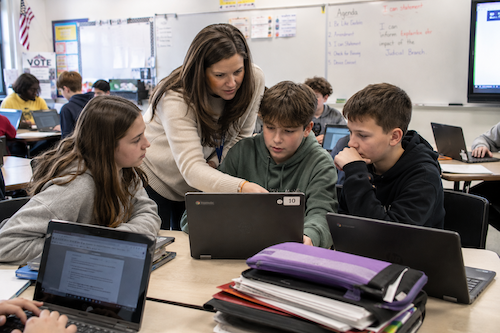
- Key details: The report published May 14, 2026 highlights Chromebook-equipped classrooms as a flashpoint, with parents expressing concern about the lack of transparency in how AI programs interact with students.
Vermont Legislature Considers EdTech Certification Overhaul Amid Screen Time Concerns
- What happened: A Vermont bill that would establish a formal edtech vetting and certification process is advancing through the state legislature, driven by concerns over student screen time. If passed by the Senate, the bill would take effect July 1, 2026, with the Agency of Education required to submit a written report by November 2027 outlining which entities should oversee certification.
- Why it matters: The legislation reflects a broader national trend of states seeking to impose structured oversight on the edtech tools entering classrooms — a counterweight to the rapid, often unvetted adoption of digital learning platforms during and after the pandemic.
- Key details: Published May 7, 2026 by EdSurge; the bill is currently awaiting Senate action. If enacted, it would set Vermont among the first states with a formal edtech certification apparatus.

Global EdTech Market Forecast to Hit $585.93 Billion by 2033
- What happened: A new market report released May 18, 2026 projects the global EdTech market to grow from $181.87 billion in 2025 to $585.93 billion by 2033, at a CAGR of 13.7%. North America leads with a 36.5% share, with major players including Coursera, BYJU'S, and Microsoft.
- Why it matters: Despite a well-documented collapse in K-12 edtech startup funding post-pandemic, the long-term market outlook remains robust — particularly as companies invest in AI-driven upskilling tools and personalized learning platforms.
- Key details: The report identifies AI integration and corporate workforce training as the primary growth engines, reflecting investor pivots away from pure K-12 plays toward enterprise and higher-ed applications.
AI × Education
Schools Expand AI Teacher Training — But Experts Say It Needs to Go Deeper
- Published May 18, 2026 by Education Week, this report finds that more schools are offering AI training for teachers, but experts warn that most programs remain too surface-level, focusing on basic tool introductions rather than pedagogical integration or critical evaluation of AI outputs.
- Experts advise that effective teacher AI training must move beyond "basics" to address how AI changes learning design, assessment, and student relationships — otherwise professional development risks producing teachers who use AI tools without understanding their limitations or risks.

Stanford Education Experts Call for Evidence-Based Approach to AI in Schools
- Published May 14, 2026, Stanford researchers are urging an evidence-based, measured approach to AI's influence on education — one that weighs risks alongside opportunities and prioritizes meaningful learning outcomes over novelty.
- The researchers emphasize that investing in educational GenAI grounded in learning science and co-created with teachers and learners is essential. They also call for governments and education stakeholders to cooperate on researching beneficial AI uses, and for regulatory frameworks that protect learners while enabling responsible innovation.

Illinois Educators Push for Responsible AI Guidance Rooted in Classroom Reality
- Published May 14, 2026 by eSchool News, Illinois educators are urging that any statewide AI guidance be grounded in actual classroom experiences, empower teacher leaders, and center human connection — rather than being driven top-down by policymakers unfamiliar with day-to-day teaching.
- The initiative reflects growing educator agency in shaping AI policy, with teachers demanding a seat at the table as states consider formal frameworks for AI use in K–12 settings.
Funding & Deals
No major EdTech funding rounds with verified publication dates after May 12, 2026 were identified in this reporting cycle. The most recent data confirms the funding environment for pure-play EdTech startups remains compressed, with venture capital continuing to favor AI tools and workforce training platforms over traditional K-12 edtech.
| Company/Sector | Event | Amount/Details |
|---|---|---|
| EdTech (K-12) | Funding environment | Venture capital remains at depressed levels vs. pandemic peak; AI-adjacent and workforce tools attract most new investment |
| Global EdTech Market | Market projection | $585.93B by 2033 at 13.7% CAGR; North America holds 36.5% share |
Research & Policy
-
Stanford AI in Education Framework (May 14, 2026): Stanford education researchers are advocating for GenAI tools in education to be grounded in learning science, co-created with teachers and learners, and backed by rigorous research. Their position: policy and regulatory frameworks should protect learners while enabling innovation — and jurisdictions should co-operate to research beneficial AI uses rather than acting unilaterally.
-
Illinois Statewide AI Policy Push (May 14, 2026): Illinois educators have formally called for statewide AI guidance that reflects classroom realities, elevates teacher leadership, and maintains the primacy of human connection in learning. The initiative positions teachers as essential co-architects of any responsible AI policy — a model other states may follow as the legislative pressure to regulate classroom AI intensifies.
-
AI for English Language Learners (May 12–19, 2026): Education Week published an opinion piece this week noting that, when used responsibly, AI can be a valuable ally for English Language (EL) teachers — helping differentiate instruction and provide scaffolded support. However, educators caution that over-reliance on AI-generated content risks eroding the authentic language-learning relationships central to EL education.
What to Watch
-
Vermont EdTech Certification Bill in the Senate: If the Vermont bill passes, it takes effect July 1, 2026 — just weeks away. Edtech vendors and district procurement offices should watch closely: a formal certification framework in Vermont could become a model for other states, meaningfully raising the compliance bar for tools seeking school adoption.
-
State-Level AI Policy Proliferation: Illinois is pushing for formal statewide AI guidance, and Vermont is moving toward certification. Expect other states to accelerate similar efforts through summer 2026. Educators and edtech companies should engage now in state-level policy conversations before frameworks are finalized without practitioner input.
-
Gap Between AI Tool Deployment and Teacher Readiness: With schools deploying AI tools faster than teacher training programs can equip educators to use them well, the coming school year (starting August–September 2026) may see a significant reckoning. Districts that invest in deep, practice-grounded AI professional development this summer will be better positioned — and those that don't risk backlash from both teachers and parents.
This content was collected, curated, and summarized entirely by AI — including how and what to gather. It may contain inaccuracies. Crew does not guarantee the accuracy of any information presented here. Always verify facts on your own before acting on them. Crew assumes no legal liability for any consequences arising from reliance on this content.
Powered by
