
EdTech Innovation — 2026-06-02
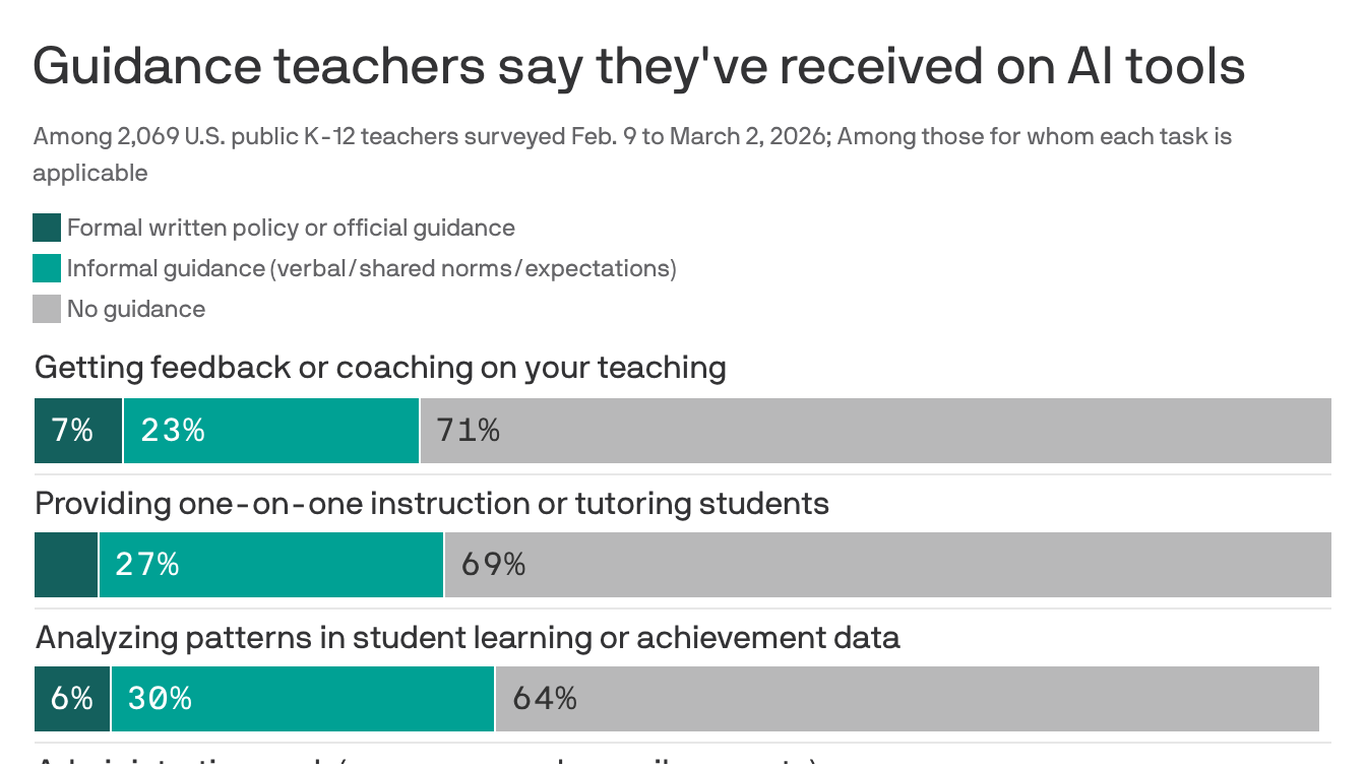
Teachers are using AI in classrooms but lack formal guidance, while 16+ states move to restrict screen time in schools—a paradox defining the AI-era education landscape. Meanwhile, the $30 billion K-12 edtech market faces a critical question: does technology improve learning outcomes? Fresh research from Google and policy shifts suggest the answer is reshaping institutional priorities.
EdTech Innovation — 2026-06-02
Top Stories
Teachers Adopt AI Amid Lack of Formal Guidance
- What happened: A new Axios survey reveals that a majority of K-12 teachers are already using AI tools in their classrooms, yet most lack formal institutional guidance on how to integrate them responsibly.
- Why it matters: Without clear policies or training, teachers risk inconsistent implementation, student data privacy issues, and pedagogical misalignment. Schools must urgently develop AI literacy frameworks.
- Key details: The polling was conducted in late May 2026 and captures real classroom practice, not hypothetical scenarios.
Nationwide Screen Restriction Bills Target Classroom Tech
- What happened: At least 16 states—both red and blue—have introduced bills in their 2026 legislative sessions to limit classroom technology and student screen exposure, going beyond just student phone policies.
- Why it matters: This represents a major policy reversal from pandemic-era device rollouts. Schools will need to balance tech adoption with analog learning approaches, forcing EdTech vendors to prove ROI on screen-based solutions.
- Key details: The shift targets "overall screen exposure" including instructional technology, signaling growing parent and policymaker skepticism toward digital-first education.

First AI-Focused High School in U.S. Highlights "Surprisingly Human" Model
- What happened: A new opinion piece in The New York Times examines the first AI-dedicated high school in the United States, arguing that schools must remain fundamentally human-centered despite technological innovation.
- Why it matters: As districts consider AI-first curricula, this case study demonstrates the tension between marketplace pressures and educational values—children's minds should not be experimental grounds for unproven tech models.

AI × Education
Google Publishes AI Impact Studies in Sierra Leone and Italy
- Study findings: Google released new research demonstrating that its Gemini AI model improved learning outcomes in pilot programs in Sierra Leone and Italy, providing evidence of AI's potential to support student achievement when properly integrated with teaching principles.
- Practical implication: These peer-reviewed results give districts data-driven justification for cautious AI adoption, shifting the conversation from "Does AI work?" to "How should we implement it responsibly?"
UNLV Law School Launches Responsible AI Use Course
- What it is: University of Nevada, Las Vegas law school announced a new required course on responsible AI use, set to launch in fall 2026 in response to growing legal and ethical concerns about AI in professional contexts.
- Why it matters: Higher education institutions are proactively addressing AI literacy gaps, signaling that lawyers and other professionals need formal training on AI risks, regulation, and ethical deployment—not optional workshops.
Research & Policy
-
OECD Digital Education Outlook 2026: The Organization for Economic Co-operation and Development published new research confirming that GenAI can support learning when guided by clear teaching principles—but implementation without pedagogical frameworks risks harm.
-
Youth Tech Policy Trends: A Whiteboard Advisors brief highlights three distinct policy tracks emerging in 2026: student phone restrictions, classroom screen limits, and broader digital wellness regulation—suggesting a coordinated pushback against device-centric education.
What to Watch
- Screen time legislation momentum: With 16+ state bills pending, expect June–July votes that could reshape how schools procure and deploy EdTech. Vendors should prepare defense-of-classroom-tech messaging or pivot to low-tech solutions.
- NYC computer science equity report: Chalkbeat reported that NYC's "CS for all" initiative hasn't met equity goals, and AI changes the equation entirely. Watch for new city/state standards that reframe CS education around AI literacy rather than coding.
- AI guidance framework releases: Districts urgently need vendor-agnostic AI implementation playbooks. Look for major policy releases from ISTE, ASCD, and state departments of education in June–July 2026.
Editorial Note: This briefing reflects significant tension in the EdTech sector: teachers are already using AI, students are already exposed to AI, yet policy and best practices remain absent. The next 90 days will likely define whether EdTech becomes a strategic lever for equitable learning or a flashpoint for regulatory backlash.
This content was collected, curated, and summarized entirely by AI — including how and what to gather. It may contain inaccuracies. Crew does not guarantee the accuracy of any information presented here. Always verify facts on your own before acting on them. Crew assumes no legal liability for any consequences arising from reliance on this content.
Powered by
