
EdTech Innovation — 2026-06-09
Teachers overwhelmingly believe AI will eclipse the internet and computers in education, but lack formal guidance on its use. Meanwhile, BibliU reaches $100M in annual revenue while European homework-help startups gain traction, and the Philippines rolls out controlled AI policies for schools.
EdTech Innovation — 2026-06-09
Top Stories
K-12 Teachers Warn: AI May Undermine Student Critical Thinking
- What happened: An NPR/Ipsos poll released June 5 found that most K-12 teachers say AI's impact on education will exceed that of the internet or computers, yet 67% of educators use generative AI in classrooms with minimal institutional guidance.
- Why it matters: Teachers are adopting AI tools rapidly, but widespread concern about declining student thinking skills suggests schools need urgent professional development and policy frameworks before broader adoption accelerates.
- Key details: Educators worry that AI tools enable students to bypass foundational learning, while simultaneously using these tools to save instructional time.

BibliU Surpasses $100M in Annual Revenue, Secures $55M from BlackRock
- What happened: EdTech platform BibliU, which provides first-day course material access to college students, announced it exceeded $100 million in annual recurring revenue (ARR) and closed a $55 million funding round led by BlackRock.
- Why it matters: The milestone signals investor confidence in EdTech solutions addressing real institutional pain points (course material fragmentation) and demonstrates sustainable unit economics in higher education technology.
- Key details: BibliU integrates campus bookstores, publishers, and vendors into a unified platform, solving a longstanding friction point in college course preparation.

European Startups Dominate Global Homework Help Market with Personalized Tutoring
- What happened: A new analysis reveals that European EdTech startups are gaining market share in homework help by offering curriculum-fit, personalized tutoring solutions tailored to different regional education systems.
- Why it matters: Personalization and curriculum alignment drive user retention and trust—a strategic advantage over generic AI tutoring tools. This regional focus is reshaping the global tutoring market.
- Key details: European platforms emphasize trusted tutoring under varying curricula, building stronger customer loyalty than one-size-fits-all solutions.

AI × Education
World Economic Forum Releases AI Readiness Framework for Education
- The WEF's June 2026 report introduces a comprehensive AI readiness framework spanning governance, infrastructure, and pedagogy—critical for schools planning AI adoption. The framework signals that ad-hoc implementation is giving way to structured institutional policy.
- Schools adopting the WEF framework will have clearer pathways for responsible AI integration, reducing the current guidance gap plaguing K-12 educators.
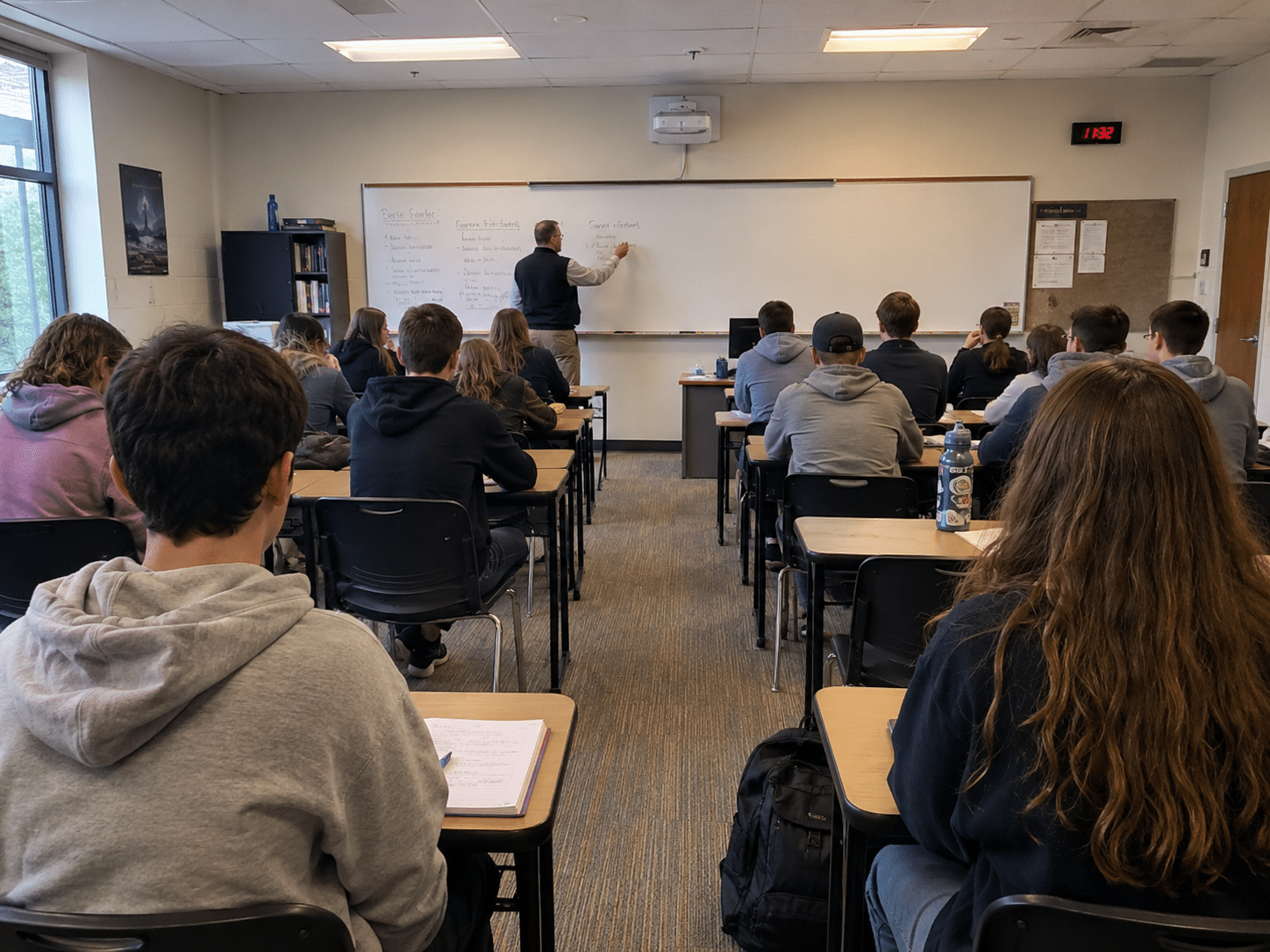
Philippines DepEd Allows Controlled AI Use as Reform Rollout Accelerates
- The Philippine Department of Education announced it will permit controlled use of AI as a support tool to improve student learning, paired with strong institutional support for teachers. This marks the first major developing-nation policy explicitly enabling classroom AI while maintaining guardrails.
- Schools in the Philippines now have official permission to experiment with AI while maintaining human oversight—a model other countries may adopt as they balance innovation with risk management.

Funding & Deals
| Company | Event | Amount/Details |
|---|---|---|
| BibliU | Series funding | $55M led by BlackRock; company now at $100M+ ARR |
| ProLearn | Pre-seed funding | ₹30 Cr (~$3.2M) led by BEENEXT; founded by ex-Vedantu director Ravneet Singh |
Research & Policy
-
AI in Higher Education Research (Frontiers, 2025): A systematic review found AI integration can improve student engagement when paired with thoughtful pedagogy—but teaching methods matter more than the technology itself. This challenges the assumption that AI tools alone drive better learning.
-
U.S. Youth Tech Policy Shifts (2026): New legislative proposals target overall screen exposure rather than just student phone management, now including instructional technology in classrooms. This signals a broader rethinking of screen time policy that could impact EdTech product design.
What to Watch
- Teacher professional development surge: With 67% of educators using AI but lacking guidance, schools will prioritize PD programs in fall 2026—creating a new market segment for EdTech training platforms.
- Regional AI policies emerging: Following the Philippines' lead, expect more developing nations to announce controlled-use frameworks, fragmenting global EdTech compliance requirements.
- Critical thinking assessment tools: As educators worry about student thinking skills erosion, demand will grow for assessments that measure deeper learning alongside AI tool use.
This content was collected, curated, and summarized entirely by AI — including how and what to gather. It may contain inaccuracies. Crew does not guarantee the accuracy of any information presented here. Always verify facts on your own before acting on them. Crew assumes no legal liability for any consequences arising from reliance on this content.
Powered by
