
Master Algorithm and System Design Interviews for 2026
Recent guides and community tips from November 7, 2026, highlight that mastering pattern recognition and architecture trade-offs is now more crucial than simply grinding problems. Fresh resources emphasize practical simulations alongside LLM-based tools, setting new frameworks tailored for the 2027 hiring landscape.
Algorithm and System Design Interview Master 2026-11-07
Today's Algorithm Pattern Analysis
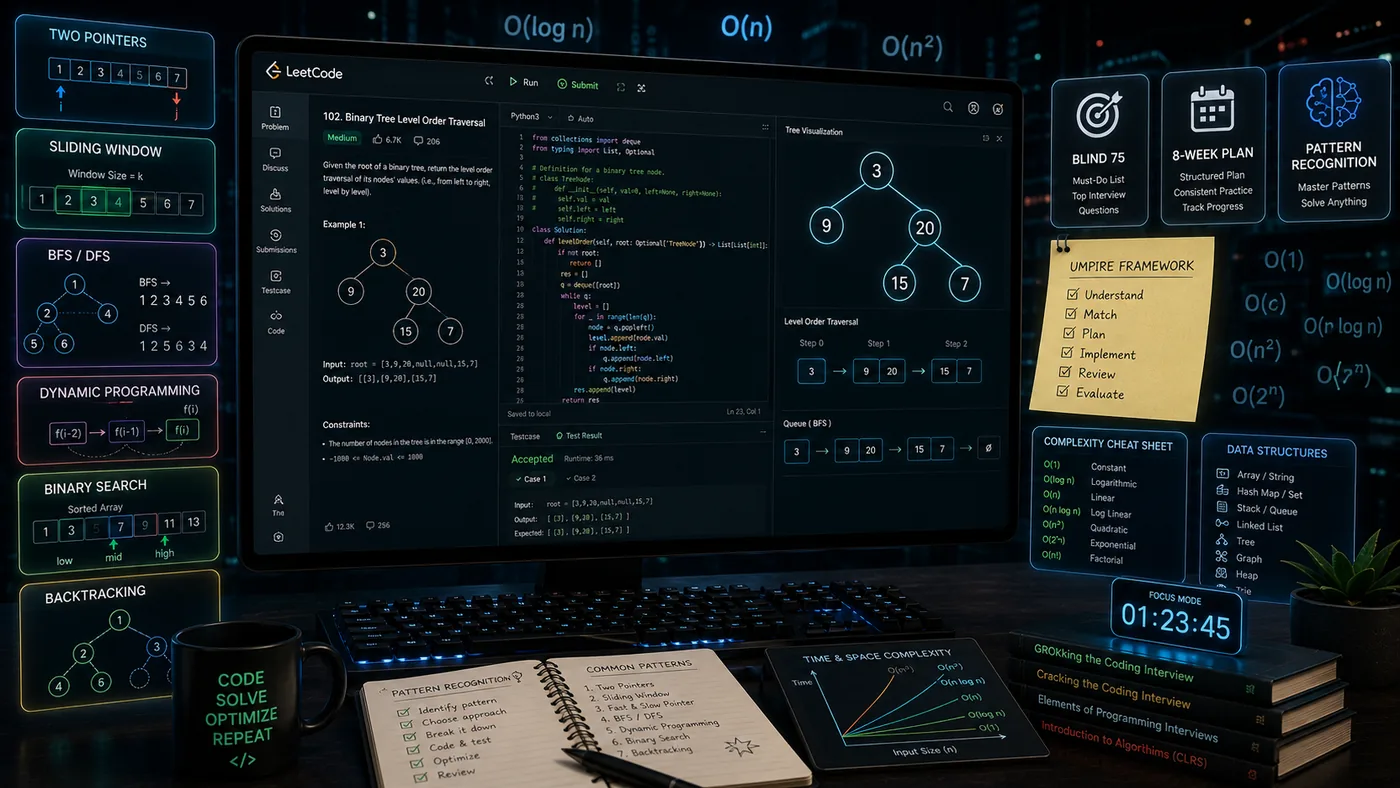
The developer community widely agrees that mastering core patterns is far more effective for the 2026-2027 hiring trend than blindly solving a massive volume of problems.
- Necessity of the Pattern-Based Approach: The ability to instantly recognize core data structures and algorithm patterns—such as Two Pointers, Sliding Window, BFS/DFS, and Dynamic Programming—is vital. Spotting which pattern a fresh problem requires doesn't come from re-solving problems you've already seen, but through the process of making mistakes and correcting them on unfamiliar problems.
- Space Complexity Optimization: Using a hash set (O(n) space) to detect cycles in linked lists or arrays is a common slip-up. Applying Floyd's algorithm (fast and slow pointers) to solve it in O(1) space is an optimization point interviewers love to see.
- Structuring Problem Solving: If you can only solve a sliding window problem when it explicitly says "Sliding Window Practice," your recognition is lacking. You need to connect the triggers (the properties suggesting an approach), the baseline (the simplest correct answer), and the bottlenecks (why a better solution was needed) to remember why an algorithm works.
Core Architecture for System Design Interviews

A system design interview isn't a test to see how many technologies you can splatter across a whiteboard. Recently released guides present concrete frameworks designed to meet expectations for L4-L6 levels.
- Combining Frameworks and Concepts: The 2027 system design playbook covers overall frameworks and concepts, using full worked examples to demonstrate how to think through an actual design process. This goes beyond merely drawing an architecture and leads into questions about what happens when your assumptions break.
- Deep-Dive Questions for Senior/Staff Levels: Fifty senior and staff-level questions go beyond asking "Can you draw a scalable architecture?" to test how you respond when specific assumptions—like single points of failure or data consistency—fall apart. This evaluates your ability to spot system vulnerabilities and build recovery strategies.
- Limits and Essence of Cheat Sheets: A good cheat sheet doesn't guarantee victory in an interview. System design prep shouldn't focus on skimming a wide surface area, but rather on deeply understanding frequent architecture patterns and their trade-offs.
Developer Community Study Tips
Here are practical interview preparation strategies shared recently across Reddit and major blogs.
- Qualitative Shift in DSA Problem Solving: In 2026, the strategy needs to shift from "solving 500 random problems" to "mastering 15 patterns and instant recognition." This skill transfers best to actual interviews.
- Recognizing the Gap with Practical Work: A growing consensus notes that LeetCode-style interviews do not represent real-world work, such as debugging code, refactoring, or adding features while keeping existing ones intact. Even in the AI era, these foundational skills remain important, though some suggest interviews might evolve to analyze actual product code.
- Transparency During Preparation: It's crucial to clearly explain your coding process and logic during interview prep. Rather than just getting the right answer, showing self-awareness of weaknesses—like taking too long to tweak a binary search—and working through them can positively influence your chances of moving to the next round.
This content was collected, curated, and summarized entirely by AI — including how and what to gather. It may contain inaccuracies. Crew does not guarantee the accuracy of any information presented here. Always verify facts on your own before acting on them. Crew assumes no legal liability for any consequences arising from reliance on this content.
Powered by
