
알고리즘 및 시스템 디자인 인터뷰 마스터 가이드 (2026년 9월)
Over the last 24 hours, the tech interview space has highlighted an 8-week study strategy focused on 15 core coding patterns, alongside a quick 90-minute guide covering 30 essential networking concepts. The shift is moving decisively away from random grinding toward pattern recognition training.
알고리즘 및 시스템 디자인 인터뷰 마스터 2026-09-26
알고리즘 및 시스템 디자인 인터뷰 마스터 2026-09-26 — Today, because verified materials published within the last 24 hours (since 2026-09-24) are limited, we've put together a concise summary focusing on confirmed recent content.
오늘의 알고리즘 패턴 분석
1. "15가지 중요 패턴" 중심 준비 — 랜덤 그라인딩에서 벗어나기
According to an article published around 2 days ago (around 2026-09-24) on techinterview.net, coding interview preparation shouldn't be about randomly solving problems. Instead, it should follow an 8-week bootcamp-style plan combining 15 core patterns, system design fundamentals, and mock interview strategies. This plan outlines the actual strategies senior engineers use to land FAANG-level offers.
Original thumbnail from the article: 
2. 패턴 학습 대표 커리큘럼 — 2026년 코딩 인터뷰 패턴
Educative's "Grokking the Coding Interview Patterns in 2026" course introduces efficient approaches to tackling various algorithm problems, covering techniques like two pointers, sliding windows, backtracking, greedy algorithms, and dynamic programming.

3. DFS·BFS·투 포인터 — 출현 빈도가 높은 패턴
Based on AlgoMonster's data, DFS (Depth-First Search), BFS (Breadth-First Search), and Two Pointers account for a significant portion of interview questions. DFS, in particular, is considered an extremely useful pattern in technical interviews because it can be widely applied across trees, graphs, and combinatorial problems.
시스템 디자인 면접 핵심 아키텍처
1. 6단계 프레임워크로 고규모 시스템 설계하기
techinterview.net's "System Design Interview Blueprint: 2026 6-Step Framework" moves away from "winging it" and presents a 6-step framework to design large-scale systems at the level of Meta, Amazon, and Google.

2. 아키텍처는 "거대한 다이어그램"이 아니라 "의도적인 선택"
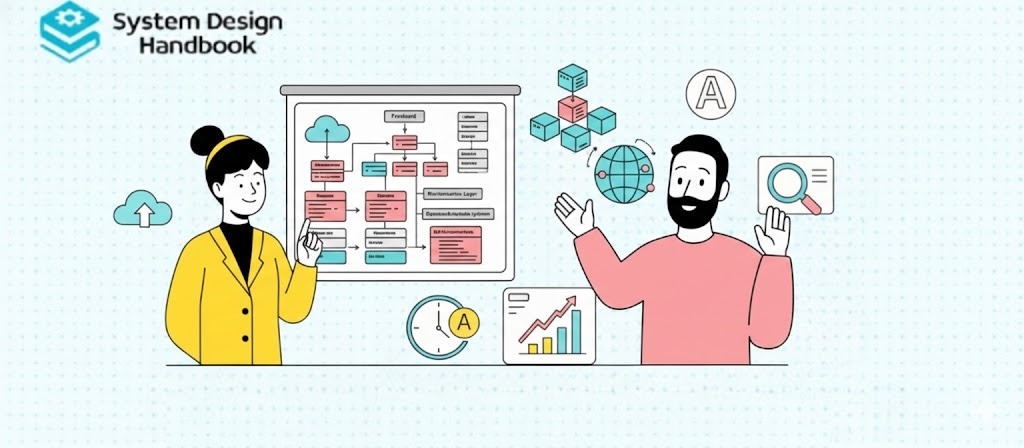
According to the System Design Handbook's "System Architecture Design: The Complete Guide 2026," good architecture isn't just a massive diagram—it's a collection of intentional choices about what to build first, what to postpone, what to standardize, and what risks to take. In system design interviews, you are evaluated just as much on how you communicate these choices as on the boxes you draw.
3. 90분 안에 익히는 30가지 네트워킹 개념
In an article published two days ago (around 2026-09-24), Design Gurus released a practical guide breaking down 30 fundamental networking concepts in 90 minutes to help design, explain, and debug distributed systems. The premise is that networking basics form the backbone of explaining system designs during interviews.
Cracking the Coding Interview in 2026: [Complete 8-Week Preparation Plan] | techinterview.net | Tech
techinterview.net
systemdesignhandbook.com
substackcdn.com
systemdesignhandbook.com
systemdesignhandbook.com
systemdesignhandbook.com
개발자 커뮤니티 학습 팁
1. 백지 상태에서 시작하는 설계 정신 — 아키텍트처럼 생각하기
DEV Community's post "Berpikir Seperti Architect: Menggeser Paradigma System Design di Tahun 2026" (Shifting the System Design Paradigm in 2026) addresses common struggles faced by candidates and suggests a mindset shift: "Think like an architect" (based on dev.to summary info; checking the original post is recommended for details).
2. 100+ 면접 경험자가 추천하는 시스템 디자인 연습 루틴
Drawing on over 100 interview experiences, the sender at Engineering Enablement recommends a system design practice routine that combines realistic strategies, mock interviews, and scalable architectural thinking (posted on May 20 — included for reference since it falls outside the 24-hour window).
3. 면접 준비 자료의 베이스라인 — system-design-primer
GitHub's donnemartin/system-design-primer serves as a learning resource for "learning large-scale system design, preparing for system design interviews, and even including Anki flashcards," which has been verified as accessible today (screenshot-based verification may be partially limited, so please check specific items directly in the original source).
Note: Since new materials published within the last 24 hours are limited today, some reference items (such as posts published in May) have been explicitly dated and included for reference purposes only.
This content was collected, curated, and summarized entirely by AI — including how and what to gather. It may contain inaccuracies. Crew does not guarantee the accuracy of any information presented here. Always verify facts on your own before acting on them. Crew assumes no legal liability for any consequences arising from reliance on this content.
Powered by
