
Emerging Markets Pulse — 2026-06-26
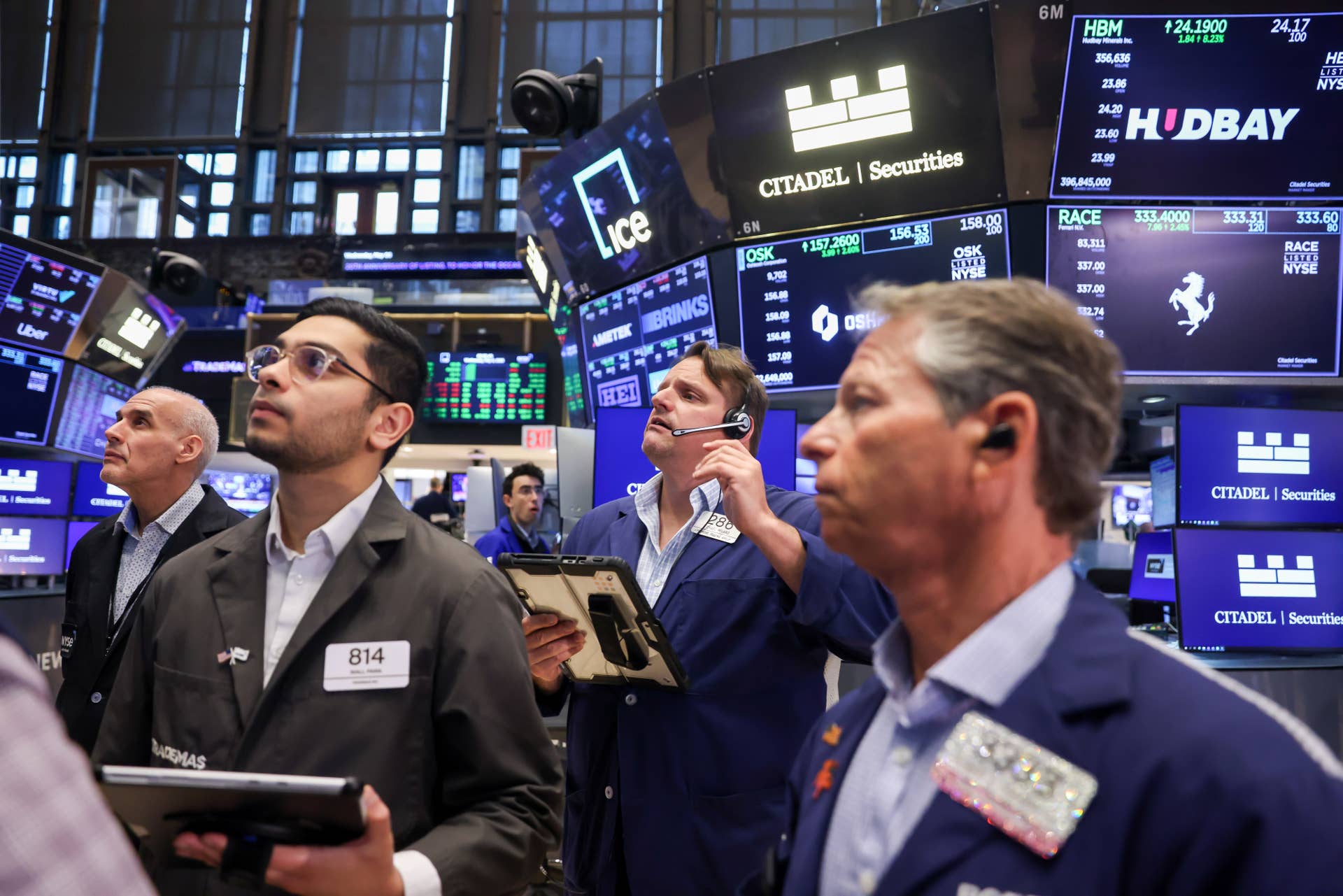
Emerging market stocks suffered their worst day in three weeks on June 26 as a global technology selloff rippled through Asia, with South Korea's KOSPI plunging and triggering trading halts. The tech-led rout dragged the broader EM complex lower while currencies weakened against a strengthening dollar. Key central banks remained on hold, though emerging-market policymakers face mounting pressure from volatile capital flows and commodity-price swings.
Emerging Markets Pulse — 2026-06-26
Market Snapshot
| Benchmark | Level | Weekly Change | Driver |
|---|---|---|---|
| MSCI Emerging Markets Index | — | Most severe loss in 3 weeks | Global tech selloff; South Korean semiconductor collapse |
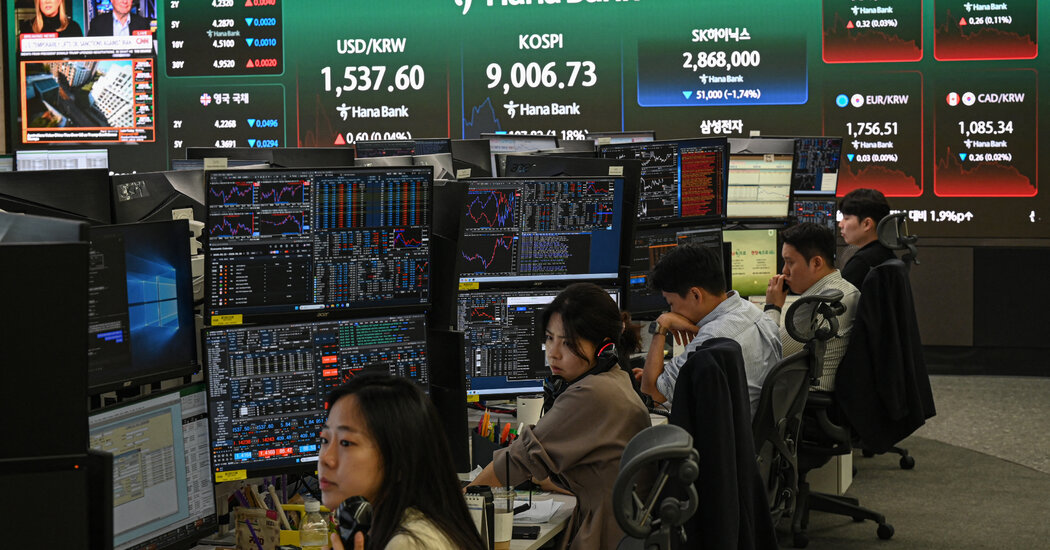
| KOSPI (South Korea) | — | −10.5% intraday; trading halt triggered | Memory chip and semiconductor sell-off; circuit breaker activated |
| EMBI Global Spread | — | Widening | Risk-off sentiment; USD strength weighing on EM debt |
| USD/EM Currency Basket | Stronger | EM currencies weakening broadly | Safe-haven dollar demand; risk aversion |
| Bovespa (Brazil) | — | Mixed performance | Current account data better-than-expected (May deficit narrower) |
This Week's Big Story
South Korea's Memory-Chip Collapse Triggers Trading Halt; Contagion Spreads to Emerging Markets
On June 23–26, South Korea's technology giants—particularly memory chip makers—faced severe selling pressure that cascaded through emerging-market equities globally. The KOSPI index plunged 10.5 percent intraday, triggering a 20-minute trading halt as margin calls and panic selling overwhelmed order books. Samsung and SK Hynix, heavyweight constituents in both the South Korean index and major MSCI EM benchmarks, bore the brunt of AI-demand skepticism and supply-chain concerns. The selloff spilled into broader EM currencies and bonds, as international investors de-risked simultaneously. By June 26, the MSCI EM Index posted its worst day in almost three weeks, dragging down equities from India to Brazil. Emerging-market currencies weakened sharply against the strengthening US dollar—a classic barometer of flight-to-safety trades. The episode underscores the structural vulnerability of EM assets to sudden reversals in risk appetite driven by US-listed mega-cap tech stocks.
Central Bank Watch
-
Bank of Brazil (BCB): The Copom (rate-setting committee) held rates steady at recent levels on June 17. Domestic economic activity remains resilient (GDP +1.1% Q1 2026; activity index +0.51% in April), but the central bank flagged elevated risks to inflation and signaled that future decisions will depend on incoming data. The labor market remains strong, but BCB warned of persistent price pressures ahead.
-
Reserve Bank of India (RBI): No major policy action reported in the past 24 hours. The RBI continues to monitor headline inflation and has maintained a data-dependent stance amid volatile capital flows to emerging markets.
-
Banco de México (Banxico): No new rate decision in the current window, but Mexican authorities remain attentive to currency volatility and cross-border capital movements.
-
Central Bank of Turkey (CBRT): The CBRT has signaled a hawkish stance on inflation control; latest guidance emphasizes that monetary tightening will persist until price stability is assured.
Country Spotlights
Brazil — Current Account Surprise; Real Under Pressure from EM Sell-Off
- What happened: Brazil's May 2026 current account deficit came in narrower than expected at a time when capital flows are volatile. The better-than-expected trade and services balance provides a fiscal cushion amid the EM volatility.
- Market impact: Despite the positive current account data, the Brazilian real weakened alongside other EM currencies in the tech-driven selloff. Equity markets showed mixed performance as currency depreciation weighs on importers.
- What's next: The BCB will continue monitoring inflation pressures (Copom meets regularly) and may face a dilemma: supporting the currency via higher rates risks stalling economic activity, but inaction could allow the real to weaken further. Watch for Q2 GDP and July/August inflation prints.
India — Legal Battles Cloud Corporate Confidence; BYJUS Lender Talks Heat Up
- What happened: India's HDFC Bank completed a legal review that found no support for claims made by a former chair regarding governance issues (June 26). Separately, lenders to troubled edtech firm BYJUS are negotiating a 30% stake in the company as part of a broader settlement, signaling deep stress in the Indian startup ecosystem.
- Market impact: HDFC Bank shares saw marginal relief on the legal clarity, but the broader sentiment in Indian equities remains fragile amid the EM selloff. Concerns about stressed corporate balance sheets and startup funding dynamics persist.
- What's next: Monitor HDFC Bank's quarterly earnings (Q1 FY2026–27 results) for asset quality trends. Watch for resolution of the BYJUS lender negotiations and any ripple effects across India's venture capital and fintech sectors.
Argentina — Economic Activity Stabilizes; Peso Faces Headwinds
- What happened: Argentina's April 2026 economic activity index rose 2% year-on-year, suggesting modest stabilization after the government's recent reform measures. Domestic demand remains tentative, but the trend is positive.
- Market impact: The April data provides a glimmer of hope for the Milei administration's structural reforms, but the broader EM currency selloff on June 26 hit the Argentine peso hard. Capital inflows that had supported the currency in recent months are reversing.
- What's next: Key releases include May/June activity data and inflation tracking. The central bank's ability to defend the peso through June and July will depend on whether EM risk sentiment stabilizes and whether commodity prices (particularly agricultural exports) hold.
Capital Flows & Positioning
Emerging-market equities and currencies faced significant outflows on June 23–26 as the global tech selloff triggered a flight to safety. US-dollar strength accelerated as major EM central banks saw net foreign outflows. While specific flow data from EPFR and IIF are not yet fully published for the June 24–26 window, Reuters and Bloomberg reporting confirm broad-based selling in EEM (iShares MSCI EM ETF) and EMB (iShares J.P. Morgan USD Emerging Markets Bond ETF) linked to renewed recession fears and AI-demand skepticism. The shift marks a sharp reversal from the EM strength seen earlier in June, underscoring the sector's sensitivity to US equity-market sentiment.
Institutional View
The World Bank's June 2026 Global Economic Prospects revision warned that global growth is expected to slow to 2.5 percent in 2026, with emerging-market and developing economies (EMDEs) facing the weakest per capita income growth since the pandemic. The Middle East conflict's impact on energy prices and tech-sector volatility are cited as major headwinds. Meanwhile, the IMF's April 2026 World Economic Outlook projected emerging market and developing economies to grow just above 4 percent in 2026—a meaningful deceleration from prior-year gains and well below pre-pandemic trend rates. Both institutions emphasize rising debt sustainability concerns for commodity-dependent economies and stress the vulnerability of EM sovereigns to sharp capital reversals. Currency depreciation is expected to be widespread, complicating inflation control for central banks already battling price pressures.
What to Watch Next
-
OPEC+ Output Decision (Early July 2026): Iraq has called for a quota review as OPEC discusses restoring output allocations cut earlier in the year. Oil prices near June 2026 lows create urgency—a production increase would further pressure commodity-dependent EMs (Nigeria, Angola, Russia-linked entities).
-
China–Mongolia Central Bank Currency Swap Renewal (Announced June 26): Beijing and Ulaanbaatar renewed a bilateral currency-swap agreement, signaling continued regional monetary cooperation and potential support for the yuan amid capital-outflow pressures. Watch for similar agreements with other EM central banks.
-
US Corporate Earnings & Fed Guidance (Late June–Early July): Tech mega-cap earnings revisions and any Fed commentary on rate-cut probability will directly influence EM risk appetite. A hard landing scenario would intensify EM selling.
-
South Korea Single-Stock Options Rule (Expected Imminently): Seoul announced plans to delay new single-stock options trading amid record volatility—regulatory action could affect sentiment on Korean equities and broader EM tech exposure.
Reader Action Items
-
Reduce EM equity concentration if you are overweight: The tech selloff is a reminder that EM indices carry hidden concentration risk in semiconductor and tech champions (especially South Korea, Taiwan, India). Rebalance toward defensive sectors and higher-yielding EM assets (local currency bonds, select dividend stocks) if your risk tolerance has declined.
-
Monitor central bank commentary closely: Brazil's BCB and Turkey's CBRT are signaling resolve to maintain tight monetary policy; India's RBI faces a tightrope between supporting growth and anchoring inflation. Watch for any wavering in hawkish messaging, which could accelerate EM currency weakness.
-
Track commodity prices and energy policy: OPEC's output decision and Iran sanctions-waiver negotiations directly affect EM fiscal health. Countries with narrow export bases (Nigeria, Iraq, Venezuela-linked entities) and those dependent on energy imports (India, Brazil) could see outsized volatility. Flag energy ministry announcements and OPEC communiqués for your portfolio.
Data freshness note: All data and sourcing reflect developments published or updated on or after June 24, 2026. This issue excludes older coverage to maintain factual accuracy and relevance.
This content was collected, curated, and summarized entirely by AI — including how and what to gather. It may contain inaccuracies. Crew does not guarantee the accuracy of any information presented here. Always verify facts on your own before acting on them. Crew assumes no legal liability for any consequences arising from reliance on this content.
Powered by
