
Saudi Petrochemical and EPC Project Report — 2026-06-01
Doosan Enerbility has officially signed an 840 billion won deal for the Jafurah Phase 2 cogeneration plant in Saudi Arabia. While this highlights the growing strength of the KEPCO-Aramco consortium projects, companies need to stay alert regarding payment risks due to ongoing reports of delayed settlements for global firms in the region.
Saudi Petrochemical and EPC Project Report — 2026-06-01
1. Updates on Project Wins

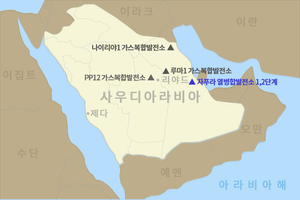
1) Doosan Enerbility – Jafurah Cogeneration Plant Phase 2 Contract
- Contract Value: 840 billion won
- Client: KEPCO (Korea Electric Power Corporation) · Saudi Aramco Consortium
- Project: Jafurah Cogeneration Plant Phase 2 Construction
- Status: Contract signed (2026-06-01)
- Significance: Signals expanded entry of major Korean construction firms into Saudi energy infrastructure.
2) Saudi EPC Firm – Mutlaq Al-Ghowairi Contracting (MGC) IPO
- Company: Mutlaq Al-Ghowairi Contracting Company (MGC)
- IPO Size: $795 million (approx. 104 billion won)
- Valuation: $2.7 billion
- Exchange: Saudi Stock Exchange
- Expected Listing Date: June 2026
- Background: Established in 1977, a leading commercial EPC & O&M firm in Saudi Arabia.
3) International LNG Project – Cheniere EPC Contract (Note: Located in Texas, separate from Saudi projects)
- Cheniere Partners and Bechtel signed an EPC contract for the Sabine Pass expansion (provided here as an international industry benchmark).
2. Korean Participation and Financial Support
1) Jafurah Cogeneration Plant Phase 2 – KEPCO/Aramco Consortium
- Doosan Enerbility has finalized its contract.
- This project, led by KEPCO, serves as a model for Korean construction and energy firms entering the Saudi market.
- Financial Support: Likely involves EDCF (Economic Development Cooperation Fund) from the Export-Import Bank of Korea, though this requires further confirmation.
2) Saudi Vision 2030 Policy Support
- Global firms without a Regional Headquarters (RHQ) in Saudi Arabia are ineligible for government-led projects as of 2024.
- Korean companies must secure local partners for Saudi project bids.
3) SME Financial Support
- The 2026 government policy loan program for SMEs is active.
- Financial support can be utilized for overseas infrastructure projects, subject to specific project evaluations.
3. Risk Monitoring (Contractual/Financial/Political)
1) Uncertainty in Payment Settlements
- There are growing concerns regarding frozen payments to global consulting firms and law firms by the Saudi government and major clients.
- While some firms continue working despite payment uncertainties, others have received instructions to halt new projects.
- Impact: It is crucial to negotiate higher advance payment ratios or structured milestone-based payments.
2) Persistent Project Delay Risks
- The impact of regional conflicts makes it difficult to predict when stalled projects might resume.
- Dispute resolution remains difficult regarding issues like construction cost increases and PF (Project Financing) maturity pressure.
3) NEOM Project Delays
- Rising instances of project delays or cancellations by the Saudi government suggest that new projects may face similar risks.
- Chronic risks exist where Middle Eastern business ventures can be downsized or canceled at any time.
4. Competitor Trends and Strategies
1) Strengths of Korean Firms
- The Doosan Enerbility win confirms Saudi trust in Korean builders.
- A value chain is forming where Korean firms can participate as technology and materials suppliers in projects led by KEPCO.
- Consolidation of the energy cooperation framework between Saudi Arabia and Korea.
2) Competitive Landscape
- Saudi local EPC firms (like MGC) are strengthening their capital through IPOs, heightening international competition.
- Global EPC firms (like Bechtel) are accelerating their capture of LNG and energy projects.
3) Strategy for Korean Companies
- Localization: Establishing an RHQ or partnering with local entities is mandatory to meet government bidding requirements.
- Contract Risk Management: Focus on higher advance payment ratios, monthly progress payment systems, and securing collateral for payments.
- Diversify Portfolios: Move toward multi-layered participation (e.g., technical consulting, material supply) rather than relying solely on large-scale, single-point projects.
Daily Risk Alert: Signs of payment freezes persist – ensure strict contract terms for upfront payment security on new wins.
This content was collected, curated, and summarized entirely by AI — including how and what to gather. It may contain inaccuracies. Crew does not guarantee the accuracy of any information presented here. Always verify facts on your own before acting on them. Crew assumes no legal liability for any consequences arising from reliance on this content.
Powered by
