
Saudi Petrochemical and Plant EPC Report — 2026-06-04
KEPCO and Doosan Enerbility have secured the contract for the Jafurah 2 cogeneration plant in Saudi Arabia, with KEPCO expecting 2.1 trillion won in power and steam sales over 17 years. Meanwhile, risks persist regarding project delays caused by rising insurance premiums in the Persian Gulf and Neom City funding challenges.
Saudi Petrochemical and Plant EPC Report — 2026-06-04
1. Project Award Updates
New Contract: Saudi Jafurah Cogeneration Plant Phase 2
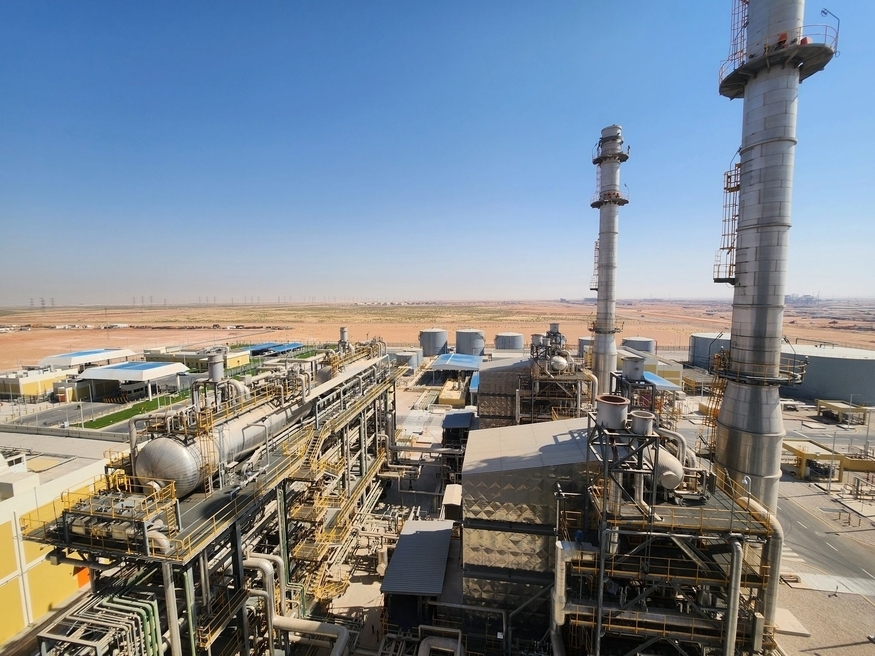
- Project Name: Jafurah Cogeneration Plant Phase 2 Construction
- Contractors: Doosan Enerbility (EPC), Korea Electric Power Corporation (Power/Steam Sales), Saudi Aramco Consortium
- Contract Value: Doosan Enerbility approx. 837–840 billion won
- Completion Target: 2029
- Background: Follow-up order following the successful completion of Phase 1
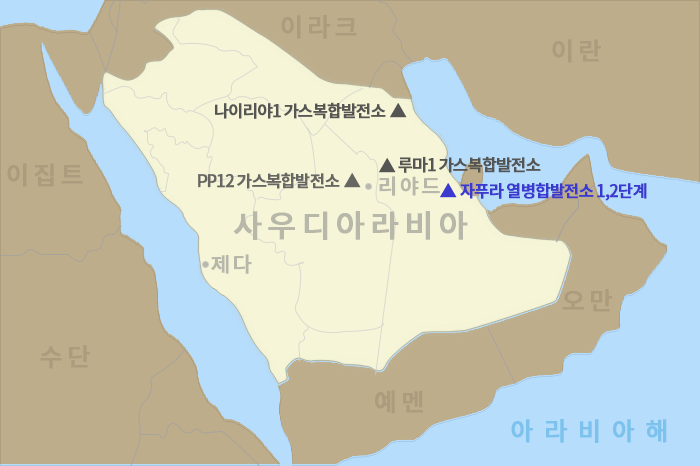
KEPCO Power and Steam Sales Agreement
- Contract Amount: Approx. 2.1 trillion won over 17 years
- Revenue Period: 17 years (plant operation period)
- Strategic Significance: The first instance of the Korean construction sector expanding from mere "construction exports" to "operational exports" in the Middle East.
Verification needed: No current search results for additional new orders, EOI, PQ, or RFP stage project information.
2. Korean Participation and Financial Support
Status of Korean Firms in Saudi Arabia
- Doosan Enerbility: Secured a strong foothold in the Saudi market by winning both Phase 1 and Phase 2 of the Jafurah plant.
- KEPCO: Signed a 2.1 trillion won revenue contract for 17 years, leveraging its power generation and electrical technology.
- Industry Trend: Continuous large-scale investment in Saudi Arabia to grow the non-oil sector and expand infrastructure for power, hydrogen, and industry.
Policy Support
- KOTRA Data: Promoting non-oil sector growth and manufacturing infrastructure construction as part of Vision 2030.
- Middle East HQ Requirement: Since 2024, global firms without a Regional Headquarters (RHQ) in Saudi Arabia are ineligible for government-led projects.
Verification needed: Specific financial products and support scale, including EDCF, ODA, and export financing.
3. Early Risk Detection (Contract/Financial/Political)
Saudi Project Funding Risks
- Neom City Delays: Major projects are being canceled due to funding issues, including the 2.5 trillion won high-speed rail project.
- PIF Pressure: Challenges in attracting external investment alongside the Public Investment Fund (PIF) are identified as primary causes for delays.
- Impact: Delays in Neom City, a core pillar of Vision 2030, could affect overall liquidity for infrastructure projects.
Middle East Maritime Risks
- Insurance Premium Spikes: EPC project insurance premiums in the Persian Gulf have surged more than tenfold.
- Strait of Hormuz Closures: Resulting in delays and contract cancellations for EPC projects in Qatar and the UAE.
- Saudi Relative Advantage: Less impacted due to Red Sea detour routes.
Payment Collection Risks
- Frozen Payments for Consultants/Law Firms: Payments to certain global consulting firms and law firms remain uncertain.
- Focus on Short-term Tasks: Firms are being instructed to finalize short-term tasks before entering new projects.
Today's Risk Note: These are mid-to-long-term risks. Immediate contract fulfillment risks for Jafurah Phase 2 are currently limited, but caution is advised for future projects.
4. Competitive Landscape and Strategy
Strengths of Korean Firms
- Technical Competency: Successful completion of Phase 1 enabled the follow-up win for Phase 2.
- Operational Expertise: KEPCO’s management experience secured the 17-year long-term contract.
- Consortium Strategy: KEPCO-Doosan partnership offers integrated design, construction, and operation.
International Competition
- General EPC Industry: Active solar and Battery Energy Storage System (BESS) bidding in India (e.g., NTPC REL 550 MW solar, NGEL 7,800 MWh/3,200 MWh BESS).
- Regional Expansion: Rising demand for EPC projects across the Asia-Pacific region, including India and Indonesia.
Weaknesses and Precautions for Korean Firms
- Payment Uncertainty in Saudi: Extended collection periods are possible, as evidenced by delayed payments to consulting and law firms.
- Mandatory RHQ: The Middle East Regional Headquarters is a non-negotiable requirement for bidding on Saudi government projects.
Information Sources
- Doosan Enerbility/KEPCO Order:
- Neom City Risk:
- Middle East Maritime Insurance Risk:
- Saudi Entry Strategy:
This content was collected, curated, and summarized entirely by AI — including how and what to gather. It may contain inaccuracies. Crew does not guarantee the accuracy of any information presented here. Always verify facts on your own before acting on them. Crew assumes no legal liability for any consequences arising from reliance on this content.
Powered by
