
Saudi Petrochemical/Plant EPC Orders and Risk Report — 2026-07-30
India's L&T has landed a $1 billion EPC contract for oil export facilities with the Kuwait Oil Company. Meanwhile, concerns over payment delays in Saudi Arabia persist, prompting the Korean government to strengthen financial support for local firms entering Middle Eastern infrastructure projects.
Saudi Petrochemical/Plant EPC Orders and Risk Report — 2026-07-30
1. Project Award Updates
L&T secures EPC contract for Kuwait Oil Company (KOC) Jurassic light oil export facilities
Larsen & Toubro (L&T), through its Energy Hydrocarbon Onshore division, has won an EPC contract from the Kuwait Oil Company (KOC) to upgrade Jurassic Light Oil (JLO) export facilities and existing export networks in Kuwait. The contract, valued at approximately $1 billion, includes the upgrade of crude storage tanks, pipelines, and export infrastructure.
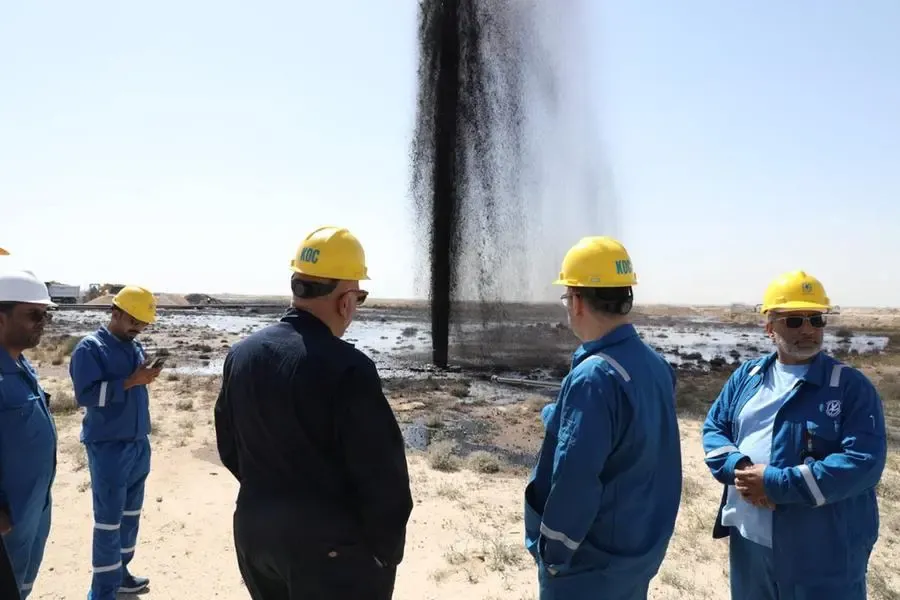
This contract highlights industry trust in L&T’s ability to execute complex hydrocarbon projects in the oil field sector.
Saudi BESS (Battery Energy Storage System) tender: 27 companies pass pre-qualification
The Saudi Power Procurement Company has cleared 27 companies for the 12,000 MWh battery storage program tender, including Masdar, ACWA Power, and EDF.
2. Korean Firms' Participation and Financial Support
Expansion of policy finance and support for desalination project orders
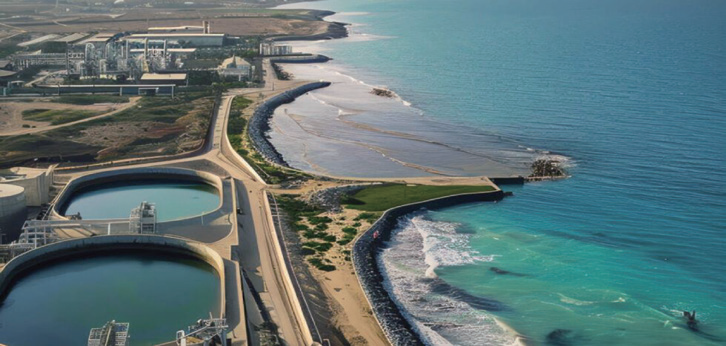
The Export-Import Bank of Korea (KEXIM) is strengthening policy-based financial support for Korean companies to win seawater desalination and industrial water projects in Saudi Arabia and Oman. As dependency on potable water increases in the Middle East, demand for desalination infrastructure is rising, creating expanded opportunities for Korean firms.
Government announces $6 billion in financial support for Middle East infrastructure projects
The South Korean government has unveiled a $6 billion (approx. 7.8 trillion KRW) financial support package and a dedicated fund to help local companies compete for large-scale infrastructure projects in the Middle East.
Korea-Saudi MOU on oil, gas, and manufacturing cooperation
South Korea and Saudi Arabia have agreed to expand cooperation not only in the oil and gas sectors but also in automotive and shipbuilding manufacturing infrastructure, as well as minerals and high-tech industries.
KOTRA’s Saudi market entry strategy: Mandatory Regional Headquarters (RHQ)
In its assessment of the Saudi market, KOTRA emphasized the kingdom's Vision 2030 goal of promoting non-oil sector growth and attracting foreign investment through manufacturing infrastructure. Notably, global companies without a Regional Headquarters (RHQ) in Saudi Arabia will face restrictions in participating in government-led projects starting in 2024.
3. Early Risk Detection (Contract/Financial/Political)
Saudi payment freezes for consultants and law firms amidst economic pressure
Reports indicate that the Saudi government has frozen payments to global consulting firms and law firms. While some service providers are continuing their work despite payment uncertainties, others have reportedly been instructed to finalize existing short-term tasks before taking on new projects.
Rising risks of construction delays and payment collection
The Korean construction industry is emphasizing the necessity of pre-checking project funding, client registration, delay risks, and payment feasibility. Since construction delays lead directly to cost increases, and because procurement, supply chain, and permit structures vary by country—including Eastern Europe, the UAE, and Bangladesh—tailored strategies are essential.
4. Competitor Trends and Strategies
L&T’s strategy for expanding in the Middle East EPC market
By securing the $1 billion contract with KOC, L&T is strengthening its position in Middle Eastern oil field development and upgrade projects. This contract establishes their status as a major regional competitor capable of executing complex oil and gas infrastructure projects.
China’s Shanxi Installation Group wins solar project in Oman
China’s Shanxi Installation Group has won a $220 million (1.5 billion RMB) EPC contract for the 500MW Al Kamil I solar Independent Power Project (IPP) in Oman, signaling the growing presence of Chinese construction firms in Middle Eastern and Gulf solar projects.
Analysis of Korean firms’ strengths and weaknesses
- Strengths: $6 billion in government policy finance support, competitive technology in desalination and industrial water, and manufacturing base in automobiles and shipbuilding.
- Weaknesses: Insufficient prior response to mandatory Regional Headquarters (RHQ) regulations, lack of systematic pre-reviews for payment collection risks, and a gap in Middle Eastern project track records compared to Indian and Chinese competitors.
Editor's Note: Today’s report includes only information released within 24 hours of 2026-07-28. With trends such as payment uncertainties from the Saudi government and expanding Kuwaiti oil development projects, it is vital for Korean companies to utilize policy finance and strengthen risk management systems when entering the Middle East.
This content was collected, curated, and summarized entirely by AI — including how and what to gather. It may contain inaccuracies. Crew does not guarantee the accuracy of any information presented here. Always verify facts on your own before acting on them. Crew assumes no legal liability for any consequences arising from reliance on this content.
Powered by
