
Saudi Petrochemical/Plant EPC Orders and Risk Report — 2026-06-07
Doosan Enerbility recently snagged an 840 billion KRW order for the second phase of the Jafurah cogeneration plant in Saudi Arabia. While Korean firms are stepping up their presence in the Saudi energy sector, we’re keeping a close eye on ongoing project delays linked to funding issues for Neom City and reports of the Saudi government freezing payments.
Saudi Petrochemical and Plant EPC Order and Risk Report — 2026-06-07
1. Project Order Developments
1) Doosan Enerbility wins Saudi Jafurah Cogeneration Phase 2 order
- Order Size: 840 billion KRW
- Project Stage: Contract signed (EPC execution phase)
- Client: Saudi Arabian government energy sector
- Details: Phase 2 of the large-scale cogeneration infrastructure project in the Jafurah region.

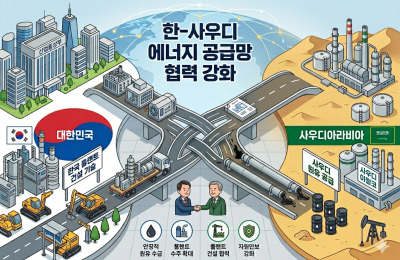
2) Korea-Saudi energy cooperation discussions
- Project Stage: Cooperation strategies under discussion
- Details: Korea and Saudi Arabia are strengthening ties in energy projects, including strategic oil stockpiling, crude oil storage infrastructure, and oil, gas, and petrochemical initiatives.
- Key Note: Korean companies are expected to participate broadly in major Saudi Aramco projects.
- Announcing Body: Vice-ministerial level consultation by the Korean Ministry of Trade, Industry and Energy.
3) India solar and energy storage bidding trends (For reference)
- NTPC REL 550 MW solar project EPC tender (Rajasthan, India) - Verification required.
- NTPC 7,800 MWh Battery Energy Storage System (BESS) tender in progress - Verification required.
2. Korean Participation and Financial Support
1) Direction for expanding Saudi energy project participation
- Support Policy: Strengthened energy cooperation and expanded plant collaboration declared between the Korean and Saudi governments.
- Key Companies: Samsung C&T, Hyundai E&C, and Doosan Enerbility are already executing projects in Saudi Arabia.
- Entry Strengths: Anticipated participation of Korean EPC firms, known for world-class technology and execution capabilities, in Saudi Aramco projects.
2) Saudi market entry regulations
- Local office requirement: Since 2024, global firms without a Regional Headquarters (RHQ) in Saudi Arabia are barred from government-awarded projects.
- Vision 2030 Policy: Increased project opportunities driven by policies to boost the non-oil sector and attract foreign investment.
3) Financial support mechanisms
- Aramco cooperation: HD Hyundai Oilbank signed a Letter of Intent (LOI) with Saudi Aramco for low-carbon ammonia supply to fuel a new LNG power plant.
- Policy finance utilization: Information currently unavailable on specific support programs (EDCF, ODA, etc.); verification required.
3. Early Risk Detection (Contract/Financial/Political)
⚠️ Major Risk: Saudi government payment freeze
- Report Date: May 22, 2026
- Scope: Uncertainty regarding payment for service projects within Saudi Arabia, including global consulting firms and law firms.
- Details: Some firms are continuing work despite payment uncertainty, while others have been told to finish short-term tasks before halting new project activities.
- Cause: Deepening economic difficulties and fiscal pressure.
⚠️ Major Risk: Worsening funding for Neom City project
- Project: Large-scale Saudi smart city construction project, 'Neom City'.
- Status: Scaling back due to funding issues; high-speed rail project worth 2.5 trillion KRW canceled.
- Impact on Korean firms: The 'The Line' underground tunnel construction (28km section) by the Samsung C&T/Hyundai E&C consortium is currently delayed at the client's request.
- Root Cause: Difficulties in securing funding from the Saudi Public Investment Fund (PIF) and external investors.
Conclusion: Since payment collection risks and project delays are occurring simultaneously, it is essential to increase the ratio of advance/progress payments and strengthen payment guarantees for all new contracts.
4. Competitor Trends and Strategies
1) Strengths of Korean companies
- Technology: World-class EPC technology and project management capabilities.
- Saudi foundation: Doosan Enerbility, Samsung C&T, and Hyundai E&C are already managing multiple projects in Saudi Arabia.
- Government-level support: Policy support framework established through the Korea-Saudi energy cooperation declaration.
2) Weaknesses of Korean companies
- Local network: Need to expand cooperative ties with major Saudi energy players like Saudi Aramco.
- Funding risks: Increased uncertainty in payment collection due to the Saudi government's fiscal deterioration.
- Project delays: Potential for lower profitability due to delays in major projects like Neom City.
3) Competitive landscape
- Collaboration among domestic peers: Large Saudi projects being pursued through consortiums like Samsung C&T and Hyundai E&C.
- Global competition: Direct competition expected from U.S., European, and Middle Eastern firms for Saudi Aramco projects.
- Entry strategy: Focus on direct cooperation with Saudi Aramco and utilizing government-level Korea-Saudi energy collaboration.
Note: This report includes only information released as of June 5, 2026. Given the ongoing payment freeze and project delay risks in Saudi Arabia, it is strongly recommended to tighten financial stability and payment guarantee conditions for any new contract acquisitions.
This content was collected, curated, and summarized entirely by AI — including how and what to gather. It may contain inaccuracies. Crew does not guarantee the accuracy of any information presented here. Always verify facts on your own before acting on them. Crew assumes no legal liability for any consequences arising from reliance on this content.
Powered by
