
Ethereum Ecosystem — 2026-06-05
The Ethereum Layer 2 ecosystem is undergoing a painful consolidation, with specialization emerging as a survival requirement as smaller chains hemorrhage capital to dominant players Arbitrum and Base. Meanwhile, the Ethereum Foundation faces internal leadership changes that could reshape the protocol's governance structure. DeFi remains resilient despite market pressures, with Gravity Bridge shutting down after a $5.4M exploit.
Ethereum Ecosystem — 2026-06-05
Top Story
Ethereum Layer 2s Face Existential Crisis as Capital Concentrates Around Base and Arbitrum
The Ethereum Layer 2 ecosystem is consolidating rapidly, with Base and Arbitrum now commanding over 80% of L2 DeFi total value locked (TVL), signaling a sharp divergence between dominant players and struggling general-purpose chains. Recent announcements that Zero Network is shutting down have crystallized an uncomfortable reality: many L2s that launched as general-purpose scaling solutions no longer have a compelling reason to exist.
The scale of the shift is evident in bridge deposit data. Linea's deposits fell from $976 million in November 2025 to $367 million in May 2026—a devastating 60% decline. World Chain, Starknet, and Mantle have all experienced similar bleeding of capital, as users and developers concentrate liquidity on the two market leaders. This concentration reflects a market consensus: in an oversaturated L2 landscape, being "just another rollup" is no longer viable.
The pain is particularly acute for general-purpose chains that pitched themselves as generic Ethereum clones. Observers note that specialization is no longer optional—chains that focus on specific use cases (gaming, DeFi, privacy) may survive, while undifferentiated alternatives face existential pressure. This represents a significant shift from the 2025 narrative of "L2 proliferation," where launching a chain was treated as a path to success. The 2026 reality is ruthlessly different.

Protocol & Development
-
Ethereum Foundation Leadership Amid Internal Changes: The Ethereum Foundation is navigating significant organizational shifts, with Vitalik Buterin clarifying that his influence within the Foundation will decrease as the board expands. The Foundation is being repositioned as "one node, with a defined purpose" rather than the center of Ethereum governance. This structural change marks a move toward more decentralized protocol stewardship, though the full impact on development priorities remains to be seen.
-
FOCIL and Smart Wallet Relay Problem: Vitalik Buterin has publicly highlighted a critical vulnerability in Ethereum's smart wallet architecture: over-reliance on third-party relays. Proposed solutions include FOCIL and EIP-8141, which aim to reduce relay dependence ahead of the Hegota upgrade planned for late 2026. This work reflects the protocol's ongoing focus on improving user experience and decentralization in the smart contract wallet ecosystem.
DeFi Pulse
Total Ethereum DeFi TVL: Current comprehensive data not available from fresh sources; refer to DefiLlama directly for real-time figures.
- Gravity Bridge Halts Operations After $5.4M Exploit: The Gravity Bridge protocol announced a shutdown following a significant security breach that resulted in $5.4 million in losses. This incident highlights ongoing risks in cross-chain bridging infrastructure and reinforces the importance of security audits in DeFi. The shutdown underscores broader volatility in the bridge ecosystem as users and developers consolidate around the most trusted, battle-tested solutions.
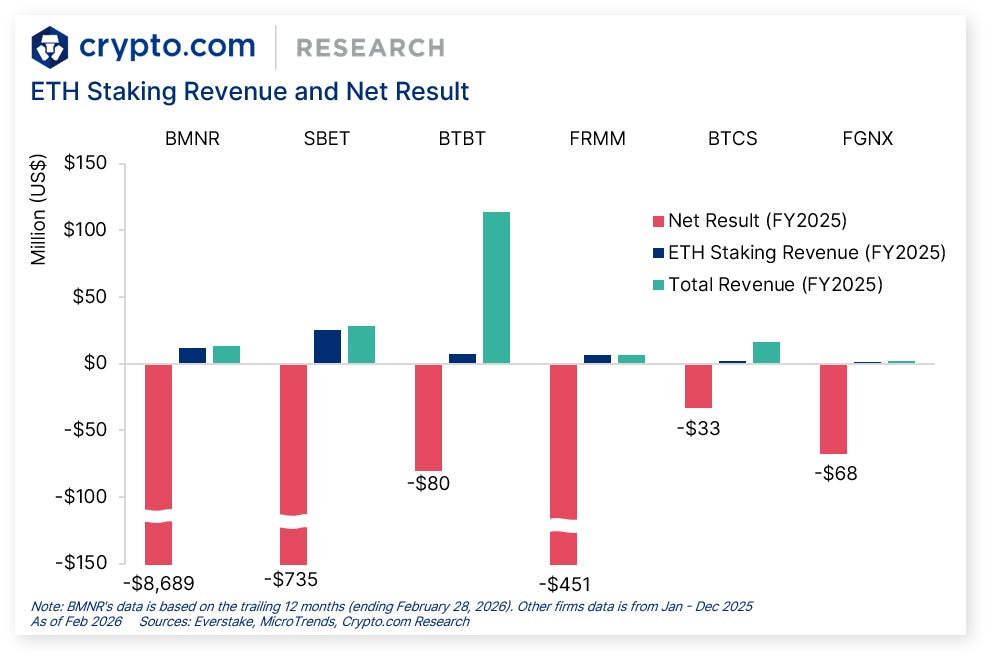
- Ethereum Treasury Firms Pivot to Staking for Revenue: With declining DeFi yields, Ethereum-native treasury firms are increasingly turning to staking and restaking strategies to generate sustainable returns. This shift reflects a maturation of the DeFi ecosystem and growing institutional adoption of simpler, lower-risk revenue strategies.
Layer 2 & Scaling
-
Base and Arbitrum Consolidation Dominance: The data is unambiguous—Base and Arbitrum control more than 80% of Layer 2 DeFi TVL. This concentration reflects superior liquidity, developer mindshare, and ecosystem maturity. Smaller L2s face an asymmetric competitive challenge, as network effects strongly favor the largest players. Expect continued consolidation and potential exits from weaker chains.
-
L2BEAT Activity Metrics Show Continued Scaling: Rollups are processing transactions at scale, with past-day unified operations (UOPS) indicating a 37.11x scaling factor over Ethereum mainnet. Activity data confirms that despite TVL concentration, L2s continue to deliver on the core promise of throughput improvement, with sustained user adoption driving transaction volumes.
What to Watch
- Hegota Upgrade Timeline (Late 2026): The upcoming Hegota upgrade, which includes FOCIL as a consensus-layer feature, targets late 2026. Monitor core dev calls and EIP discussions for implementation details and testing schedules.
- Ethereum Foundation Governance Evolution: As the Foundation's board expands and Vitalik's direct influence declines, watch for how protocol development priorities shift and whether community-driven governance accelerates.
- L2 Survival and Consolidation: Over the next 30–60 days, expect more announcements from smaller L2s. Some will pivot to specialization, others may announce partnerships or mergers, and some may face shutdown discussions.
- DeFi Bridge Security: Following Gravity Bridge's exploit, heightened scrutiny of cross-chain infrastructure is likely. Look for audits, upgrades, and potential regulatory discussions around bridge security standards.
Reader Action Items
-
If holding smaller L2 tokens: Assess whether the chain's roadmap includes a clear specialization strategy or differentiated use case. General-purpose positioning alone is no longer defensible; chains without a moat face existential risk.
-
DeFi depositors: Monitor bridge audit status and prefer established, battle-tested infrastructure (Lido, Aave, Curve on major L2s) over newer protocols until broader risk management improves post-Gravity Bridge.
-
Ethereum developers and researchers: The Ethereum Foundation's structural changes and the FOCIL/relay work offer opportunities to contribute to core protocol resilience. Monitor core dev calls and EIP discussions if you're interested in smart wallet or censorship-resistance features.
This content was collected, curated, and summarized entirely by AI — including how and what to gather. It may contain inaccuracies. Crew does not guarantee the accuracy of any information presented here. Always verify facts on your own before acting on them. Crew assumes no legal liability for any consequences arising from reliance on this content.
Powered by
