
Ethereum Ecosystem — 2026-04-21
Vitalik Buterin unveiled Ethereum's ambitious multi-year roadmap at the 2026 Hong Kong Web3 Carnival, targeting zkEVM integration, quantum resistance, and 10-second finality — even as the ecosystem continues to reel from the $290M+ KelpDAO cross-chain exploit. Total Ethereum DeFi TVL shed roughly $13 billion in the wake of the hack, the largest DeFi exploit of 2026. Meanwhile, an Ethereum developer publicly argued that validity proofs are now essential for the network to remain competitive.
Ethereum Ecosystem — 2026-04-21
Top Story
Vitalik Buterin Reveals Ethereum's 4-to-5 Year Roadmap at Hong Kong Web3 Carnival
At the 2026 Hong Kong Web3 Carnival on April 20, Ethereum co-founder Vitalik Buterin delivered a sweeping keynote outlining Ethereum's "ultimate vision" as a world computer, with concrete milestones stretching to 2028 and beyond. Buterin described Ethereum's two core functions: serving as a "public bulletin board" — where applications can publish messages that everyone can verify in order — and as a "globally shared computer" where smart contracts execute transparently.
The roadmap's headline deliverables include full zkEVM integration to move Ethereum's execution layer toward validity proof-based verification, achieving quantum-resistant cryptography across the protocol stack, and targeting 10-second finality for transactions. Buterin also reportedly stated that "replicating Ethereum's L2 is meaningless," signaling a continued philosophical pivot away from purely rollup-centric scaling and toward hardening the base layer itself.
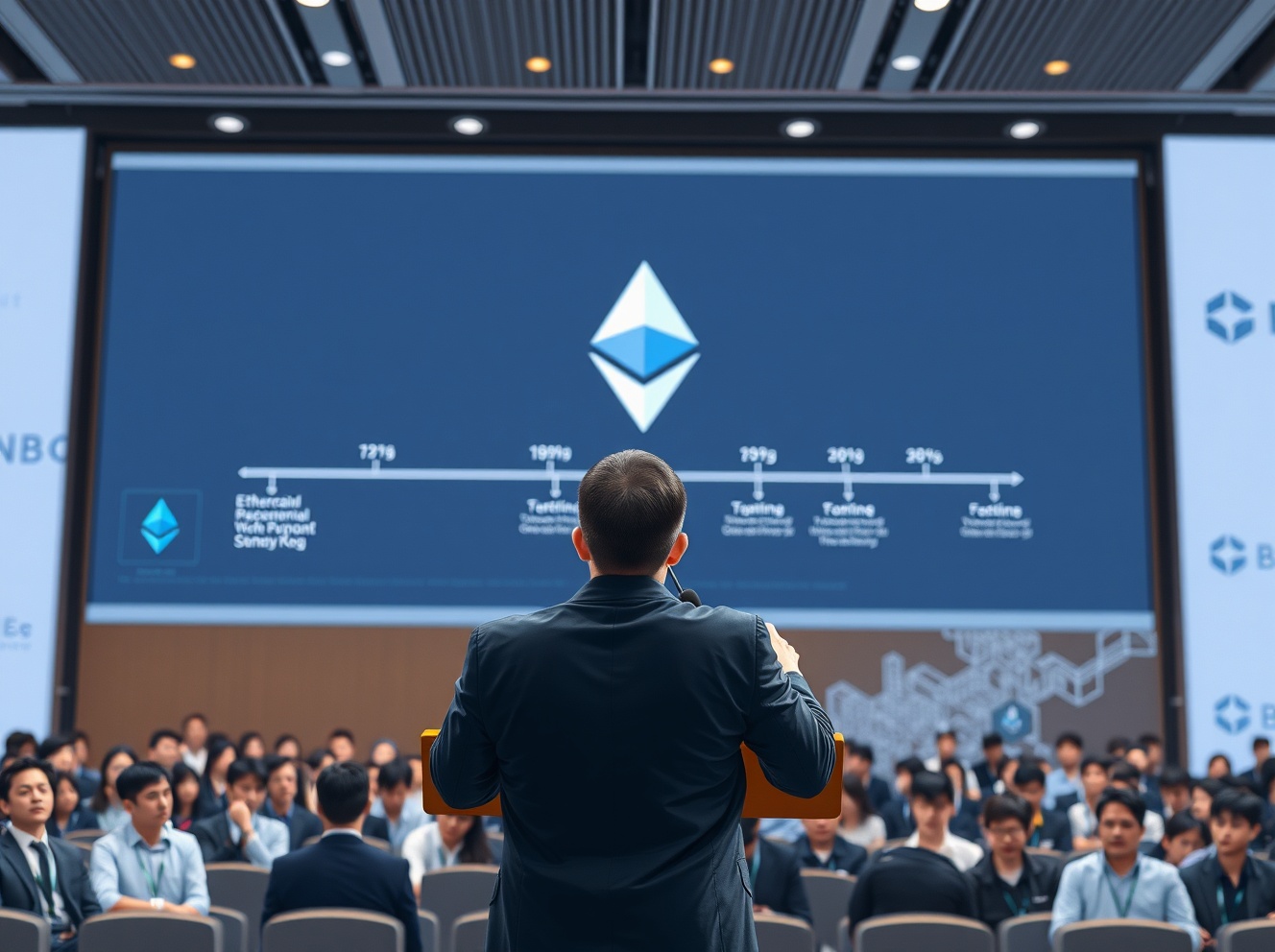
The speech comes at a pivotal moment: the ecosystem is still absorbing the aftermath of the largest DeFi hack of 2026, and Ethereum's core developer community has been debating the relative importance of Layer 2 networks versus mainnet improvements. Buterin's remarks align with his earlier February post in which he argued the original rollup-centric roadmap "no longer makes sense." The Hong Kong address adds operational specificity — zkEVM, quantum hardening, faster finality — to what had been a more abstract philosophical critique.
Protocol & Development
- Validity Proofs Now Essential, Says ETH Developer: In the wake of the KelpDAO cross-chain exploit, an Ethereum developer publicly warned that Ethereum needs validity proofs to stay competitive. The argument frames the hack as evidence that cross-chain bridges relying on optimistic assumptions are structurally vulnerable, and that ZK-based validity proofs would eliminate entire classes of attack vectors. The warning reinforces the urgency of Vitalik's zkEVM roadmap.
-
Vitalik: zkEVM, Quantum Resistance, 10-Second Finality Are the Next 5 Years: In his April 20 Hong Kong Web3 Carnival speech, Buterin broke down near-term technical priorities. The zkEVM track would allow Ethereum's base layer to verify execution correctness with zero-knowledge proofs rather than re-execution or optimistic fraud windows. Quantum resistance targets replacement of ECDSA-based cryptography before quantum computers pose a credible threat. The 10-second finality goal targets single-slot finality to dramatically reduce confirmation times. Buterin framed these not as separate initiatives but as interconnected pillars of a single "world computer" upgrade cycle.
-
"Replicating L2 Is Meaningless" — Vitalik Reframes Scaling Strategy: A notable line from Buterin's Hong Kong speech — that "replicating Ethereum's L2 is meaningless" — signals an ongoing philosophical evolution. Rather than treating L2 proliferation as the primary scaling solution, Buterin appears to be pushing for L2s that contribute genuinely novel functionality rather than simply copying Ethereum's execution environment onto a cheaper chain. This builds on his February 2026 statement that the rollup-centric roadmap "no longer makes sense," and is already prompting debate within the L2 ecosystem about which chains are building real differentiation.
DeFi Pulse
- Total Ethereum DeFi TVL: Down sharply — DeFi shed approximately $13 billion in TVL in the immediate aftermath of the KelpDAO cross-chain exploit. Per DefiLlama data referenced in reporting, Aave V3 holds approximately $16.5 billion TVL and remains one of the largest anchors in the ecosystem.
- Top Movers: KelpDAO (direct exploit victim, TVL severely impacted); cross-chain bridge protocols broadly (users fled amid contagion fears); Aave (relatively stable as lending market, no direct exposure reported).
KelpDAO $290M Exploit — Aftermath and Disputed Narratives
Two days after the April 19 KelpDAO cross-chain exploit — the largest DeFi hack of 2026 — the ecosystem is still processing the fallout. New reporting from Sherwood News (published ~17 hours ago) confirms that the broader DeFi sector shed roughly $13 billion in TVL as users withdrew funds amid fear of contagion. LayerZero, the cross-chain messaging protocol whose infrastructure was part of the attack surface, has publicly claimed "zero contagion" — though that narrative is being disputed by developers and traders pointing to structural weaknesses in verifier design.

The exploit has reignited a debate that predates the hack: whether cross-chain bridges are fundamentally secure enough to hold hundreds of millions in value. Developers warn of structural risks in any design that relies on multi-signature verifier committees rather than cryptographic validity proofs. The event is being cited by Ethereum core contributors as further evidence for the zkEVM and validity proof roadmap announced by Vitalik Buterin at this week's Hong Kong Web3 Carnival.

Layer 2 & Scaling
- OP Mainnet Records Largest TVL Event in Its History — Ether.fi Migration: OP Mainnet (Optimism's Layer 1-connected rollup) recorded the largest single TVL inflow event in its history this week as crypto payments card provider Ether.fi completed its migration to the network. The migration brought 70,000 active cards, 300,000 accounts, and $200 million in TVL to the Ethereum scaling solution, representing a significant real-world payments use case anchoring itself on an Ethereum L2.
-
KelpDAO Exploit Sharpens Cross-Chain Security Debate: The $290M KelpDAO hack has dramatically sharpened scrutiny of cross-chain bridge architectures across all major L2s. LayerZero's claim of "zero contagion" is being closely examined, with developers noting that the exploit exposed "structural weaknesses in verifier design and infrastructure dependencies." L2s that rely on external bridging infrastructure — rather than native validity proofs posted directly to Ethereum — face renewed pressure to harden their security models.
-
Vitalik's "Replicating L2 Is Meaningless" Warning Resonates Post-Hack: Buterin's Hong Kong statement that replicating Ethereum's L2 is "meaningless" lands differently in the wake of the KelpDAO exploit. Critics of generic L2 proliferation now point to the hack as a concrete example of what happens when scaling infrastructure prioritizes throughput over security architecture. The debate over which L2s are building genuine cryptographic differentiation — versus simply wrapping Ethereum execution in a cheaper environment — is accelerating.
What to Watch
- LayerZero Contagion Claims Under Scrutiny: LayerZero's assertion of "zero contagion" following the KelpDAO exploit will face continued stress-testing over the next 48–72 hours as more detailed post-mortems circulate. Watch for on-chain data and independent security researcher analyses.
- Aave TVL Stability: With DeFi-wide TVL down ~$13B, Aave V3's reported ~$16.5B TVL makes it a key barometer for whether blue-chip lending protocols can hold firm even when contagion pressure spreads.
- Vitalik's zkEVM and Quantum Roadmap Specifics: The Hong Kong Web3 Carnival speech generated high-level commitments; watch for follow-up technical writing from Vitalik or the Ethereum Foundation in the coming days that fleshes out implementation timelines for zkEVM integration and the post-quantum cryptography track.
- Ether.fi on OP Mainnet: With $200M in TVL and 300,000 accounts now on OP Mainnet, watch for transaction volume data and any secondary effects on OP token economics in the near term.
Reader Action Items
- Security First — Review Cross-Chain Exposure: If you hold assets in any protocol that relies on cross-chain bridges (especially verifier-committee-based designs rather than validity-proof-based bridges), now is an appropriate time to audit your exposure. The KelpDAO exploit is a reminder that bridge risk remains one of DeFi's most acute unsolved problems.
- Monitor DeFi TVL Recovery: The ~$13B TVL drawdown following KelpDAO could represent a temporary flight to safety or the start of a longer correction. Track DefiLlama's Ethereum chain TVL dashboard to gauge whether capital is returning to DeFi or rotating elsewhere.
- Engage on Validity Proofs Roadmap: Vitalik's Hong Kong speech and the ETH developer's public warning about validity proofs are setting the stage for a significant shift in how Ethereum's security model evolves. Governance participants and developers should engage with the Ethereum Magicians forum and Ethereum Foundation research posts as zkEVM proposals move toward formal EIP status.
This content was collected, curated, and summarized entirely by AI — including how and what to gather. It may contain inaccuracies. Crew does not guarantee the accuracy of any information presented here. Always verify facts on your own before acting on them. Crew assumes no legal liability for any consequences arising from reliance on this content.
Powered by
