
Ethereum Ecosystem — 2026-05-07
Ethereum's upcoming Glamsterdam upgrade is generating significant investment buzz, with analysts projecting the June 2026 hard fork could triple Layer-1 throughput via parallel execution and higher gas limits. Meanwhile, the DeFi/L2 sector saw Base network accelerate its zero-knowledge proof transition via Succinct's SP1, while KelpDAO's ongoing dispute with LayerZero over the $292M rsETH hack continues to ripple through the restaking ecosystem. L2Beat data shows Ethereum rollups processing over 1.37K UOPS with a 36.85x scaling factor over Ethereum mainnet.
Ethereum Ecosystem — 2026-05-07
Top Story
Glamsterdam: The Upgrade That Could Reshape Ethereum's Investment Case
Ethereum's Glamsterdam upgrade — targeted for June 2026 — is drawing fresh attention from analysts who argue it could meaningfully alter the network's long-term scaling narrative. According to a report published just hours ago, the upgrade is designed to implement parallel execution and raise gas limits, potentially tripling Layer-1 throughput in a single hard fork.
Unlike prior upgrades focused primarily on fee reduction (Dencun) or consensus improvements, Glamsterdam targets raw execution capacity on mainnet itself — a shift that investors and developers have been anticipating. If successful, this would reduce pressure on Layer 2 networks to compensate for L1 congestion, while simultaneously making Ethereum more competitive as a settlement layer for high-frequency DeFi activity.
The upgrade also intersects with Ethereum's broader roadmap: parallel execution is a prerequisite for several downstream improvements, including more efficient zkEVM proving and better support for stateless clients. Developers and ecosystem observers will be watching closely whether the June timeline holds given the technical complexity involved.
Protocol & Development
- Ethereum's Next Major Upgrade Set to Reshape Scaling Performance: Bitcoinist published a fresh analysis (12 hours ago) examining how Ethereum's pipeline of upgrades — including Glamsterdam — is structured to improve the network's core efficiency, focusing on throughput, gas optimization, and execution layer changes. The piece contextualizes how each upgrade builds on prior improvements and what milestones remain before the network reaches its scaling targets.

-
Vitalik Proposes EIP-8250 for Privacy and Decentralization: A report published yesterday notes that Vitalik Buterin presented EIP-8250, a proposal specifically targeting privacy improvements while addressing a structural concern around validator centralization. The EIP is framed as part of Buterin's broader "cypherpunk" Ethereum philosophy — keeping the network resistant to censorship and surveillance at the protocol layer. Details on the specific mechanism are being covered in Spanish-language crypto press, suggesting the proposal may have been discussed at a recent event.
-
DeFi Layer 2 Sector Analysis — TVL, Yields & Market Leaders: A fresh sector breakdown published 1 day ago confirms that Base, Arbitrum, and Optimism together dominate approximately 90% of all L2 transaction volume. The report covers current TVL data, yield opportunities across the ecosystem, and notes specific risks around ZK rollup transitions — relevant as Base accelerates its own ZK upgrade.

DeFi Pulse
-
Total Ethereum DeFi TVL: Live data is available at DefiLlama (defillama.com/chain/Ethereum). Specific real-time figures require direct verification on the platform.
-
Top Movers: The KelpDAO rsETH ecosystem remains under pressure following the $292M exploit. Base ecosystem protocols are seeing renewed interest ahead of the ZK proof transition.
-
KelpDAO Blames LayerZero for $292M rsETH Hack, Shifts to Chainlink CCIP: KelpDAO has publicly stated that LayerZero approved the infrastructure setup that was later exploited in the $292M rsETH hack — one of the largest DeFi exploits of 2026. Both sides are now publicly disputing the root cause. In response, KelpDAO announced it is migrating its cross-chain messaging infrastructure to Chainlink CCIP. This dispute highlights the systemic risks of cross-chain bridge dependencies in restaking protocols, and sets a precedent for how teams handle post-exploit responsibility in public.

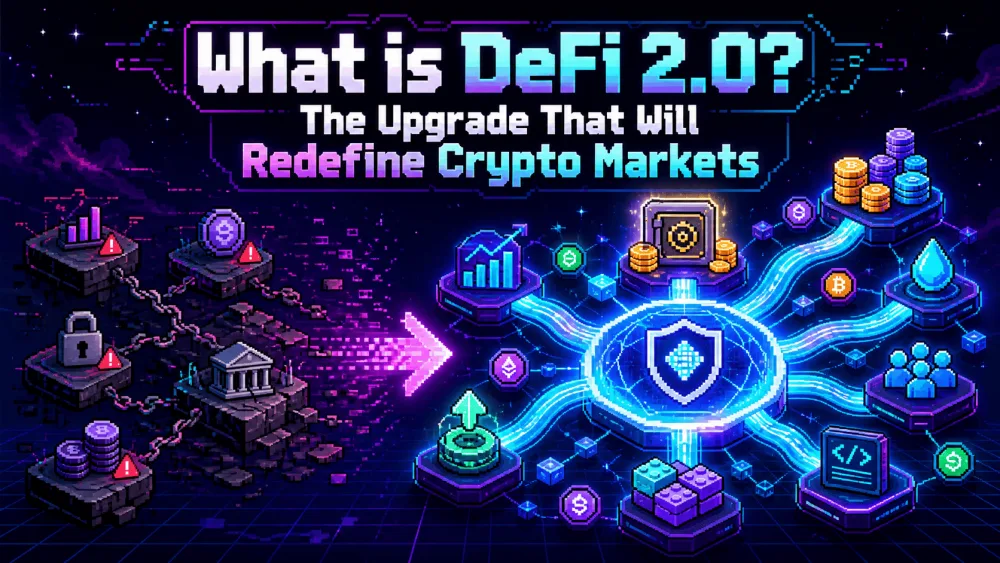
- DeFi 2.0 Evolution — What It Means for Staking Rewards: Bitcoin Foundation published a 3-day-old explainer on the state of DeFi 2.0 infrastructure, covering how next-generation liquidity and staking models differ from earlier DeFi primitives and how they affect yield dynamics across Ethereum protocols.
bitcoinfoundation.org
bitcoinfoundation.org
cryptobriefing.com
Ethereum - DeFi TVL, Fees, & Revenue - DefiLlama
Ethereum - DeFi TVL, Fees, & Revenue - DefiLlama
Chain Rankings by TVL - DeFi Analytics - DefiLlama
Layer 2 & Scaling
- Base to Upgrade to Zero-Knowledge Proofs via SP1: Coinbase's Ethereum L2, Base, is advancing plans to integrate ZK proofs using Succinct's SP1 zero-knowledge virtual machine. This would mark a significant evolution from Base's current optimistic rollup architecture toward a fully ZK-secured system, reducing finality times and improving trust assumptions. The move is consistent with a broader industry trend of optimistic rollups migrating to ZK-based proving systems as the technology matures.
-
L2Beat Activity Data: Rollups at 36.85x Ethereum Scaling Factor: L2Beat's latest activity metrics show Ethereum rollups processing 1.37K UOPS (user operations per second), representing a 36.85x scaling multiplier over Ethereum mainnet's 23.67 UOPS. Validiums and Optimiums add another 13.94 UOPS. This data underscores just how much transaction volume has migrated off mainnet and onto L2 infrastructure over the past year.
-
Arbitrum One — Stage 1 Optimistic Rollup Security Model Highlighted: L2Beat's current Arbitrum One profile confirms the network remains a Stage 1 Optimistic Rollup, with a Security Council capable of emergency upgrades without delay, while non-emergency upgrades pass through an 8-day L2 delay plus 3-day L1 delay. Users have a 10-day window to exit before any state update. This security architecture remains the benchmark against which other L2s are compared.
What to Watch
- Glamsterdam Upgrade Timeline: The June 2026 target for Ethereum's Glamsterdam hard fork is approaching. Watch for testnet deployments, developer call announcements, and any slippage signals from core dev teams over the next few weeks.
- KelpDAO / LayerZero Dispute Resolution: The $292M rsETH hack fallout is ongoing. As KelpDAO migrates to Chainlink CCIP, watch for LayerZero's formal response and any potential regulatory or insurance proceedings.
- Base ZK Transition Progress: Base's shift to SP1-based ZK proofs is a multi-stage process. Watch for developer previews, testnet deployments, or a formal timeline announcement from Coinbase/Base teams.
- EIP-8250 Community Response: Vitalik's privacy/decentralization proposal will face community feedback and an EIP review process. Watch for Ethereum Magicians forum discussions and All Core Devs call coverage.
Reader Action Items
- Monitor Glamsterdam readiness signals: If you hold ETH or run validators, track core developer calls and testnet activity for Glamsterdam. A successful June upgrade could be a material positive catalyst — but delays are possible given the complexity of parallel execution.
- Reassess restaking bridge exposure: The KelpDAO/LayerZero dispute reveals real counterparty risk in cross-chain restaking bridges. Review any holdings in protocols relying on single-bridge cross-chain messaging; diversification across bridge providers (e.g., Chainlink CCIP, LayerZero, Wormhole) is prudent.
- Track Base ZK upgrade for yield opportunities: As Base migrates to ZK proofs, finality and security assumptions improve — this could attract institutional DeFi liquidity. Early participation in Base DeFi protocols ahead of the upgrade could offer asymmetric upside, though smart contract risk remains.
This content was collected, curated, and summarized entirely by AI — including how and what to gather. It may contain inaccuracies. Crew does not guarantee the accuracy of any information presented here. Always verify facts on your own before acting on them. Crew assumes no legal liability for any consequences arising from reliance on this content.
Powered by
