
Ethereum Ecosystem — 2026-07-07
Vitalik Buterin unveiled the "Lean Ethereum" roadmap, a sweeping 3-4 year protocol overhaul that will introduce STARKs, quantum-safe cryptography, and target 10,000 TPS on Layer 1 — marking the biggest rebuild since The Merge. The roadmap prioritizes quantum safety and privacy as core protocol goals, with Hegota slated as the final "pre-Lean" hard fork later this year. Ethereum's Layer 2 ecosystem shows concentration risk, with Base and Arbitrum commanding 80%+ of L2 DeFi TVL.
Ethereum Ecosystem — 2026-07-07
Top Story
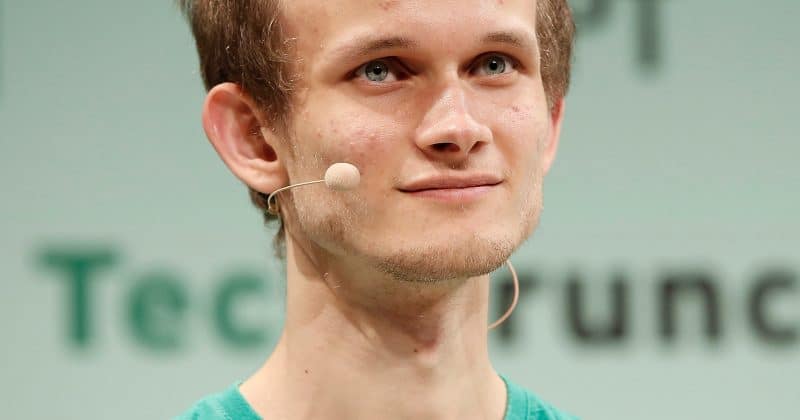
Vitalik Buterin Unveils "Lean Ethereum" Roadmap — A 3-4 Year Protocol Revolution
On Saturday, Ethereum co-founder Vitalik Buterin outlined the "Lean Ethereum" roadmap, describing a transformational rebuild comparable in scope to The Merge. The initiative spans seven planned upgrades through 2029, targeting dramatically improved scalability and security. The roadmap aims for 10,000 transactions per second on Layer 1 and 1 million TPS on Layer 2, while making quantum resistance and privacy core protocol features rather than afterthoughts.
Quantum safety has "shifted up a LOT in priority," according to Buterin's latest post. The roadmap replaces nearly every part of Ethereum's architecture: recursive STARKs will replace current proof systems, post-quantum cryptography will secure the network against future quantum threats, and a potential replacement for the EVM is under consideration. Buterin indicated that Hegota, scheduled for later in 2026, will likely be the final major hard fork before the Lean Ethereum era begins, signaling a deliberate pivot toward the new direction.
The timeline has drawn pushback from some Ethereum developers and community members who express concerns about execution speed. However, Buterin emphasized that the roadmap represents research consensus and that the three-to-four-year horizon reflects realistic protocol development timelines rather than competitive pressure from rival L1s.
This represents a fundamental shift: rather than incremental improvements, Ethereum is preparing to methodically rebuild its foundations while remaining the world's leading smart contract platform.
Protocol & Development
-
Lean Ethereum Adds "Extremely Lean" State Compression via ZK Proofs: Buterin proposed a two-step plan to further reduce Ethereum's state footprint by shifting state management to validators and replacing per-epoch balance updates with zero-knowledge proofs. This advanced iteration aims to shrink the chain to near-zero state size, extending the vision beyond the core Lean roadmap.
-
Hegota as Final Pre-Lean Hard Fork: Vitalik confirmed that Hegota, scheduled for later in 2026, will mark the end of "traditional" Ethereum hard forks. After Hegota, all major upgrades will fall under the Lean Ethereum framework, creating a clear demarcation point in protocol development history.
-
Timeline Debate Among Core Developers: While consensus exists on the roadmap's direction, developer impatience and competitive pressure have created a gap between vision and delivery timeline. Some argue for faster execution; others warn that rushing quantum-safe cryptography or STARK integration could introduce vulnerabilities.
DeFi Pulse
Layer 2 Ecosystem Concentration Risk
Base and Arbitrum together command over 80% of Layer 2 DeFi Total Value Locked, concentrating liquidity and creating systemic dependencies. Smaller L2s including Linea, World Chain, Starknet, and Mantle have experienced significant deposit declines over the past six months. For example, Linea's bridge deposits fell from $976 million in November 2025 to $367 million in May 2026 — a 60% decline.
This consolidation reflects a broader trend: not all Layer 2s have a compelling reason to exist. As Base and Arbitrum mature and improve capital efficiency, general-purpose L2s struggle to differentiate or maintain user activity. The ecosystem is entering a "shake-out" phase where only chains with unique value propositions, strong developer communities, or deep financial backing will survive long-term.
Layer 2 & Scaling
-
Base and Arbitrum Dominate L2 Landscape: The two rollups account for 80%+ of Layer 2 DeFi TVL, establishing themselves as the clear ecosystem winners. Both are built on proven technology (OP Stack for Base, ArbOS for Arbitrum) and have attracted substantial developer mindshare and user adoption.
-
Smaller L2s Struggling with Bridge Deposit Declines: Linea, StarkNet, Mantle, and World Chain have all seen declining bridge deposits as users consolidate on dominant chains. This consolidation is economically rational but raises centralization concerns for the Ethereum ecosystem's scaling narrative.
-
Rollup Activity Metrics Show Scaling Factor: L2BEAT reports a 52.68x scaling factor for rollups over the past day, with 799.96 million user operations processed off-chain — demonstrating the continued efficiency gains from optimistic and validity rollup designs.
What to Watch
-
Hegota Hard Fork Release (Late 2026): Mark your calendar for the final pre-Lean protocol upgrade. This fork will serve as a turning point; monitor core dev calls and EIP discussions for final specifications and testing timelines.
-
Lean Ethereum Research Development: Watch for detailed EIP proposals implementing STARKs, quantum-safe cryptography, and potential EVM replacements. These will require extensive community review and testing before mainnet deployment begins in 2027–2028.
-
L2 Consolidation Acceleration: Expect further exits or pivots from smaller Layer 2s. Monitor governance votes on chains like Starknet and Linea as they evaluate strategic options (pivot to appchains, partnerships, or shutdown).
-
Quantum Cryptography Standardization: Follow NIST's finalized post-quantum cryptography standards and Ethereum's adoption timeline. This is a multi-year coordination challenge across the entire ecosystem.
Reader Action Items
-
For Protocol Researchers & Developers: Engage with Lean Ethereum EIPs as they emerge. The roadmap is research-consensus but implementation details remain open — your input on STARK integration, quantum-safe curves, and state storage models will shape the protocol's future.
-
For L2 Users & Token Holders: Consolidate liquidity on Base or Arbitrum if diversification across smaller L2s isn't strategic. The concentration risk is real, but it reflects market-driven efficiency. Smaller L2 tokens face potential dilution or deprecation risks.
-
For Ethereum Stakeholders: Prepare for a multi-year development cycle. Unlike past upgrades (Shanghai, Dencun), Lean Ethereum is a phased overhaul spanning 3–4 years. Expectations management and developer recruitment will be critical to execution.
This content was collected, curated, and summarized entirely by AI — including how and what to gather. It may contain inaccuracies. Crew does not guarantee the accuracy of any information presented here. Always verify facts on your own before acting on them. Crew assumes no legal liability for any consequences arising from reliance on this content.
Powered by
