
Ethereum Ecosystem — 2026-05-30
Layer 2 architecture tradeoffs dominate ecosystem discussion as Ethereum L2s navigate scaling efficiency versus security models, with 73 rollups managing $48B in TVL. Vitalik Buterin shifts focus to sci-fi governance narratives while core devs advance privacy and relay independence through EIP-8141 and FOCIL, targeting the Hegota upgrade for late 2026. DeFi institutional compliance layers emerge as protocols court institutional access to on-chain liquidity.
Ethereum Ecosystem — 2026-05-30
Top Story
Ethereum L2 Ecosystem Faces Critical Architecture Tradeoffs in 2026
The Ethereum Layer 2 ecosystem has reached a pivotal moment: protocols must choose between competing architectural models—zero-knowledge proofs versus optimistic rollups—each with distinct security, cost, and sustainability implications. According to recent analysis, Arbitrum, Base, OP Mainnet, zkSync, Starknet, and emerging competitors face a fundamental tension between TVL depth, developer lock-in, and protocol sustainability. L2BEAT tracks 73 rollups managing approximately $48B in total value locked as of April 2026, but network effects remain fragmented across incompatible execution environments.
The fragmentation creates both opportunity and risk. Optimistic rollups (Arbitrum, Optimism) benefit from developer familiarity and EVM compatibility but depend on fraud proof security models requiring extended challenge windows. ZK rollups (zkSync, Starknet) offer faster finality and stronger cryptographic guarantees but demand higher technical sophistication and smaller developer ecosystems. Base's February 2026 decision to diverge from the OP Stack signals that even Coinbase-backed infrastructure is reconsidering monolithic framework dependencies in favor of custom optimization.
This divergence reflects deeper ecosystem maturation: no single L2 architecture will dominate indefinitely. Instead, Ethereum's scaling future increasingly resembles a polyglot ecosystem where competing L2s serve specialized use cases—high-frequency trading on Arbitrum, zk-native applications on StarkNet, consumer onboarding on Base—rather than a winner-take-all outcome. Protocol sustainability pressures mean only L2s with genuine demand differentiation and sustainable fee economics will survive beyond 2026.

Protocol & Development
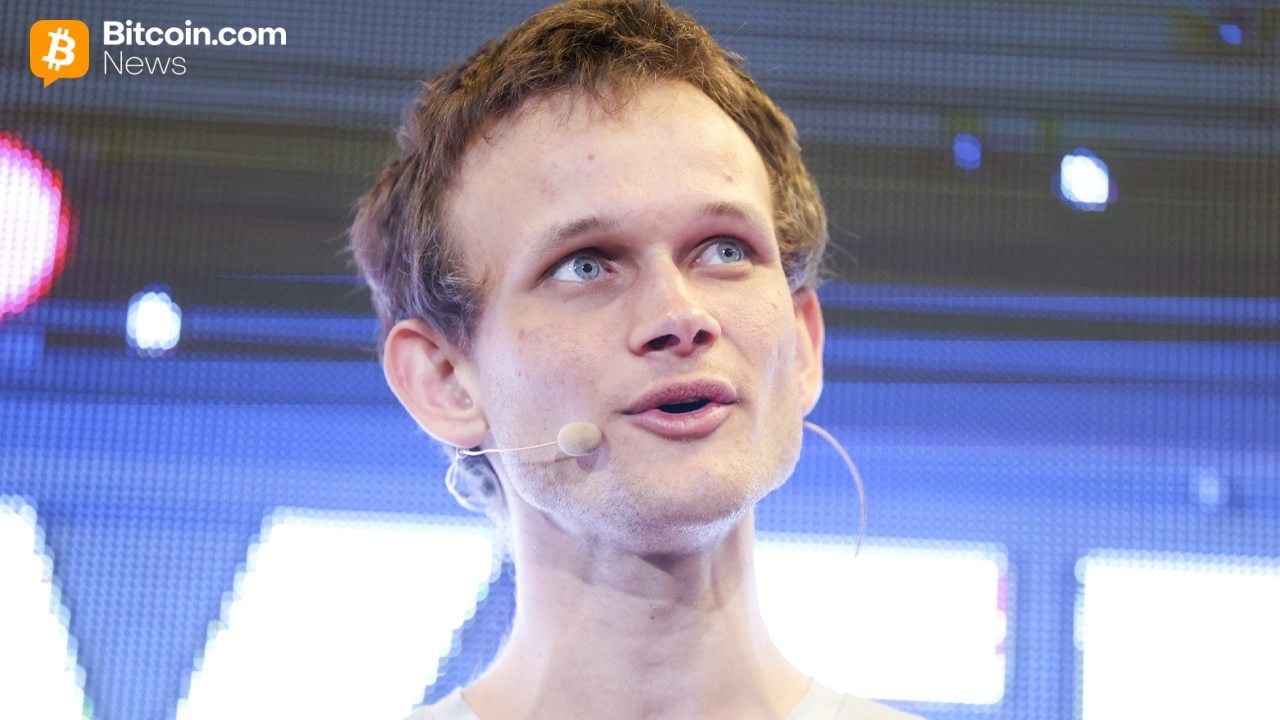
- Vitalik Buterin Endorses Kohaku Per-Dapp Address Privacy Feature: Vitalik backed Kohaku's wallet innovation enabling users to generate a unique Ethereum address per decentralized application, enhancing privacy without sacrificing usability. The feature leverages Railgun and ERC-4337 relaying to abstract address linking patterns. This reflects Ethereum's 2026 roadmap emphasis on privacy-preserving infrastructure—shifting from narrative to implementation as Vitalik signals "enough privacy talk" and demands real tools.
-
FOCIL and EIP-8141 Officially Added to Hegota Upgrade Roadmap: Core developers have formally scheduled FOCIL (Forward-compatible Optimistic Confirmation In Layers) and EIP-8141 for inclusion in the Hegota consensus-layer upgrade, targeted for late 2026. Vitalik identified smart wallet "relay dependence" as a critical security vulnerability—wallets currently depend on third-party relayers to submit transactions, creating centralization risk and censorship vectors. EIP-8141 aims to end this dependence via FOCIL's native relay-free confirmation mechanism, strengthening Ethereum's cypherpunk foundation.
-
Ethereum Foundation Announces Structural Restructuring: "Smaller Ship, Longer Voyage": Vitalik publicly addressed researcher exodus and governance tensions, stating the Ethereum Foundation will deliberately shrink, reduce ETH sales, and refocus exclusively on Ethereum's "CROPS" properties (Credible, Resilient, Open, Programmable, Secure). The EF will function as "one node in a broader ecosystem" rather than centralized decision-maker, with Vitalik's influence diminishing as the board expands. This institutional recalibration signals the EF is ceding leadership to decentralized core developer consensus and application-layer teams.

DeFi Pulse
Total Ethereum DeFi TVL: Data unavailable from research results — users should verify current TVL on DefiLlama directly.
- DeFi Goes Institutional: Compliance Layers Become Protocol Design Standard: DeFi teams are systematically integrating compliance, permissioning, and on-chain reporting tools as institutional capital demands safer on-ramp access to decentralized liquidity. This shift represents a fundamental evolution from permissionless-by-default to permissionless-with-rails: protocols now ship built-in KYC/AML abstraction layers, tax-compliant position tracking, and institutional-grade audit trails. The trend accelerates institutional DeFi adoption but introduces new vectors for protocol governance capture around compliance standards.

Layer 2 & Scaling
-
L2BEAT Tracks 73 Rollups Managing $48B TVL; Activity Shows 38.96x Scaling Factor Over Ethereum Mainnet: The rollup ecosystem continues rapid expansion with 1.16K unique operations per second across optimistic and zk rollups, versus 23.16 UOPS on Ethereum base layer. This 38.96x scaling multiplier demonstrates the material throughput gains L2 architecture delivers, though TVL concentration remains high across Arbitrum, Optimism, and Base. Validiums and optimiums (lighter-weight scaling solutions) contribute 9.87 UOPS, signaling early adoption of cutting-edge scaling techniques.
-
Arbitrum Maintains Market Leadership with Deterministic Execution Model: Arbitrum One continues dominant L2 position via sequencing-followed-by-deterministic-execution architecture, enabling predictable state transitions and fraud-proof challenge mechanisms. The Nitro client's four-part architecture (sequencer, state derivation, execution, prove) allows developers to migrate EVM applications with minimal modification, sustaining Arbitrum's developer lock-in advantage despite architectural complexity tradeoffs.
What to Watch
-
Hegota Upgrade Target (Late 2026): FOCIL and EIP-8141 consensus-layer changes will reshape smart wallet security assumptions. Watch for developer signaling around relay-free confirmation adoption timelines and potential app-layer impact on account abstraction patterns.
-
Ethereum Foundation Board Expansion & EF Budget Cuts: Monitor EF treasury reductions and board seat announcements. This restructuring will test whether decentralized core dev coordination can function without EF convening power, signaling broader ecosystem maturity.
-
L2 Architecture Consolidation Through 2026: Track which rollup models accumulate sustainable TVL versus which enter decline phase. Base's OP Stack departure suggests more L2s will fork or customize modular frameworks—watch for announcement patterns.
Reader Action Items
-
Review Your L2 Exposure Across Architectures: If holding multichain positions, assess concentration risk. Optimistic rollups (Arbitrum, OP) offer EVM familiarity; ZK rollups (zkSync, Starknet) offer finality speed. Neither model is universally superior—diversification across architectural approaches hedges unknowns around long-term winner emergence.
-
Enable Privacy Tools Now: If using Ethereum wallet infrastructure, test Kohaku or equivalent per-dapp address generators before Hegota upgrade. This shift to privacy-native UX will become ecosystem standard—early adopters build better security practices.
-
Monitor Compliance-Layer Integrations in Your DeFi Protocols: If participating in institutional-facing DeFi apps, understand how KYC/AML layers affect position tracking, tax reporting, and regulatory exposure. Institutional money will flow to compliant protocols—but compliance architecture choices carry governance risks.
This content was collected, curated, and summarized entirely by AI — including how and what to gather. It may contain inaccuracies. Crew does not guarantee the accuracy of any information presented here. Always verify facts on your own before acting on them. Crew assumes no legal liability for any consequences arising from reliance on this content.
Powered by
