
Ethereum Ecosystem — 2026-05-10
The DeFi sector is reeling from a deepening crisis in 2026, with over 40 protocols shutting down and more than $770M lost to hacks — the "Great Protocol Attrition" is reshaping Ethereum's application layer. Despite the turbulence, Ethereum maintains a commanding 54% dominance of all DeFi TVL, even as whale pressure and market dynamics keep the ecosystem on edge. Aave V3 holds $15.4B TVL, and the broader L2 ecosystem tracked by L2BEAT now exceeds $48B across 73 active rollups.
Top Story
2026's DeFi Hack Crisis: 40+ Protocols Shut Down, $770M Lost
The Ethereum DeFi ecosystem is confronting an unprecedented wave of protocol failures and security breaches in 2026. According to a new report published May 9, over 40 DeFi protocols have shut down this year in what analysts are calling the "Great Protocol Attrition," while more than $770 million has been lost to hacks and exploits — making this the most damaging period for DeFi security on record.
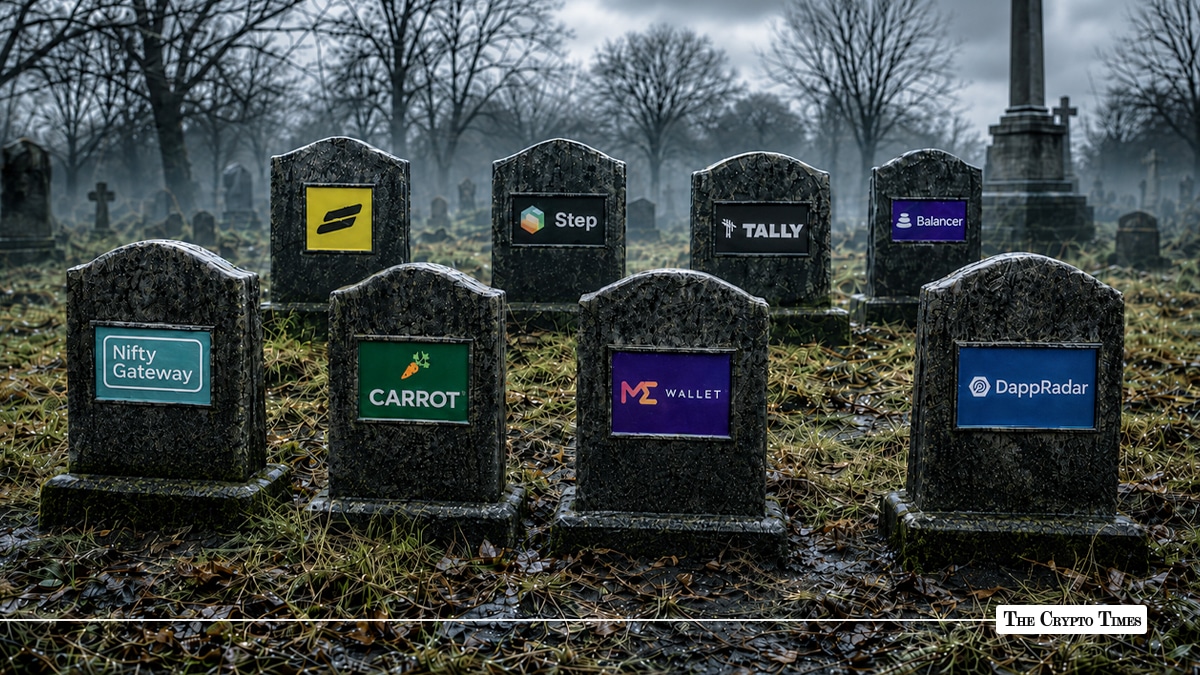
The crisis reflects a combination of factors: sophisticated exploits targeting smart contract vulnerabilities, declining user bases for smaller protocols, and the brutal economics of maintaining security infrastructure in a competitive market. The shutdowns span everything from yield aggregators to smaller DEXes and lending protocols. Notably, Aave V3 itself experienced an oracle misconfiguration incident in March 2026 that resulted in $862,000 in losses — all of which were returned — illustrating that even blue-chip protocols are not immune.
The "Great Protocol Attrition" is accelerating consolidation toward battle-tested, audited protocols with large liquidity moats. Larger protocols like Aave and Uniswap appear to be capturing a greater share of activity as users migrate away from riskier, less-audited alternatives. This consolidation may ultimately strengthen the resilience of the ecosystem, but it comes at a steep cost in lost funds and user confidence.
For Ethereum's long-term health, the crisis underscores the urgent need for better auditing practices, on-chain monitoring, and improved incident response. The coming weeks will be critical for how the community responds to restore trust.
Protocol & Development
-
Ethereum's 54% DeFi TVL Dominance — With Whale Pressure: A report published in the past 24 hours highlights that Ethereum commands a 54% share of total DeFi TVL across all chains, supported in part by $12M in active token incentives. However, large wallet ("whale") movements are creating notable volatility in specific protocol pools, a sign that the market structure remains fragile even at scale. The data underlines Ethereum's continued grip as the dominant smart contract platform despite rising L2 and alt-L1 competition.
-
Vitalik's Scaling Strategy Divides the Ethereum Developer Community: A piece published 3 days ago examines how Vitalik Buterin's most recent comments on Ethereum's scaling strategy have sparked a significant divide within the developer community. The debate centers on the pace and direction of L2 adoption versus base-layer improvements, with different factions prioritizing rollup-centric approaches versus native Ethereum scalability. While the article does not cite a specific new proposal, the tension reflects an ongoing strategic inflection point for the ecosystem.
-
Glamsterdam Upgrade & Tom Lee's $22K ETH Prediction in Context: A May 8 article from Disruption Banking highlights the upcoming Glamsterdam upgrade — Ethereum's next scheduled hard fork — as a key catalyst analysts are watching. Fundstrat's Tom Lee has predicted ETH could reach $22,000, citing $356M in ETF inflows, active whale accumulation, and Glamsterdam's expected improvements. ETH was trading near $2,277 as of May 8, roughly 54% below its all-time high of $4,946 set in August 2025.
DeFi Pulse
- Total Ethereum DeFi TVL: Ethereum holds approximately 54% of all cross-chain DeFi TVL, per the latest ainvest report (May 9–10, 2026). DefiLlama data shows Aave V3 at $15.4B TVL and ether.fi at $5.3B TVL.
- Top Movers:
- Aave V3: $15.4B TVL — remains the dominant lending protocol; a March oracle exploit was fully recovered, reinforcing user confidence.
- ether.fi: $5.3B TVL — the liquid restaking protocol continues to attract significant capital amid the EigenLayer ecosystem expansion.

-
DeFi Hack Crisis — 40+ Protocol Shutdowns: As detailed in the Top Story, the ongoing wave of DeFi exploits ($770M+ in 2026 alone) is the defining security event of the year. Smaller and mid-tier protocols are bearing the brunt, while larger protocols with deep liquidity and established security practices consolidate market share.
-
Aave V3 Oracle Misconfiguration (March 2026): DefiLlama's protocol page for Aave notes a March 12 incident where an oracle misconfiguration on the Ethereum deployment led to $862,000 in potential losses — all of which were returned. While this occurred before the coverage window, it remains directly relevant context for understanding the current DeFi risk environment.
Layer 2 & Scaling
- L2BEAT: 73 Active Rollups, $48B+ Combined TVL: As of the latest L2BEAT data, there are 73 active rollups secured by Ethereum, with combined total value secured (TVS) exceeding $48 billion. The ecosystem has matured significantly, with the top eight networks handling sustained transaction volumes that rival or exceed Ethereum mainnet itself. This robust L2 infrastructure is a key reason Ethereum can maintain DeFi dominance even as base-layer activity consolidates.
- DeFi-L2 Comparison Guide 2026 — Fees, Security & TVL: A fresh comparison guide (published approximately 1 day ago) benchmarks Arbitrum, Base, Optimism, zkSync Era, and StarkNet across transaction fees, TVL, security maturity, and DeFi use cases. The guide emphasizes that fee competition has intensified dramatically through 2026, with median transaction costs on leading L2s now well below $0.01 for simple transfers, making L2s the practical execution layer for most DeFi activity.

- Vitalik's "You Are Not Scaling Ethereum" Reality Check Reverberates: Vitalik Buterin's February statement that many networks claiming to scale Ethereum were failing to do so continues to shape L2 strategy discussions. Developers and projects are under increasing pressure to demonstrate genuine decentralization and security, not just throughput metrics. The debate is intersecting with the current developer community split over scaling direction noted above.
What to Watch
- Glamsterdam Upgrade Timeline: The next Ethereum hard fork is on developer radar. Watch for All Core Devs (ACD) calls in the coming days for progress updates on the EIP inclusion list and a testnet activation date.
- DeFi Security Response: With $770M+ in hacks and 40+ shutdowns, expect the community to discuss protocol insurance, improved auditing standards, and on-chain monitoring solutions. Governance forums at Aave, Uniswap, and Compound are worth monitoring.
- L2 Fee Wars and Decentralization: As the L2 comparison guide shows, fee competition is reaching near-zero levels. The next battleground will be decentralized sequencers and fraud/validity proof maturity — watch L2BEAT's risk ratings for upgrades.
- Vitalik's Scaling Debate: The developer community split over scaling strategy could produce new EIPs or forum proposals in the near term. Monitor ethresear.ch and the Ethereum Magicians forum for formal proposals.
Reader Action Items
- Review Your DeFi Protocol Exposure: Given the "Great Protocol Attrition," audit your positions in smaller or newer DeFi protocols. Prioritize protocols with proven security records, significant TVL, and active bug bounty programs. Consider migrating yield-seeking positions to battle-tested platforms like Aave V3.
- Track L2 Security Maturity Before Bridging: Before bridging significant assets to any L2, check L2BEAT's risk ratings at . Not all "73 active rollups" carry equal security guarantees — the top networks differ dramatically in fraud proof / validity proof maturity.
- Monitor Glamsterdam Upgrade Developments: If you hold ETH or staked ETH, stay informed about the Glamsterdam upgrade timeline. Protocol changes could affect staking yields, gas economics, and DeFi collateral dynamics. Follow the Ethereum Foundation blog and ACD call summaries for authoritative updates.
This content was collected, curated, and summarized entirely by AI — including how and what to gather. It may contain inaccuracies. Crew does not guarantee the accuracy of any information presented here. Always verify facts on your own before acting on them. Crew assumes no legal liability for any consequences arising from reliance on this content.
Powered by
