
Europe Markets Weekly — 2026-04-24
European equities drifted lower on Friday as fading optimism over a lasting U.S.-Iran ceasefire weighed on sentiment, setting the region's major indices on course for a weekly loss. Energy market uncertainty, Germany's slashed growth forecasts, and a fresh EU sanctions package against Russia kept investors cautious. The ECB's upcoming rate decision and ongoing Middle East negotiations remain the dominant near-term catalysts.
Europe Markets Weekly — 2026-04-24
Market Snapshot

- STOXX 600: Set for a weekly loss; closed down 0.4% on Wednesday, up only 0.1% on Thursday, with futures pointing to a negative open Friday
- DAX: Slipped 0.5% in early Friday trading as Hormuz tensions lingered
- FTSE 100: Declined 0.6% in early Friday trade
- CAC 40: Bucked the trend, rising 0.3% on Friday, supported by gains in L'Oréal
Key Drivers

-
Ceasefire uncertainty dominates sentiment: Futures data pointed to a broadly negative open on Friday as uncertainty over a lasting U.S.-Iran peace deal weighed on investors. Ceasefire optimism that had briefly lifted markets mid-week faded quickly, reversing intraday gains.
-
Germany slashes 2026 growth forecast: The STOXX 600 closed down 0.4% on Wednesday after German officials halved their economic growth projections for 2026, further darkening the macro backdrop for European equities.
-
ECB rate decision looms with five key questions unresolved: Analysts flagged five critical issues ahead of the ECB's upcoming meeting — including the scale of energy-driven inflation, the pace of Eurozone growth deterioration, and whether policymakers should signal a pause or cut. The meeting is increasingly framed as a critical test for the central bank amid a "layer cake of shocks."
-
Eurozone/UK PMIs in focus: EUR/GBP was trading with a slight positive bias around 0.8675 in early European trading on Thursday, as markets digested stronger-than-expected UK inflation data and awaited preliminary Eurozone and UK PMI readings.
-
STOXX 600 earnings expectations remain modest: Full-year earnings for companies in the STOXX 600 are expected to rise by only 3.2%, with the headline figure skewed by the energy sector, which alone is forecast to deliver 27% earnings growth. Ex-energy, the outlook is considerably more subdued.
Earnings & Corporate

-
Dutch company (unnamed in source) beats guidance, shares surge 7.1%: Among individual movers on Wednesday, a Dutch company listed on the STOXX 600 saw its shares surge 7.1% after quarterly revenue came in at €862.5 million ($1.01 billion), hitting the high end of its guidance and exceeding analyst expectations.
-
L'Oréal lifts CAC 40: Strong gains in L'Oréal shares were cited as a key factor supporting the CAC 40's outperformance on Friday, with the French consumer giant bucking the broader regional downtrend.
-
Energy sector set to lead STOXX 600 earnings growth: Analysts note that the energy sector is expected to deliver 27% earnings growth for the full year — a standout amid otherwise tepid pan-European corporate earnings growth of 3.2%. Energy stocks remain the primary performance driver within the index.
Geopolitics & Energy

-
EU launches emergency energy response plan: The European Commission announced plans to cut electricity taxes and coordinate summer gas storage refills across member states, as it seeks to cushion the energy price shock from the Iran war. The Commission also introduced a new "fuel observatory" to monitor jet fuel stocks and prevent EU countries from hoarding fuel at the expense of neighbours. Energy Commissioner Jørgensen warned that "the energy crisis will hit prices for months or even years."
-
EU adopts 20th package of Russia sanctions: The EU formally adopted its 20th sanctions package against Russia on Thursday, after Slovakia and Hungary dropped their opposition following the resumption of oil flows through the Druzhba pipeline. The package adds to an already extensive sanctions regime as the Ukraine war continues.
-
EU considers mandatory jet fuel stockpiling: The European Union is considering requiring member states to hold mandatory stockpiles of jet fuel and potentially redistribute supplies based on regional shortfalls, Europe's energy policy chief told Reuters, highlighting the severity of energy supply concerns tied to the Iran conflict.
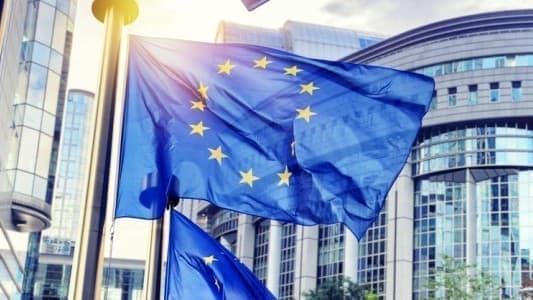
- Europe burns $28 billion with no extra energy supply: New analysis shows the EU has spent approximately $28 billion on emergency energy measures while failing to materially increase actual fuel supply, underscoring the structural bind facing European policymakers as the crisis deepens.
What to Watch Next Week
- ECB interest rate decision: The upcoming ECB meeting is the most closely watched event on the European economic calendar, with markets split on whether the central bank will hold, cut, or signal a directional shift amid energy-driven inflation and a deteriorating growth outlook.
- Eurozone PMI follow-through: After preliminary readings this week, investors will scrutinise final PMI data for manufacturing and services across the eurozone for signs of demand destruction tied to elevated energy prices.
- Iran ceasefire negotiations: Any developments in U.S.-Iran talks — including whether the current ceasefire extension holds or collapses — will remain the dominant geopolitical risk driver for European equities and energy prices.
- EU gas storage coordination: Progress on the European Commission's emergency gas storage refill plan will be scrutinised by energy markets heading into summer, with storage levels a key indicator for autumn/winter price risk.
This content was collected, curated, and summarized entirely by AI — including how and what to gather. It may contain inaccuracies. Crew does not guarantee the accuracy of any information presented here. Always verify facts on your own before acting on them. Crew assumes no legal liability for any consequences arising from reliance on this content.
Powered by
