
Global Stock Market Trends — 2026-07-08
Global markets are seeing intense volatility. While the U.S. Dow hit a record high of 53,000 on July 6, it entered a correction phase by the 7th due to semiconductor weakness and surging oil prices. In Korea, massive selling by foreign and institutional investors saw the KOSPI plunge over 5% on July 8, triggering a circuit breaker.
Global Stock Market Trends — 2026-07-08
Global Indices at a Glance
| Region | Index | Closing (or Recent) Price | Change | Change % |
|---|---|---|---|---|
| 🇰🇷 Korea | KOSPI | 7,200 | -396 | -5.20% |
| 🇰🇷 Korea | KOSDAQ | Approx. 2,305 | - | -Approx. 5% |
| 🇺🇸 U.S. | S&P 500 | N/A | - | Mixed |
| 🇺🇸 U.S. | Nasdaq Composite | N/A | - | -1.0% (July 6) |
| 🇺🇸 U.S. | Dow Jones | 53,000+ | +150 | +0.28% (As of July 6) |
| 🇯🇵 Japan | Nikkei 225 | N/A | - | - |
| 🇭🇰 Hong Kong | Hang Seng | N/A | - | - |
| 🇨🇳 China | Shanghai Comp | N/A | - | - |
| 🇬🇧 U.K. | FTSE 100 | N/A | - | - |
| 🇩🇪 Germany | DAX | N/A | - | -1.37% (July 6) |
Based on recent data — Korea as of July 8 (intraday), U.S./Europe as of July 6-7 closing.
🇰🇷 Korean Market
KOSPI / KOSDAQ Overview
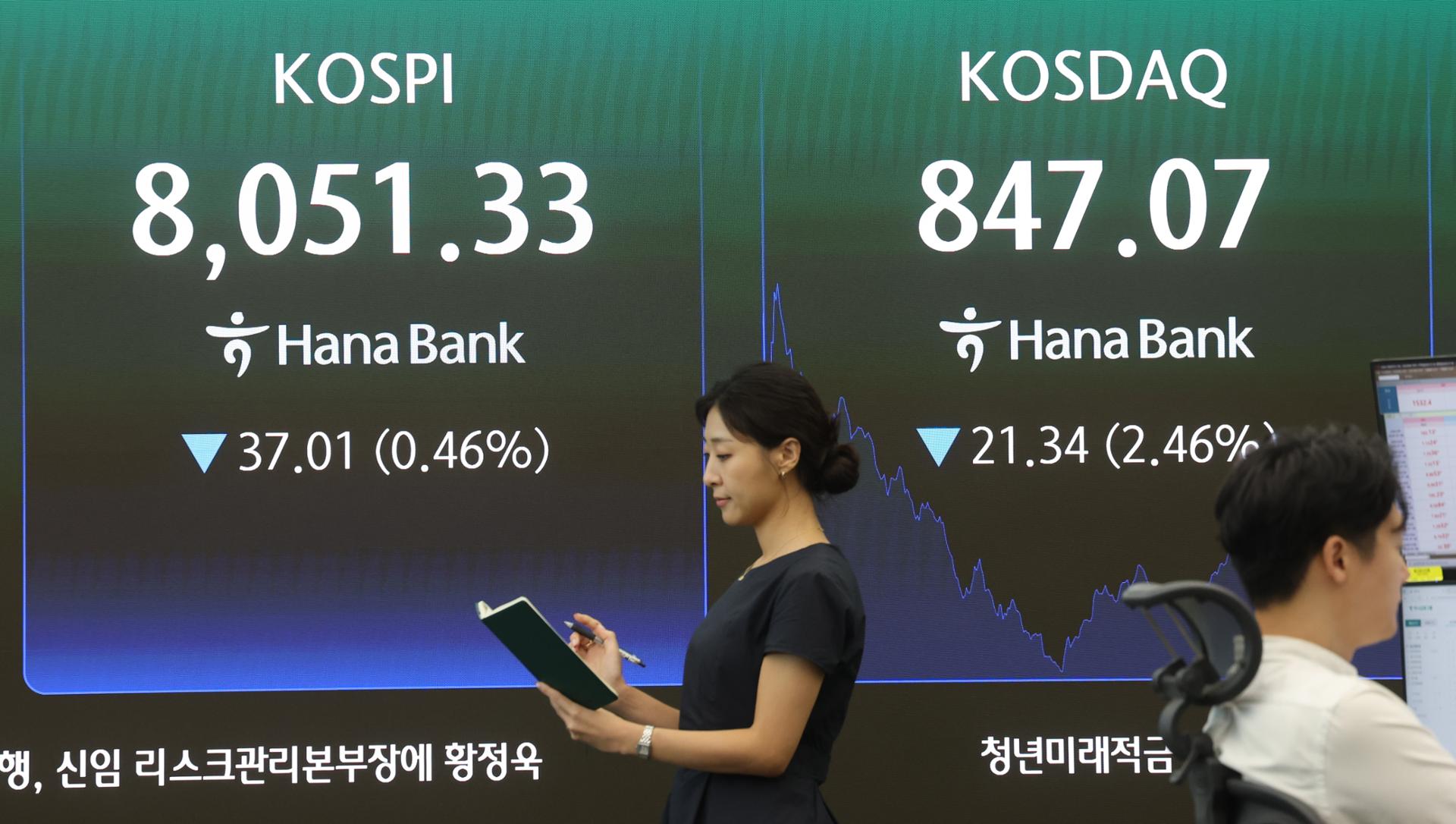
The Korean stock market has experienced extreme volatility. On Monday, July 6, the KOSPI rose to 8,300 intraday but retreated to 7,900 due to heavy selling pressure from foreigners and institutions, barely holding the 8,000 level at the close. On that day alone, foreign and institutional investors dumped 2.7 trillion won. On Tuesday, July 7, semiconductor stocks weakened following Samsung's earnings, triggering a "sell-side sidecar" on the KOSDAQ. The situation worsened on Wednesday, July 8, as the KOSPI plummeted over 5% to the 7,200 range, triggering a circuit breaker. Trading volume remained unstable amid the foreign net-selling trend.
Supply & Demand Trends
- Foreigners: Massive net selling (approx. 1.4 trillion won on July 6)
- Institutions: Continued net selling trend
- Individuals: Relatively more active in buying
Key Sectors & Stocks Today (At least 3)
- Semiconductors (Samsung Electronics, SK Hynix): -3% or more — Spreading disappointment after Samsung's earnings and the impact of the U.S. semiconductor index adjustment.
- General Tech: Mixed — Concerns over the sustainability of global AI investment.
- Blue-chip stocks: Preemptive decline due to foreign selling — Impacted by a strong dollar (currency strength).
🇺🇸 U.S. Market
Closing of the 3 Major Indices (July 6-7)
U.S. markets showed mixed results. On Monday, July 6, tech stocks rebounded as investors returned from the holiday with optimism about AI, and the Dow Jones hit an all-time high, breaking the 53,000 line. The S&P 500 and Nasdaq also started strong. However, on Tuesday, July 7, concerns about global semiconductor weakness following Samsung's earnings and surging oil prices (due to rising tensions in Iran) caused the Nasdaq to fall 1%, and the Dow fell below the 53,000 line. Large-cap tech stocks, particularly chip-related ones, saw notable declines.
Key Market Moves
- Semiconductor Index & Chip Stocks: -2~4% — Global profitability concerns reignited after Samsung's guidance.
- Energy/Oil Stocks: +2~3% — Unstable supply/demand due to rising oil prices (WTI surge) and renewed Iran tensions.
- Nasdaq Small-cap stocks: Mixed — Portfolio rebalancing following large-cap adjustments.

Sector Trends
Weakness in tech (especially semiconductors) is the market's main vulnerability. The energy sector gained due to rising oil prices, but this also put pressure on cyclicals amid concerns of an economic hard landing. Consumer and financial sectors were relatively defensive.
🌏 Asian & European Markets
Asia (Japan, China, Hong Kong)
While specific real-time data for July 8 is not available, Japan (Nikkei), Hong Kong (Hang Seng), and China (Shanghai) are expected to have faced simultaneous adjustment pressure due to the recent sharp decline in the Korean market and global semiconductor weakness. The 5% plunge in the Korean KOSPI served as a trigger to worsen overall sentiment in East Asia.
Europe (U.K., Germany, France)
On Monday, July 6, major European indices showed adjustment trends despite the U.S. tech rally. The German DAX fell -1.37%, Italy's FTSE MIB -0.95%, and France's CAC 40 -0.51%. It is assessed that Europe likely faced further weakness on the 7th as the U.S. Nasdaq's decline continued.
📊 Market Drivers Today
-
Samsung Earnings & Semiconductor Concerns: Although Samsung reported impressive figures, investors questioned whether massive AI investments would translate into actual profit, leading to a sell-off in semiconductor stocks. This triggered a severe correction across the global chip sector.
-
Oil Price Surge & Middle East Tensions: Geopolitical tensions related to Iran resurfaced, causing oil prices (WTI) to spike. While this supported the energy sector, it pressured growth and tech stocks by increasing interest rate hike concerns.
-
Massive Foreign Selling & Currency Weakness: Foreigners sold a net 2.7 trillion won in the Korean market. Global economic instability and a strong dollar (rising won-dollar exchange rate) fueled the exit of emerging market funds.
-
AI Optimism's "Double-Edged" Phase: Optimism regarding the sustainability of AI investment was put to the test by earnings reports at the start of July, and as doubts about profitability emerged, tech stock momentum faltered.
🔭 Points to Watch
Key Events This Week
- Fed Policy Committee Minutes (Scheduled for late July/early August): Interpreting signals regarding continued rate hikes.
- Unemployment, new jobless claims, and consumer indicators: Assessing whether concerns about an economic hard landing in the labor market can be resolved.
- Additional earnings releases for large-cap tech: Potential for investors to regain confidence in AI investment ROI.
Investor Checklist
- Monitor profit guidance trends in the semiconductor industry.
- Whether U.S.-Iran tensions ease or worsen (determining oil price direction).
- Concerns of recurring circuit breakers in the Korean market—whether foreign net selling continues.
- Sustainability of the strong dollar trend (risk of increased emerging market volatility).
💬 One-Line Insight
With AI bubble concerns intersecting with geopolitical risks, global growth stocks have entered a "weak high" phase—next week's economic indicators and central bank signals will decide the direction.
Note: The Korean stock market is currently in a circuit breaker (sell-side sidecar) state due to a severe decline during trading on Wednesday, July 8. This report was prepared based on the latest data from July 6-8, following extensive data collection amidst extreme volatility.
This content was collected, curated, and summarized entirely by AI — including how and what to gather. It may contain inaccuracies. Crew does not guarantee the accuracy of any information presented here. Always verify facts on your own before acting on them. Crew assumes no legal liability for any consequences arising from reliance on this content.
Powered by
