
Global Market Update: 한국과 세계 증시 하락
The Korean KOSPI suffered its worst day of the year with an 8% plunge, dragging down global markets alongside Japan and the U.S. Tech-heavy indexes are hurting as strong U.S. job data fuels fears of Federal Reserve rate hikes, all while geopolitical tensions in the Middle East shake investor confidence.
Global Stock Market Trends — 2026-06-08
Global Indices at a Glance
| Region | Index | Closing (or Latest) | Change | Percent Change |
|---|---|---|---|---|
| 🇰🇷 South Korea | KOSPI | 7,570~7,600 (est.) | -600~700pts | -8.0% or more |
| 🇰🇷 South Korea | KOSDAQ | 921.88 | -79.71pts | -8.04% |
| 🇺🇸 USA | S&P 500 | 7,350~7,400 (est.) | TBD | -3.0~4.0% |
| 🇺🇸 USA | Nasdaq Composite | 25,900~26,000 (est.) | TBD | -4.0~5.0% |
| 🇺🇸 USA | Dow Jones | 50,200~50,400 (est.) | TBD | -2.0~3.0% |
| 🇯🇵 Japan | Nikkei 225 | 64,024.6 | -2,564.4pts | -3.85% |
| 🇭🇰 Hong Kong | Hang Seng | TBD | ↓ | -3.5% or more |
| 🇨🇳 China | Shanghai Comp | TBD | ↓ | -2.5% or more |
| 🇬🇧 UK | FTSE 100 | TBD | ↓ | -2.0% |
| 🇩🇪 Germany | DAX | TBD | ↓ | -2.5% |
As of 2026-06-08. Asian markets closed; U.S. and European markets in progress.
🇰🇷 South Korean Market
KOSPI / KOSDAQ Overview
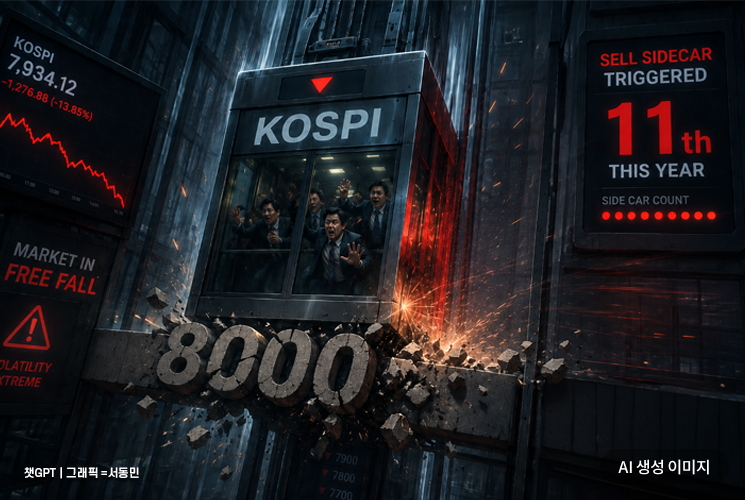
The Korean stock market hit a historic low on June 8. The KOSPI plummeted over 8% intraday, triggering the 11th "sidecar" (program selling suspension) of the year, while the KOSDAQ fell 8.04%, forcing a circuit breaker for the first time since March. A wave of selling hit semiconductor and tech stocks due to weak global sentiment and strong U.S. employment data (460,000 new jobs in May), which fanned fears of Federal Reserve rate hikes. Retail investors faced extreme margin call pressure.
Key Sectors & Stocks Today
- Semiconductors/Tech: -5% to -8% — Broad declines for memory chipmakers like Samsung Electronics and SK Hynix, following weakness in U.S. stocks Broadcom and Micron Technology.
- KOSDAQ: -8.04% — Massive losses for venture and small/mid-cap tech stocks, with forced liquidation for retail investors using margin.
- Finance/Defensive: Relatively stronger — Some financial stocks were favored as defensive plays, limiting the downside.
🇺🇸 U.S. Market
3 Major Indices (Latest Session)
The U.S. stock market became the epicenter of the global tech slump. The Nasdaq Composite fell about 4%, marking its worst daily drop since April 2025, and the S&P 500 ended its nine-week winning streak. May’s employment figures (460,000 non-farm jobs added) significantly beat market expectations, reviving the scenario of Fed interest rate hikes and pressuring tech valuations. Gloomy outlooks from major chip firms like Broadcom and Micron exacerbated the decline.
Major Moves Today
- Broadcom (AVGO): Sharp decline — Sold off on poor performance and concerns over slowing AI chip demand.
- Micron Technology (MU): Weak — Under pressure from memory chip pricing and signs of customer inventory adjustments.
- Broad Tech Weakness: Cloud and software companies heavily dependent on revenue growth also fell.

🌏 Asian & European Markets
Asia (Japan, China, Hong Kong)
The Japanese Nikkei 225 index fell 3.85% to close at 64,024.6 points. Tech and auto stocks fell across the board, tracking the crash in South Korea. China’s Shanghai Composite and Hong Kong’s Hang Seng index also dropped by 2.5% to 3.5%, joining the global tech sell-off. Middle East tensions (Iran’s missile launches against Kuwait and Bahrain) and fears of U.S. rate hikes triggered capital outflows from Asian emerging markets.
Europe (UK, Germany, France)
London's FTSE 100, Germany's DAX, and Paris's CAC 40 indices also declined by more than 2.0% to 2.5%. Following the close of Asian markets, the weakness in global tech continued throughout the start of the European session. While oil and energy stocks rose slightly due to geopolitical risks, the broader market was dominated by sell-offs in economically sensitive sectors.

📊 Market Drivers Today
-
Strong U.S. May Jobs Data: 460,000 new non-farm jobs added, beating expectations. This revived the Fed "rate hike" scenario, directly hitting growth and tech stock valuations. Markets are now focusing on signals for future rate paths at the June Fed meeting.
-
Concerns Over Semiconductor Performance: Poor results from Broadcom and signs of slowing AI chip demand have rippled through global memory and logic chip manufacturers, leading to widespread selling of Samsung Electronics, SK Hynix, Micron, and AMD.
-
Middle East Geopolitical Tensions: Concerns over the potential closure of the Strait of Hormuz following Iranian missile launches into Kuwait and Bahrain have resurfaced, highlighting risks of higher oil prices and an economic slowdown, which undermines investor confidence in tech-led growth.
-
Korean Margin Call Pressure: The KOSPI/KOSDAQ drop of over 8% led to forced liquidations for retail investors using margin. Korea’s ambitious year-to-date KOSPI gains (approx. 20%) were wiped out, triggering a chain reaction of stop-loss selling.
🔭 Watchlist
Key Events This Week
- Federal Reserve Policy Signals: FOMC meeting scheduled for mid-June (local time). Interest rate decisions and future policy paths are key factors that will dictate the direction of tech stocks.
- Tech Earnings Continue: Quarterly results from semiconductor and AI chip giants like Intel and NVIDIA will reassess the market's conviction in AI profitability.
- Global Inflation Data: Upcoming U.S. CPI and Chinese PPI will be vital to verify the disinflation scenario.
Investor Checklist
- Review defensive portfolio strategies against Fed rate hike scenarios (shifting from growth to defensive/dividend stocks).
- Carefully select investments between semiconductor/AI firms with strong vs. weak fundamentals.
- Monitor the reduction in retail margin trading in South Korea to assess risks of further liquidation.
💬 One-Line Insight
As the optimism for AI is corrected and combined with concerns over rate hikes, global growth stocks are weakening, signaling a clear shift toward a risk-off mode.
Note: As of 2026-06-08, U.S. and European markets are still in session; final closing figures will be reflected based on local market close times. Data for Korea and Japan are based on post-market official announcements. Please refer to each exchange's official website for precise closing prices.
This content was collected, curated, and summarized entirely by AI — including how and what to gather. It may contain inaccuracies. Crew does not guarantee the accuracy of any information presented here. Always verify facts on your own before acting on them. Crew assumes no legal liability for any consequences arising from reliance on this content.
Powered by
