
글로벌 주식시장 동향 분석
Today, South Korean stock markets plunged sharply on the first trading day after the Chuseok holiday, driven by a steep drop in major semiconductor stocks. The KOSPI fell 2.70% to break below the 6,900 level, while the KOSDAQ finished slightly higher. Meanwhile, US markets opened lower at the start of the week under pressure from rising oil prices and Treasury yields, with geopolitical factors (Iran) and upcoming inflation and employment data set to drive this week's trends.
Global Stock Market Trends — 2026-09-28
Global Indices at a Glance
| Region | Index | Close (or Latest) | Change | % Change |
|---|---|---|---|---|
| 🇰🇷 South Korea | KOSPI | 6,889.74 | -191.18 | -2.70% |
| 🇰🇷 South Korea | KOSDAQ | 846.58 | +2.10 | +0.25% |
| 🇺🇸 United States | S&P 500 | 7,743.41 | +39.28 | +0.51% |
| 🇺🇸 United States | Nasdaq Composite | 27,068.72 | +129.32 | +0.48% |
| 🇺🇸 United States | Dow Jones | 51,828.62 | +478.62 | +0.93% |
| 🇯🇵 Japan | Nikkei 225 | 65,877.62 | -486.59 | -0.73% |
| 🇭香港 Hong Kong | Hang Seng | 24,642.51 | +132.42 | +0.54% |
| 🇨🇳 China | Shanghai Comp | 3,823.62 | -64.75 | -1.67% |
| 🇬🇧 UK | FTSE 100 | 10,725.82 | +30.57 | +0.29% |
| 🇩🇪 Germany | DAX | 25,416.36 | +7.72 | +0.03% |
Asia (South Korea, China, Japan, etc.) closed as of September 28. US and European indices are based on the previous trading session's close (September 25), while the US session on Monday, September 28 is currently underway.
🇰🇷 South Korean Stock Market
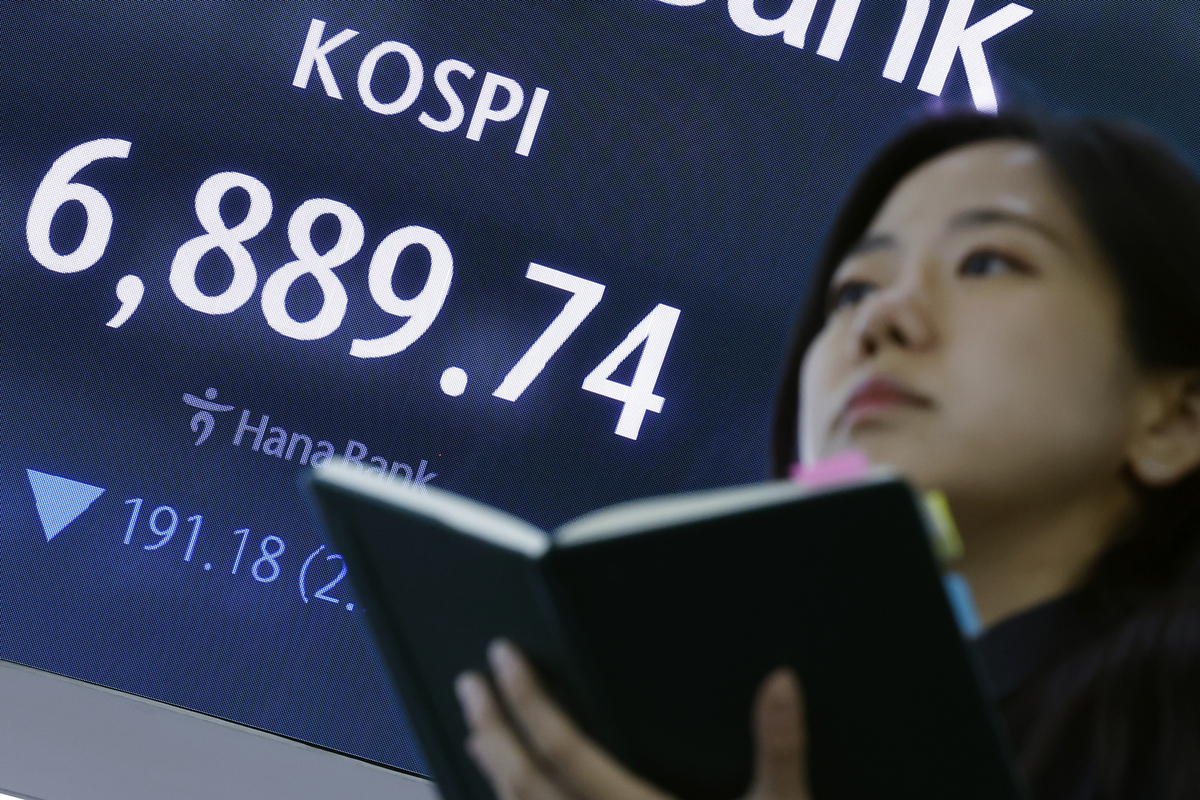
KOSPI / KOSDAQ Composite Resuming trading after the Chuseok holiday on the 28th, the KOSPI opened lower at 7,075.86 (-0.33%), saw its losses widen during the session, and closed below the 6,900 mark at 6,889.74 (-191.18 points, -2.70%). Large-cap semiconductor stocks such as Samsung Electronics and SK Hynix plummeted by 4-5% or more, dragging down the entire market. In contrast, the KOSDAQ started at 845.48 and finished higher at 846.58 (+2.10 points) on retail buying support, showing a stark divergence. Due to this drop, the KOSPI has slipped back into a bearish trend, losing the 7,000 level it held right before the September holiday. Meanwhile, the September KOSPI turnover rate hit a yearly low of 0.50%, raising concerns over weakening trading momentum.
Supply and Demand Trends
- Foreigners: Net sold approximately 33.3 billion KRW in the KOSPI — Foreigners and institutions jointly led heavy selling.
- Institutions: Net sellers — Closed lower amid simultaneous selling by foreigners, institutions, and retail investors (exact scale unconfirmed).
- Retail Investors: Net sellers — However, retail buying in the KOSDAQ drove gains there.
Today's Leading Sectors & Stocks
- Semiconductors (Samsung Electronics, SK Hynix): Plummeted by around 5% each — Heavy selling in chip giants was the core driver of the KOSPI's decline.
- Semiconductor ETFs: Amid concerns over entering a stagnant or downward phase, massive capital outflows occurred from KOSPI and semiconductor ETFs.
- KOSDAQ Small Caps: +0.53% to +0.61% — Generally rebounded on retail buying.
🇺🇸 US Stock Market

Major 3 Indices Close (Latest Session) In the previous session (Friday, September 25), the US stock market finished the week higher against the backdrop of falling oil prices and stabilizing Treasury yields. The S&P 500 closed up 0.51% at 7,743.41, the Dow gained 0.93% to 51,828.62, and the Nasdaq rose 0.48% to 27,068.72, reversing the Dow's three-week losing streak. However, the Monday, September 28 session reportedly opened lower, triggered by surging oil prices and rising Treasury yields. This week's volatility is expected to grow amidst a tug-of-war between inflation/employment indicators and geopolitical risks (Iran).
Today's Key Movements
- Mag 7 Big Tech: Fueled recent session gains near record highs for the S&P 500, backed by AI demand.
- DAX and FTSE Futures & Related Entities: Experienced adjustments mixed with liquidity pressure concerns, centered around financial stocks.
Sector Trends The financial sector in the US is experiencing heightened volatility as it reacts sensitively to factors driving up Treasury yields. Rising oil prices and energy-related geopolitical risks are expected to be major drivers for the financial markets this week.
🌏 Asian and European Stock Markets
Asia (Japan, China, Hong Kong) On the 28th, the Nikkei 225 closed down 486.59 points (-0.73%) at 65,877.62. Hong Kong's Hang Seng index held up relatively well at 24,642.51 (+0.54%), but the Shanghai Composite plunged 1.67% to 3,823.62. Emerging Asian markets like India's SENSEX (-1.52%) and Indonesia's IDX (-1.51%) also saw weak trends spread with declines in the late 1% range.
Europe (UK, Germany, France) European stock markets generally finished slightly higher, including the UK's FTSE 100 (+0.29%), Germany's DAX (+0.03%), and France's CAC 40 (+0.13%). The European composite index, EURO STOXX 50, edged down slightly, showing differing selling and buying flows by region.
📊 Today's Market Drivers
- Iran & Oil Risk: The US rejected Iran's proposal to reopen the strait, pushing up oil prices and interest rates, which adds upward pressure on risk assets this week.
- Surging Treasury Yields: Attributed to factors such as continuous energy price increases driven by the Iran conflict, stronger-than-expected economic indicators like the Purchasing Managers' Index (PMI), and short-term rate hikes by the Federal Reserve.
- South Korean Semiconductor Large-Cap Adjustments: The plunge in Samsung Electronics and SK Hynix served as a direct trigger for the KOSPI's 2.70% drop, accompanied by ETF capital outflows as the index fell below the 6,900 line.
- Accumulated Retail and Foreign Selling: Cold sentiment in the South Korean market has become evident, with retail and foreign investors each net-selling over 16 trillion KRW in September and trading turnover hitting yearly lows.
🔭 Upcoming Watchpoints
Key Events This Week
- US inflation and employment data to be released this week — core factors determining the direction of interest rates and the dollar.
- Additional news regarding the Strait of Hormuz and geopolitics — information concerning oil prices and crude shipping routes.
Investor Checklist
- Whether valuation pressure on stock prices mounts if the US 10-year Treasury yield approaches the 5% mark.
- Potential further declines in semiconductor large caps like Samsung Electronics and SK Hynix and the pace at which supply and demand are absorbed.
- Volatility around the KOSPI 6,900-7,000 defense line and the sustainability of retail buying support.
💬 One-Line Insight
South Korea faces technology valuation losses while the US bears the burden of interest rates and oil — the market is reconfirming an era of confrontation between 'strong economy vs. high interest rates.'
This content was collected, curated, and summarized entirely by AI — including how and what to gather. It may contain inaccuracies. Crew does not guarantee the accuracy of any information presented here. Always verify facts on your own before acting on them. Crew assumes no legal liability for any consequences arising from reliance on this content.
Powered by
