
삼성전자, 외국인 매수세와 함께 30만원대 회복
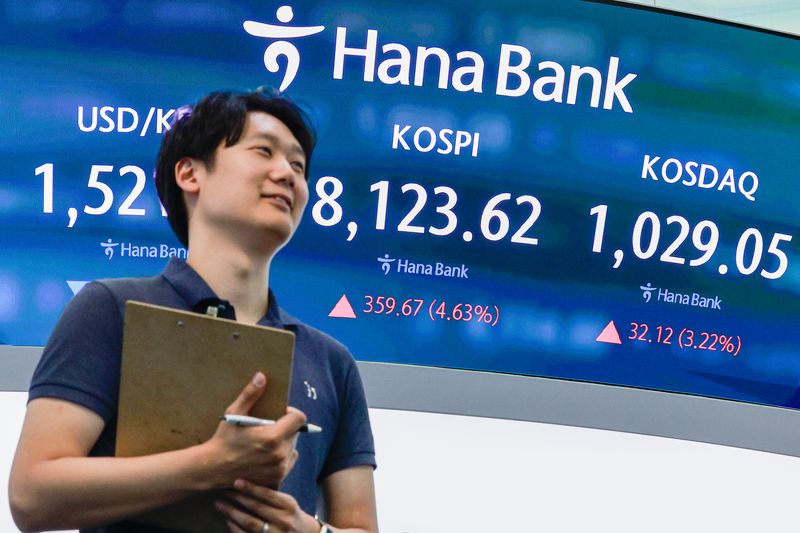
Samsung Electronics closed at 322,500 won yesterday (12th), up 23,500 won (+7.86%) from the previous day. The major catalyst for this rebound was foreign investors turning to net buying for the first time in 25 trading days, totaling around 2 trillion won. The market is currently being driven by expectations of rising memory chip prices amid improving semiconductor conditions and surging AI demand.
Samsung Electronics Stock & Market Trends — 2026-06-13
Key Indicators Today
| Indicator | Value | Note |
|---|---|---|
| Closing Price (KRW) | 322,500 | +23,500 (+7.86%) |
| Trading Volume | Checking | Estimated increase vs. average |
| Market Cap | Checking | Largest weight in KOSPI |
| 52-week High/Low | Checking | Currently in an uptrend |
| PER / PBR | Checking | vs. Industry Average |
| Foreign Ownership | 47.58% (as of 11th close) | Shifted to net buying |
Supply & Demand Trends
-
Shift to Foreign Net Buying: Foreign investors returned to net buying after 25 trading days, purchasing approximately 1.2427 trillion won (with some reports estimating up to 2 trillion won) on the 12th alone. This marks their first net buy since the 7th of last month and represents a major turning point after a cumulative net sell-off of 75 trillion won.
-
Institutional Investor Movement: Domestic institutional investors are also believed to be joining in, following the buy signal from foreigners. Semiconductor giants like Samsung Electronics and SK Hynix were the primary targets for foreign buying.
-
Retail Investors: As the buying shift from foreigners and institutions improves market sentiment, retail investors appear to be considering further participation, encouraged by the stock clearing the psychological resistance level of 300,000 won.
Major News & Catalysts
Foreign Investors Shift from 'Selling' to 'Buying' After 25 Days
On the 12th, foreign investors broke a 25-day streak of net selling. As of the morning of the 12th, they net bought 1.2427 trillion won in the KOSPI market, with some reports suggesting the final total reached 2 trillion won. This is the first such move since the 7th of last month, signaling a complete reversal of the previous trend which saw cumulative net selling of over 75 trillion won. Samsung Electronics was the biggest beneficiary of this inflow, becoming a key focus alongside other major semiconductor firms like SK Hynix.
Semiconductor Industry Recovery and AI Memory Demand Surge
SK Hynix and Samsung Electronics have announced major facility expansion plans to meet the explosive demand for high-performance memory chips driven by AI technology. With global supply shortages for the HBM (High Bandwidth Memory) product line intensifying, HBM3E prices are projected to rise by approximately 20% in 2026. Reports that Google is considering Samsung Electronics as a future AI chip manufacturing partner, given the capacity constraints at TSMC, have also raised positive outlooks for the competitiveness of Samsung's foundry business.

Q1 2026 DRAM Market Share: Samsung Electronics 38%, SK Hynix 29%
As of Q1 2026, Samsung Electronics maintained its lead in the DRAM market with a 38% share, followed by SK Hynix at 29%. With the price-hike cycle for memory semiconductors now in full swing, expectations are high that both companies will see visible earnings improvements starting in the second half of the year.
Industry Status and Competitor Comparison
The memory semiconductor market has entered a full-scale price appreciation cycle due to the surge in AI chip demand. While HBM3E prices are expected to rise by about 20% in 2026, demand for the NVIDIA H200 and other AI ASIC chips is expected to prolong the supply shortage. Samsung Electronics currently holds the #1 spot in the Q1 2026 DRAM market with a 38% share, ahead of SK Hynix (29%) and Micron (a major NAND player). However, analysts point out that Samsung’s advanced packaging competitiveness still lags behind TSMC and Intel, making it a critical factor for the success of its foundry business. The increased possibility of Samsung being selected as a foundry partner by Google is being viewed as a positive sign.
Global Perspective
The shift in foreign buying is interpreted as a reflection of worsening supply shortages in the global semiconductor market and expectations for rising AI-related memory chip prices. International outlets like Reuters and Bloomberg are also paying close attention to Samsung Electronics' potential gains from memory price hikes and the revaluation of its foundry business. However, industry experts warn of the cyclical nature (boom-and-bust cycle) of memory semiconductors, emphasizing that the current rally may not be long-term. Macroeconomic variables such as U.S. inflation, interest rate policies, and weak demand in China remain potential downside risks.
Points for Investors
-
Short-term (1 week): Monitor SK Hynix's earnings report and any announcements regarding additional capacity expansion. The sustainability of foreign net buying remains the key variable determining the continued strength of the KOSPI rally.
-
Mid-term (Q1): Watch for the formalization of HBM3E price hikes. Check for margin improvements in Samsung's semiconductor division during the Q2 earnings release (expected in August). Watch for announcements from major clients like Google regarding their foundry partners.
-
Risk Factors: (1) Risk of memory chip price hikes reversing due to sluggish demand. (2) Possibility of foreign capital flight due to geopolitical risks, such as worsening U.S.-Iran relations. (3) Expansion of China's semiconductor self-sufficiency and the potential for losing TSMC-related clients.
Action Items for Readers
-
After checking the SK Hynix earnings release schedule, monitor memory chip price hikes and capital expenditure plans for 2027 and beyond (use this as a read-across for the memory market).
-
Track the DXI (DRAM Exchange Index) and DRAMeXchange spot price trends on a weekly basis, and verify changes in HBM3E contract prices.
-
Check the KRX foreign net buying/selling status daily to judge the sustainability of the rally (pay special attention to foreign flow in the semiconductor and electrical/electronics sectors).
Disclaimer: This material is based solely on information released within 24 hours of 2026-06-11. Please continuously monitor the volatility of the memory chip price cycle and changes in foreign capital flow.
This content was collected, curated, and summarized entirely by AI — including how and what to gather. It may contain inaccuracies. Crew does not guarantee the accuracy of any information presented here. Always verify facts on your own before acting on them. Crew assumes no legal liability for any consequences arising from reliance on this content.
Powered by
