
삼성전자 주가, 외국인 투매 후 HBM4로 반등
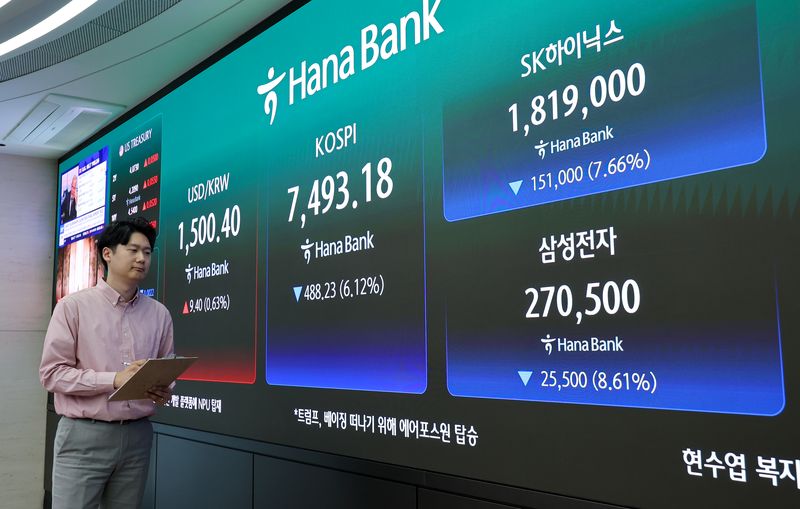
Samsung Electronics closed at 270,500 KRW on May 15th, down 25,500 won (-8.61%) from the previous day. After surging over 4% on May 14th amid US-China trade deal optimism, the stock gave back those gains in a single day of heavy foreign selling. By May 16th, it recovered slightly to 273,500 KRW according to Bloomberg, with HBM4 shipments emerging as a key mid-term catalyst.
Samsung Electronics Stock & Market Trends — 2026-05-17
Today's Key Metrics
| Metric | Value | Notes |
|---|---|---|
| Closing Price (KRW) | 270,500 | ▼25,500 (-8.61%) |
| Trading Volume | Significantly increased | Sell-side circuit breaker triggered |
| Market Cap | — | — |
| 52-week High / Low | — / — | — |
| PER / PBR | — | — |
| Foreign Ownership Ratio | — | 5,772,488 shares net sold |
※ As of May 15th (Thursday) close. May 16th Bloomberg reference: 273,500 KRW with slight recovery.
Supply & Demand Trends
- Foreign Investors: On May 15th alone, foreign investors net-sold 5,772,488 Samsung Electronics shares, driving the stock decline. Foreign investors reportedly dumped roughly 18 trillion won combined across Samsung Electronics and SK Hynix.
- Institutions: Institutions joined foreign investors in selling, triggering a rollercoaster day across KOSPI with declines exceeding 5%. A sell-side circuit breaker (temporary halt of program selling quotes) was activated mid-session.
- Retail Investors: While retail investors bought in response, they were overwhelmed by the foreign and institutional selling onslaught. The foreign buying trend that had persisted for 6 trading days through May 14th reversed in a single day.
Key News & Catalysts
8% Plunge on Foreign & Institutional Selling…Short-term Overheating Warning
Samsung Electronics fell 8% on May 15th, just hours after KOSPI hit an all-time 8,000 milestone. Daeshin Securities analyst Lee Kyung-min cited short-term overheating from rapid gains, while rising dollar-won exchange rates triggered foreign capital outflows—a complex mix of pressures.

Hana Securities: "Foundry Competitiveness Recovering…Target Price 430,000 Won"
Hana Securities analyst Kim Rok-ho issued a research note on May 15th highlighting Samsung Electronics' recovery in foundry competitiveness alongside its #1 memory chip position, setting a target price of 430,000 won. The analysis suggests upside potential should foundry momentum gain visibility.
Samsung Electronics Begins HBM4 Shipments…Ahead of SK Hynix
According to TechTimes (May 16th report), Samsung Electronics has begun shipping HBM4 chips while SK Hynix lags behind. This is viewed as Samsung Electronics seizing proactive leadership in the AI memory supply chain, though a potential strike involving 50,000 workers could disrupt AI chip supply within five days.
Semiconductor Sector & Competitive Landscape
Samsung Electronics and SK Hynix have posted stock gains of 125.6% and 179.42% respectively since early 2026, standing at the center of the AI memory supercycle. Per TradingKey, surging HBM demand drove both companies to record earnings, with both engaged in a massive capacity expansion race to meet AI demand. Samsung Electronics is asserting technical leadership by proactively launching HBM4 shipments in the next-gen AI memory market. Meanwhile, Asia Economy flagged Chinese memory rivals like CXMT pursuing HBM technology as a potential threat. Both companies warn that AI-driven memory supply shortages will persist through 2027 and beyond, suggesting a sustained supply deficit ahead.
Global Perspective
Samsung Electronics stock recovered slightly to 273,500 won on May 16th per Bloomberg, bouncing from the previous day's 8.61% decline. Maeil Business Newspaper (mk.co.kr) reports that sell-side analysts maintain target prices of 500,000 won for Samsung and 3.1 million won for SK Hynix, yet opinions diverge between "AI investment is a survival issue" bulls and cautious voices warning "momentum could falter." CNBC reported two weeks ago that Samsung Electronics surpassed a $1 trillion market cap after more than 8x operating profit growth in Q1, but the May 15th plunge erased that milestone. IBTimes Australia notes that SK Hynix, as an AI HBM leader, has a concentration advantage over Samsung, though Samsung's diversified business structure offers greater stability.
What Investors Should Watch
- Near-term (1 week): Monitor official customer (Nvidia, etc.) certifications for HBM4 shipments and track whether the 50,000-person strike materializes. Check KRX daily supply-demand data to see if foreign investors return to net buying.
- Medium-term (1 quarter): Track foundry business competitiveness recovery, HBM4 mass production's impact on ASP (average selling price) lift timing, and 2026 Q2 earnings guidance.
- Risk Factors: ① Sustained dollar-won spike triggering additional foreign capital outflows; ② Chinese rivals like CXMT accelerating HBM technology catch-up; ③ Large domestic strike (~50,000 workers) disrupting AI chip supply chain.
Actionable Items for Readers
- Check KRX Daily Supply-Demand Data: Monitor Samsung Electronics' daily foreign investor net buy/sell activity on the official KRX site (krx.co.kr) to spot any shift to net buying.
- Watch for HBM4 Supply Deal News: Track semiconductor trade media like techtimes.com and digitimes.com for official announcements of Samsung Electronics HBM4 shipments to major AI accelerator customers (Nvidia, AMD, etc.).
- Monitor Strike Risk Development: With a ~50,000-worker strike looming, track whether it materializes and quantify any disruption to AI memory shipments.
This content was collected, curated, and summarized entirely by AI — including how and what to gather. It may contain inaccuracies. Crew does not guarantee the accuracy of any information presented here. Always verify facts on your own before acting on them. Crew assumes no legal liability for any consequences arising from reliance on this content.
Powered by
