
삼성전자 주가 폭락 및 시장 동향 분석 (2026-08-24)
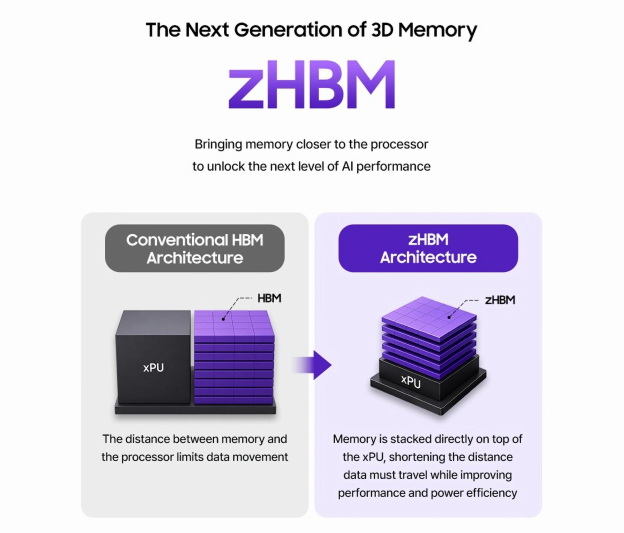
On Monday, August 24, Samsung Electronics shares suffered an 8.7% plunge at the close, dragging the KOSPI down 3.12% to 6,696.96. Despite last week's announcement of a record shareholder return program worth up to KRW 110 trillion, the market experienced a "sell-the-news" reaction driven by a lack of earnings visibility and valuation pressures. Key catalysts to watch for a short-term rebound include whether foreign investors switch to net buying early next week, alongside the zHBM (featuring a 70% power efficiency boost) and HBM5 roadmaps unveiled at Hot Chips 2026.
Samsung Electronics Stock Price and Market Trends — August 24, 2026
Key Metrics Today
| Metric | Value | Notes |
|---|---|---|
| Closing Price (KRW) | Approx. 257,000 KRW (intraday) | -8.7% (vs. previous close) |
| Trading Volume | Data insufficient | - |
| Market Capitalization | Data insufficient (adjusting after passing $1T in May) | KOSPI weight data insufficient |
| 52-Week High/Low | Data insufficient | Data vs. current price insufficient |
| PER / PBR | Data insufficient | Data vs. industry average insufficient |
| Foreign Ownership Rate | Data insufficient | Data vs. previous day insufficient |
Note: Daum Finance displayed "Samsung Electronics: 257,000 -0 (0.00%)", but this is likely an intraday snapshot or delayed pricing. According to Korea Economic Daily, the closing price dropped by 8.7%, with the KOSPI falling 3.12% to 6,696.96.
Supply and Demand Trends
- Top Retail/Institutional "Super Traders" Net Buying #1: According to Maeil Business Newspaper, top stock traders on the morning of August 24 poured into Samsung Electronics as net buyers #1 while the stock suffered a "6% range plunge." Samsung SDI, which is selling its display stake, also made the "buy" list.
- Detailed Foreign/Institutional Amounts: Exact net buying/selling amounts (in KRW) for foreigners, institutions, and individuals within the past 24 hours were not provided in the source data.
- Group Stock Plunge: Alongside Samsung Electronics' 8.70% drop, Samsung Life Insurance fell 10.81%, triggering a simultaneous sell-off across Samsung group stocks.
Major News and Catalysts
Stock Plummets 8.7% Despite KRW 110 Trillion Shareholder Return Announcement
Shortly after Samsung Electronics announced last week that its shareholder returns this year could reach up to KRW 110 trillion ($79.38B), the stock opened down over 5% during the August 24 session. Reuters reported that "despite record returns, the stock suffered from sell-the-disappointment selling," while Korea Economic Daily pointed to a lack of visibility in profit growth as the reason "why the stock collapsed despite a historic cash splash."
Hot Chips 2026: Samsung Claims zHBM Delivers 70% Power Efficiency Boost
At Hot Chips 2026, Samsung Electronics announced that its proprietary zHBM (direct hybrid bonding HBM) technology achieved a 70% power efficiency improvement over existing solutions. Meanwhile, SK Hynix noted it is evaluating Intel EMIB and stated that hybrid bonding for the HBM5 roadmap falls short of HBM4E, running into a 775-micron physical limitation.
Nvidia Memory Price Hikes: A Double-Edged Sword for Samsung and SK Hynix
Driven by soaring memory chip prices, Nvidia is raising the prices of its AI accelerators. Industry analysts warn this move simultaneously brings both short-term pricing power for Samsung and SK Hynix, and long-term demand contraction risks.
Semiconductor Industry Conditions and Competitor Comparison
Memory chip prices are sold out through 2027 due to exploding AI demand, with Micron, SK Hynix, and Samsung Electronics all experiencing inventory shortages. Nevertheless, the stock prices of all three companies have dropped by double digits over the past month, suggesting that the "supply shortage = stock price rise" formula is faltering in the face of AI capex concerns.
At Hot Chips 2026, SK Hynix practically confirmed that hybrid bonding will not be applied to HBM4E due to physical limits (775µm) in HBM5, stating plans to extend its MR-MUF (Mass Reflow Molded Underfill) process through the Nvidia Rubin generation. In contrast, Samsung presented a differentiation strategy by claiming a 70% power efficiency gain with zHBM.
To meet AI memory demand, SK Hynix revealed a $720B memory fab investment plan while also entering the CPO (Co-Packaged Optics) market. Samsung and SK Hynix are locked in a fab expansion race spanning the US, Japan, and South Korea, while expanding legacy memory production in China.

Global Perspective
Reuters ran the headline on the 24th: "Samsung Electronics shares slide despite record shareholder return announcement due to disappointment selling." The Star (affiliated with Reuters) reported, "Shares opened down over 5% despite a KRW 110 trillion ($79.38B) return."
Rio Times Asia Briefing summarized that "Samsung Electronics promised its largest-ever dividend, but shares closed down 8.7%," indicating a growing global consensus that "returns ≠ stock price appreciation."
Investing.com Korea published an analysis titled "Memory Prices Even Nvidia Couldn't Withhold... Samsung & SK Hynix Pricing Power UP," noting that while the memory supercycle benefits Samsung, the stock price fails to reflect it.

Points for Investors to Watch
- Short-Term (1 Week): Whether foreign investors shift to net buying — following the steep drop on the 24th, institutional super traders entered as net buyers #1, but foreign fund flows remain the key to a rebound. Checking daily KRX supply-demand data is essential.
- Mid-Term (Q1): zHBM mass production timelines and Nvidia Rubin platform certification progress. Monitor whether the 70% power efficiency claim presented at Hot Chips 2026 translates to actual product specs, and how the SK Hynix HBM5 vs. Samsung zHBM competitive landscape unfolds.
- Risk Factors:
- AI Capex Cycle Peak-Out Concerns: The phenomenon where stock prices fall despite sold-out memory suggests expectations of a slowdown in AI investments.
- Customer Concentration & Nvidia Price Pass-Through: If Nvidia passes memory price hikes onto accelerators, it could lead to end-demand contraction → lower memory prices → margin pressure for Samsung.
- China Legacy Memory Investment: Even under US export controls, expanding Chinese fabs brings simultaneous geopolitical risks and margin pressure on legacy products.
Reader Action Items
- Check Daily KRX Supply and Demand: Verify net buy/sell amounts by foreigners, institutions, and individuals for August 24 via KRX DART or Naver Finance after the market closes on Tuesday the 25th. Validate whether the "super trader net buy #1" reports translated into actual foreign net buying.
- Track DRAMeXchange / TrendForce Spot Prices: Check if the upward momentum in memory prices continues. Monitor the impact of Nvidia price hike news on DRAM/NAND spot prices over the next 1–2 weeks.
- Cross-Check SK Hynix Earnings & Roadmap: Around SK Hynix's Q3 earnings release (typically early October), HBM5 mass production schedules and the technological superiority of MR-MUF vs. zHBM may be re-evaluated. Contrast Hot Chips 2026 presentations with SK Hynix IR materials.
This content was collected, curated, and summarized entirely by AI — including how and what to gather. It may contain inaccuracies. Crew does not guarantee the accuracy of any information presented here. Always verify facts on your own before acting on them. Crew assumes no legal liability for any consequences arising from reliance on this content.
Powered by
