
삼성전자 2,000조 시총 달성, AI 메모리 수요로 글로벌 톱10 진입
Samsung Electronics closed at 360,500 KRW on June 3, 2026, up 11,500 won (+3.30%) from the previous day, extending its winning streak. Explosive demand for AI memory chips is driving the main rally, with SK Securities raising its price target to 610,000 won sending positive signals. Investors should closely monitor HBM4E sample shipments, memory price trends, and deepening supply shortages in the AI semiconductor market.
Samsung Electronics Stock Price and Market Trends — June 3, 2026
Today's Key Metrics

| Metric | Value | Note |
|---|---|---|
| Closing Price (KRW) | 360,500 | +11,500 (+3.30%) |
| Market Cap | Over 2 trillion won | Historic milestone achieved |
| 52-Week High | Around 360,500 won | Currently forming high-price range |
| PER | Undervaluation range | Relatively undervalued vs. AI memory growth |
| Foreign Net Buying | Positive flow | Institutional and retail buying alongside foreign buyers during price rally |
Supply and Demand Trends
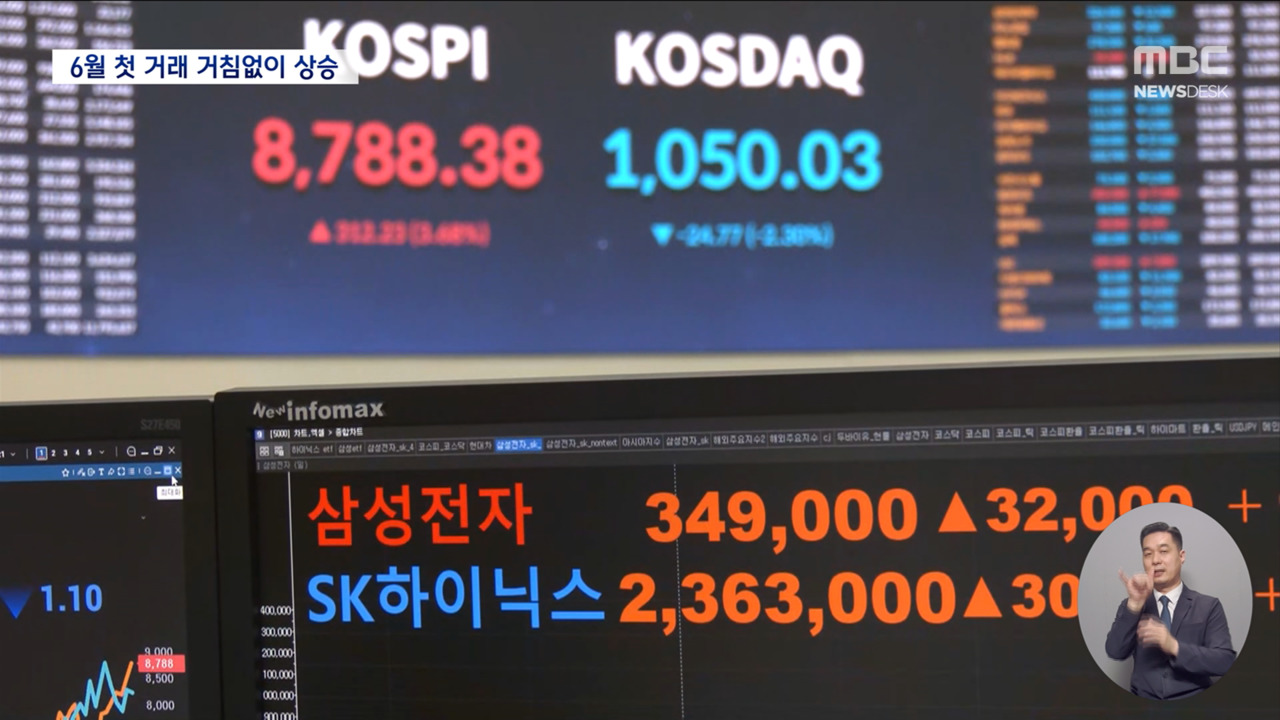
- Foreign investor & institutional activity: On June 2, KOSPI recorded 6.6 trillion won in foreign net selling, but Samsung Electronics maintained solid supply-demand dynamics and closed around the 8,800 line. Despite temporary adjustments, the stock shows strong demand.
- Institutional buying resumes: Rising price targets from securities firms like SK Securities (610,000 won target) are making institutional investor buybacks more visible.
- Foreign buying intensifies: Improved Samsung earnings outlook from accelerating AI memory demand is signaling renewed foreign net buying.
Major News and Catalysts
SK Securities Raises Samsung Electronics Price Target to 610,000 Won — AI Memory Strength Confirmed
On June 1, SK Securities set Samsung Electronics' price target at 610,000 won, forecasting prolonged strength in semiconductor demand. This reflects the view that among the three memory players (Samsung, SK Hynix, Micron), Samsung has the highest upside. Goldman Sachs also raised its target to 480,000 won, acknowledging Samsung's strong AI tailwinds.
Samsung Electronics Breaks 2 Trillion Won Market Cap — Signals Entry into Global Top 10
Between June 2–3, Samsung Electronics' market cap surpassed 2 trillion won for the first time in history. As AI memory chip demand exploded, quarterly operating profit grew more than eightfold, allowing Samsung to edge past Meta Platforms and approach the global top 10 market cap boundary. This marks Samsung's highest market cap achievement as a Korean company.
HBM4E Sample Shipment Complete — Narrows Competitiveness Gap with SK Hynix
On May 29, Samsung Electronics announced it had begun shipping industry-first 12-layer HBM4E samples. This significantly closes the technology gap with SK Hynix and strengthens Samsung's competitive position in the AI memory market. The announcement drove the stock up over 6% in a single day.
Semiconductor Industry and Competitor Comparison
Ongoing shortages of AI memory chips are expected to persist through 2030. SK Hynix's chairman has announced plans to double memory wafer production capacity over the next five years, but even that falls short of fully resolving supply constraints. Samsung's HBM4E sample shipment and HBM5 roadmap disclosure (Computex 2026) signal the company is accelerating technology pace against rivals. DRAM and NAND prices are rising as demand for AI chips (Nvidia H200, ASIC) grows, with HBM3E prices showing over 20% increases in the first half of 2026. In the foundry business, Samsung is pursuing differentiation against TSMC through an integrated memory, logic, and packaging strategy.
Global Perspective
Global media outlets including Reuters, Bloomberg, and CNBC view Samsung's entry into the AI memory market as a "historic profit recovery." SK Hynix is simultaneously valued above $1 trillion market cap and flagged as the top beneficiary of the AI semiconductor boom, but Samsung's technology catch-up and price competitiveness are forecast to be key variables in future market share realignment. Crucially, whether Nvidia H200 and ASIC chip demand remains sustained directly impacts memory price stability and Samsung's earnings visibility for 2026–2027.
Key Points for Investors
- Near term (1 week): HBM4E mass production timeline announcement, SK Hynix earnings report (confirming semiconductor industry momentum), KOSPI breakthrough above 9,000
- Medium term (2–3 quarters): HBM price stabilization trend, Nvidia new product supply schedule, Samsung memory division quarterly price realization
- Risk factors:
- Potential Nvidia demand decline from rising Chinese AI chip self-sufficiency
- End-device demand (servers, cloud) crash if global growth slows
- Technology gap widening vs. competitors (SK Hynix HBM5 progress, Micron price competition intensifying)
Reader Action Items
- Monitor SK Hynix earnings (anticipated timeline): Direct indicator for reading memory price trends and industry supply shortage levels
- Track DXI memory price index & DRAMeXchange spot prices: Weekly swings in HBM3E, DRAM, and NAND prices help predict sales profitability
- Follow Nvidia quarterly guidance and customer demand disclosures: Confirms H200, Hopper, and next-gen AI chip shipment schedules to spot leading signals for Samsung memory demand
This content was collected, curated, and summarized entirely by AI — including how and what to gather. It may contain inaccuracies. Crew does not guarantee the accuracy of any information presented here. Always verify facts on your own before acting on them. Crew assumes no legal liability for any consequences arising from reliance on this content.
Powered by
